
Treatment doesn’t have to mean putting your career on hold. At EveningIOP, we’ve built evening IOP telehealth options specifically for people juggling work, family, and recovery.
This guide walks you through scheduling night sessions online, what to expect during treatment, and why flexibility matters when you’re serious about getting better.
Why Evening Programs Fit Real Work Schedules
Standard daytime IOP programs demand you stop work mid-week. Most run from 9 AM to 1 PM or similar hours, which means telling your employer you need to leave early several times per week. That conversation rarely ends well, even with legal protections. Evening programs eliminate this conflict entirely. Sessions run during hours when you’ve already wrapped work, so you’re not choosing between recovery and your paycheck.
This timing matters more than it sounds. Research on treatment engagement shows that removing scheduling barriers increases attendance rates significantly. When people don’t have to manufacture excuses or negotiate time off, they show up consistently. Consistency drives real change in addiction recovery.
Reclaim Hours You’d Lose to Commuting
Evening telehealth removes the commute problem that plagues traditional programs. You don’t need to travel to a physical location, wait in a lobby, or sit in traffic. Sessions happen from your home, which saves roughly 30 to 60 minutes per session depending on where you live. That’s three to six hours per week you get back.
For someone working full-time while managing family duties, that time cushion prevents treatment from becoming another source of stress. The remote format also means you can attend from anywhere-whether during a work trip, from your car during a lunch break before an evening session, or from home. This flexibility proves especially critical for shift workers and self-employed professionals who don’t have predictable schedules.
Family Life Stays Intact
Evening programs respect your household. You’re home with your family before sessions start, not rushing out during their evening. Kids still have a parent present for dinner and homework. Partners don’t become solo parents three nights per week.
This stability matters because family support ranks among the strongest predictors of treatment success. When recovery doesn’t destabilize your home life, your family is more likely to support your progress rather than resent the program. One-on-one sessions with licensed clinicians typically happen once or twice weekly and fit around your specific availability. Group therapy sessions run live and online, meaning you participate from home without the pressure of sitting in an unfamiliar office or clinic. Remote drug and alcohol testing integrates into your routine without requiring trips to a testing facility. You complete tests at home, and results reach your clinician within 24 to 48 hours.
Your Career Continues Forward
Your career doesn’t pause while you address addiction. Evening IOP programs let you keep working, keep earning, and keep building your professional reputation. Inpatient residential treatment costs roughly $5,000 to $30,000 per month and requires you to step away from work entirely. Evening telehealth IOP typically costs 60 to 70 percent less and requires zero time away from your job.

You maintain your income, your job security, and your forward momentum while receiving intensive treatment. Licensed clinicians monitor your progress through live sessions and testing data, adjusting your treatment plan based on real clinical information. This isn’t a watered-down version of care. The structure includes live group therapy multiple times weekly, individual sessions focused on your specific needs, and accountability through remote testing. Joint Commission accreditation and DHCS licensing mean the clinical standards are rigorous.
The next step involves understanding what actually happens during these evening sessions and how the program structure supports your recovery without disrupting your work or family life.
Getting Started with Evening IOP Telehealth
What Evening IOP Actually Includes
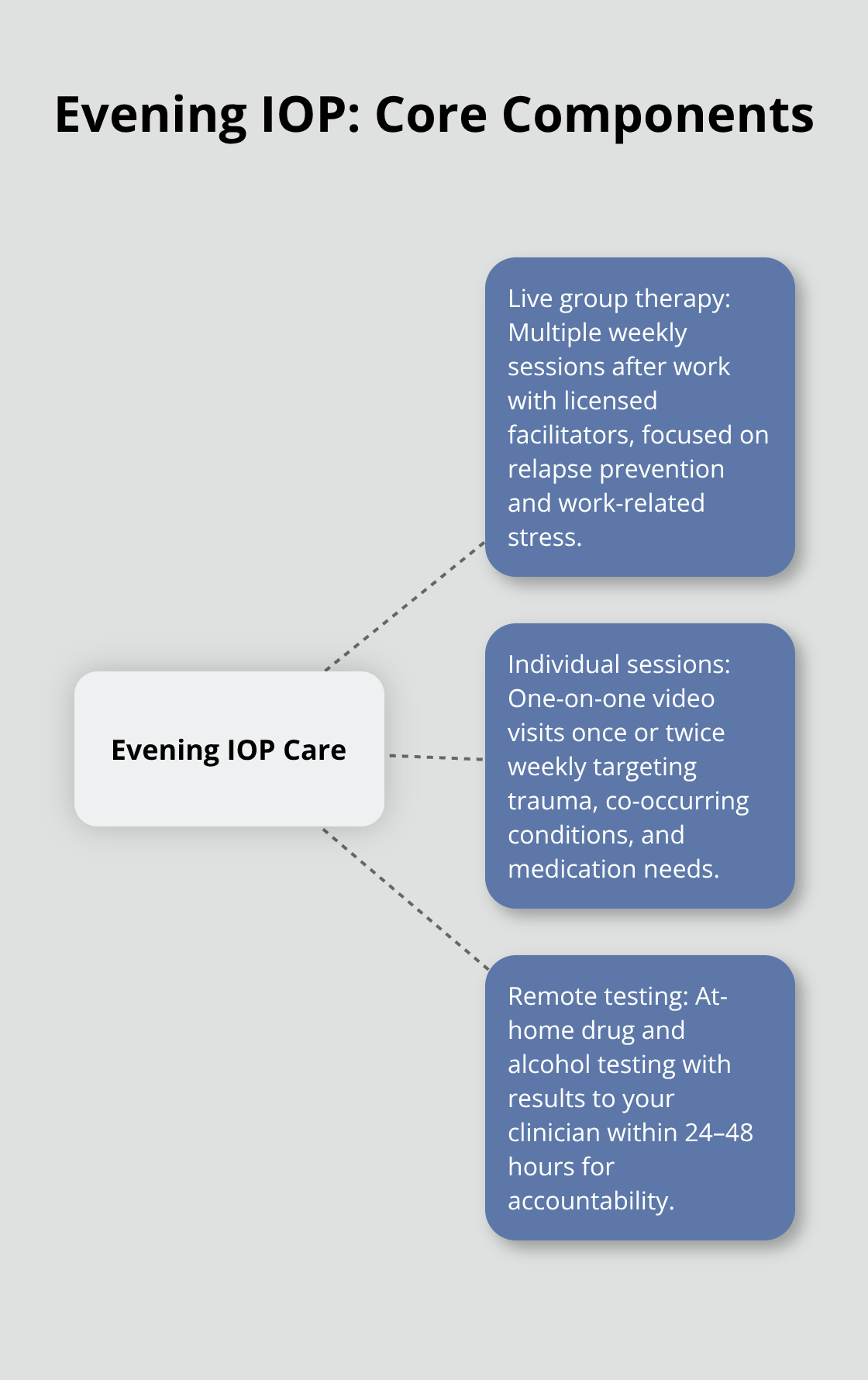
Evening IOP telehealth combines three core components that work together to deliver intensive care without disrupting your work schedule. Live online group therapy sessions run multiple times per week with 8 to 12 participants and one or two licensed facilitators guiding discussions. One-on-one sessions with licensed clinicians happen typically once or twice weekly, scheduled around your availability. Remote drug and alcohol testing completes at home, with results delivered to your clinician within 24 to 48 hours.
This structure delivers intensive clinical oversight without requiring you to commute to a facility or take time away from work. Peer support in group sessions increases treatment engagement according to research on group therapy outcomes. The one-on-one sessions address trauma, co-occurring mental health conditions, medication management if needed, and personalized relapse prevention strategies tailored to your specific triggers and goals.
Confirming Your Insurance Coverage
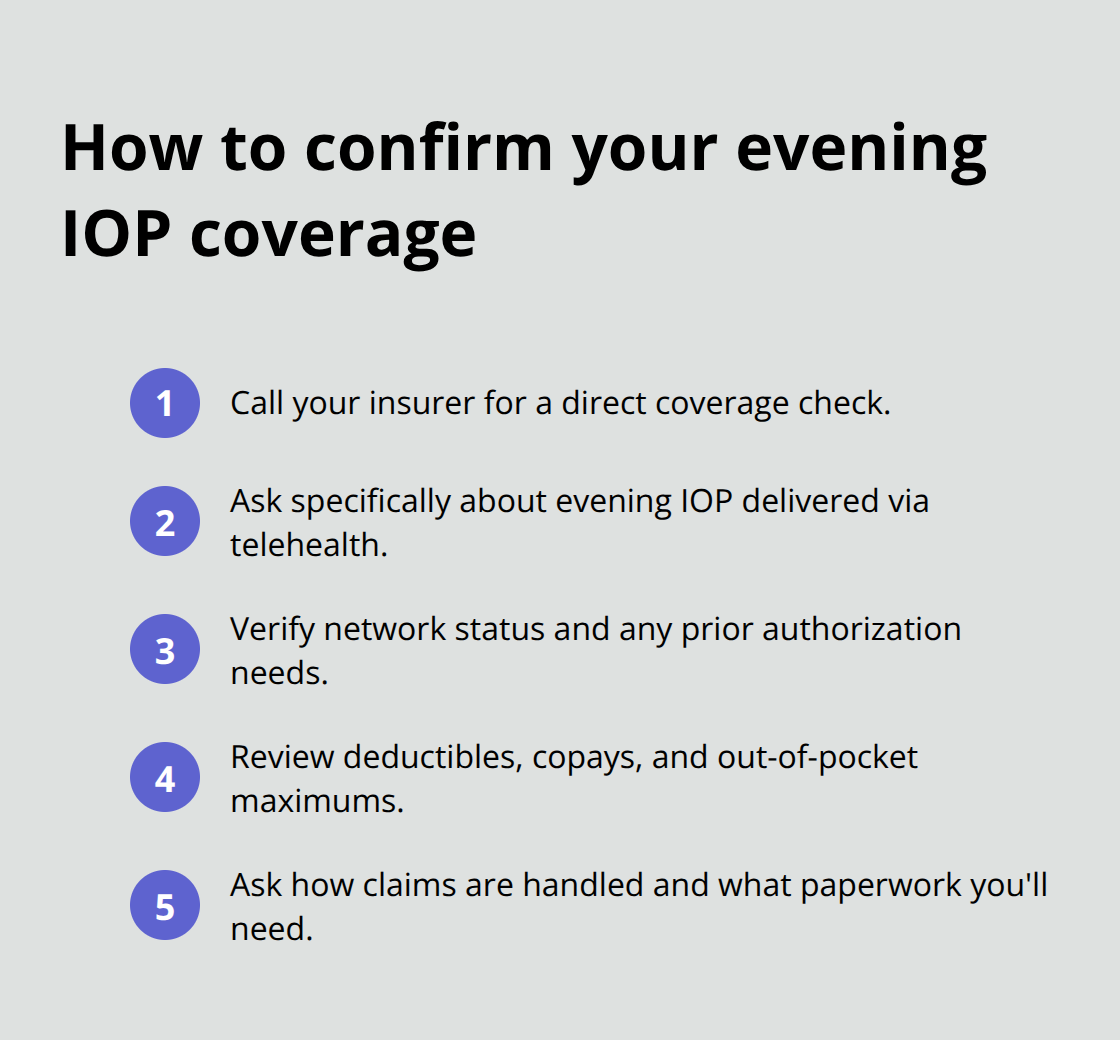
Insurance coverage requires a direct conversation with your provider, not assumptions based on what you think they cover. Call your insurance company and ask specifically whether they cover evening IOP or intensive outpatient programs for substance use treatment delivered via telehealth. Many plans do cover these programs, especially when they’re Joint Commission-accredited and state-licensed, but coverage varies significantly by plan and state.
Once you’ve confirmed coverage, contact your chosen provider to discuss your specific plan details and any out-of-pocket costs. Ask about payment options if your plan requires a deductible or copay. Clarify whether the program accepts your insurance directly or whether you’ll need to submit claims yourself.
The Assessment and Treatment Planning Process
The initial assessment typically happens within 24 hours of your call and involves a licensed clinician asking detailed questions about your substance use history, medical background, mental health conditions, work schedule, and home environment. This assessment determines whether evening IOP fits your needs or whether a different level of care suits you better. The clinician uses this information to build your personalized treatment plan, identifying which therapy modalities work best for you, whether psychiatric medication management is necessary, and how frequently you should attend sessions.
Quality programs start treatment within 24 hours of assessment, meaning you don’t wait weeks to begin care. Your clinician explains the program structure, session times, and what to expect during your first week. You’ll receive login information for the telehealth platform and instructions for completing your first remote drug and alcohol test at home.
What Happens During Your Evening Sessions
Live Group Therapy with Real Facilitators
Group therapy in evening IOP runs live with licensed facilitators who guide conversations among 8 to 12 participants. You’re not watching a recording or reading materials alone. The facilitator steers discussions toward practical relapse prevention, coping strategies for work stress, and how to handle triggers specific to your situation. Research from the National Institute on Drug Abuse shows that peer support in group settings increases engagement by roughly 25 percent, and that engagement directly predicts better outcomes.
The groups run multiple times per week, typically in the early evening after work hours end. You’ll encounter peers at different stages of recovery, which matters because seeing someone six months sober handling workplace pressure differently than someone two weeks in gives you realistic hope. The group dynamic also creates accountability that feels natural rather than punitive. When you know the same eight people are expecting you on Monday, Wednesday, and Friday evenings, you show up.
One-on-One Sessions with Licensed Clinicians
Your one-on-one sessions with licensed clinicians happen separately from group work, typically once or twice weekly depending on your treatment plan. These sessions address what group cannot: your specific trauma history, medication management if psychiatric care is part of your plan, and personalized relapse prevention strategies built around your actual triggers.
A clinician monitors your sleep quality, mood stability, medication adherence, and environmental stressors during video sessions. They adjust your treatment plan based on what they observe and what you report. This direct clinical oversight from home proves more responsive than traditional office-based care because clinicians see your actual living environment and can identify risks or progress that wouldn’t surface in an office setting.
Remote Testing for Accountability
Remote drug and alcohol testing completes at home on a schedule your clinician sets, usually one to three times weekly depending on your risk level and progress. You order a test kit, complete it at home following simple instructions, and results reach your clinician within 24 to 48 hours. This accountability structure works without feeling invasive because the testing integrates into your routine rather than requiring trips to a lab or facility.
The results inform your clinician’s decisions about whether your current treatment approach is working or whether adjustments are needed. If results show concerning patterns, your clinician addresses them directly in your next one-on-one session, not as punishment but as clinical data that drives your care forward. The combination of live group therapy, individual clinical sessions, and remote testing creates a structure that catches relapse risk early and keeps your treatment responsive to your actual progress rather than theoretical assumptions about how you should be doing.
Final Thoughts
Evening IOP telehealth options work because they respect your reality-you have a job, a family, and responsibilities that don’t pause while you address addiction. Traditional daytime programs force you to choose between recovery and your career, but evening programs eliminate that false choice. The structure of live group therapy, one-on-one clinical sessions, and remote testing delivers intensive care without disrupting your work or home life.
Starting treatment requires one phone call to EveningIOP, where you can schedule your initial assessment within 24 hours. A licensed clinician will ask about your substance use history, work schedule, and home environment to build your personalized treatment plan. You’ll receive your session times, telehealth platform access, and a clear picture of what your first week looks like.
Flexibility in treatment matters because consistency drives recovery-when you don’t manufacture excuses or negotiate time off, you show up, and when sessions fit your actual schedule, you stay engaged. Your family remains stable, your career continues forward, and you have something real to protect and build toward. Recovery is possible without sacrificing everything else.