

Working professionals often skip therapy because traditional schedules don’t fit their lives. At EveningIOP, we built teletherapy evenings for professionals specifically to solve this problem.
You shouldn’t have to choose between your career and your recovery. Our evening programs let you attend sessions after work, maintain your job, and get the clinical care you need.
Why Evening Therapy Works for Professionals
Therapy That Fits Your Actual Schedule
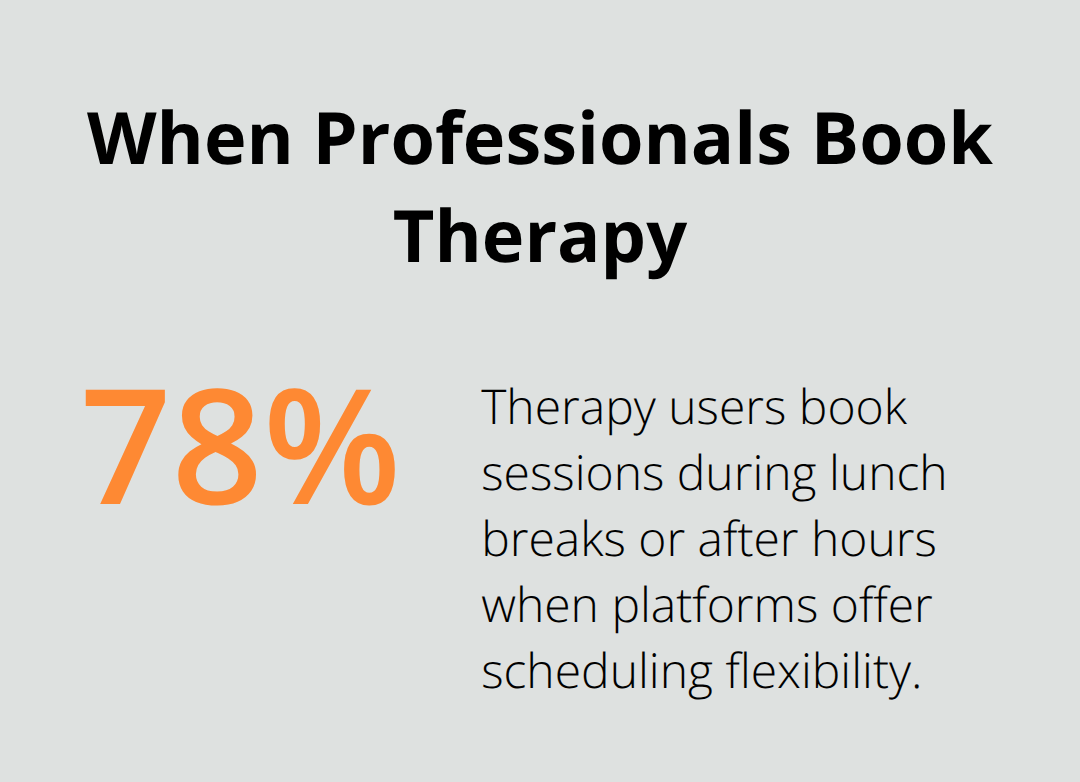
Traditional daytime appointments force a false choice between your job and your health. Evening teletherapy eliminates this conflict entirely. You complete your workday, log into a secure session from home, and engage with a licensed clinician when you’re actually available. Research from the Journal of Occupational Health Psychology shows 78% of therapy users book sessions during lunch breaks or after hours when platforms offer that flexibility-proving professionals actively seek care that respects their schedules.
A Texas A&M University study found that telehealth users reclaim an average of 47 minutes per session by eliminating commute time. That’s nearly eight hours a year freed up. When you’re not burning energy on logistics, you show up to sessions mentally present instead of stressed about what you’re missing at the office.
Zero Travel Stress, Maximum Focus
Remote sessions eliminate the friction that derails recovery. No fighting traffic, no waiting rooms, no explaining to your boss where you’re going. You sit in your own space, fully focused on treatment. For substance use recovery specifically, this matters enormously.
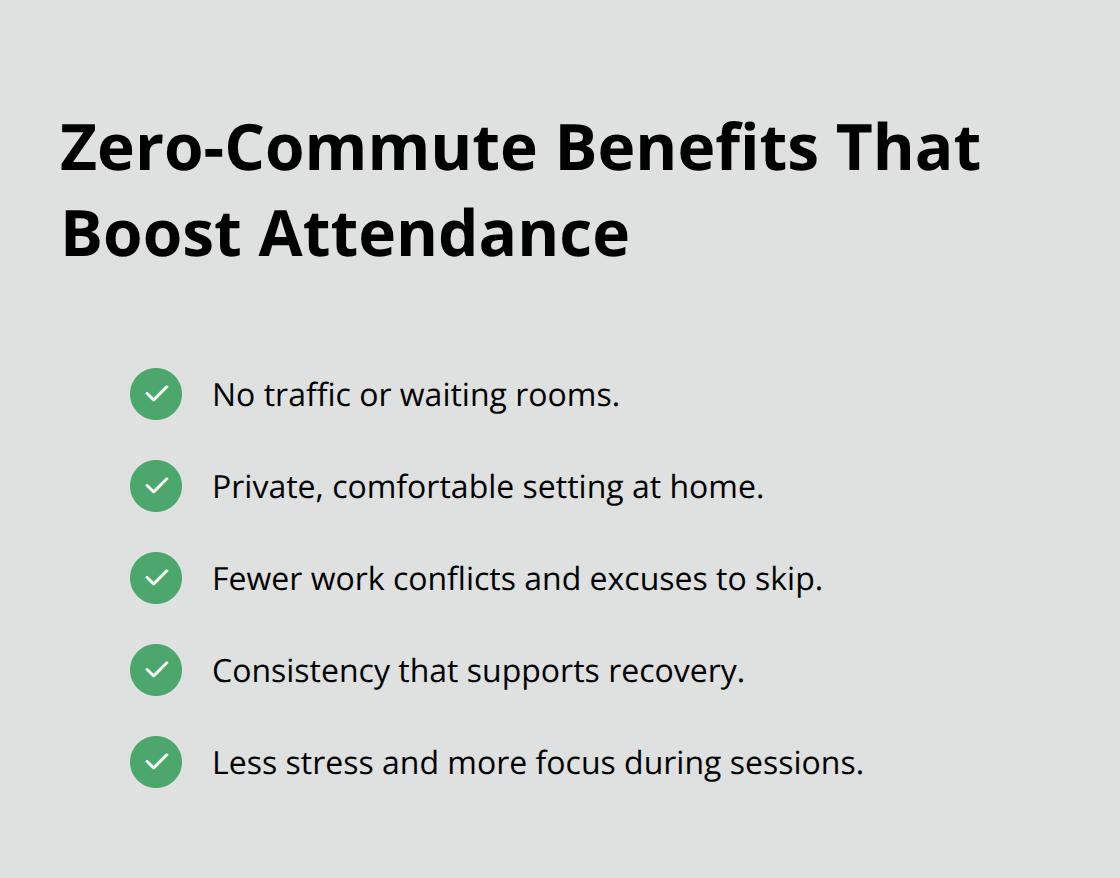
Consistency in attending therapy sessions is everything. When therapy fits your life instead of disrupting it, you attend sessions regularly. You don’t skip appointments because of work conflicts. You don’t rationalize missing treatment because the commute feels impossible that day.
Evening programs remove these friction points entirely, making it realistic to maintain the accountability and clinical structure recovery requires while keeping your employment intact.
Accountability That Doesn’t Interrupt Work
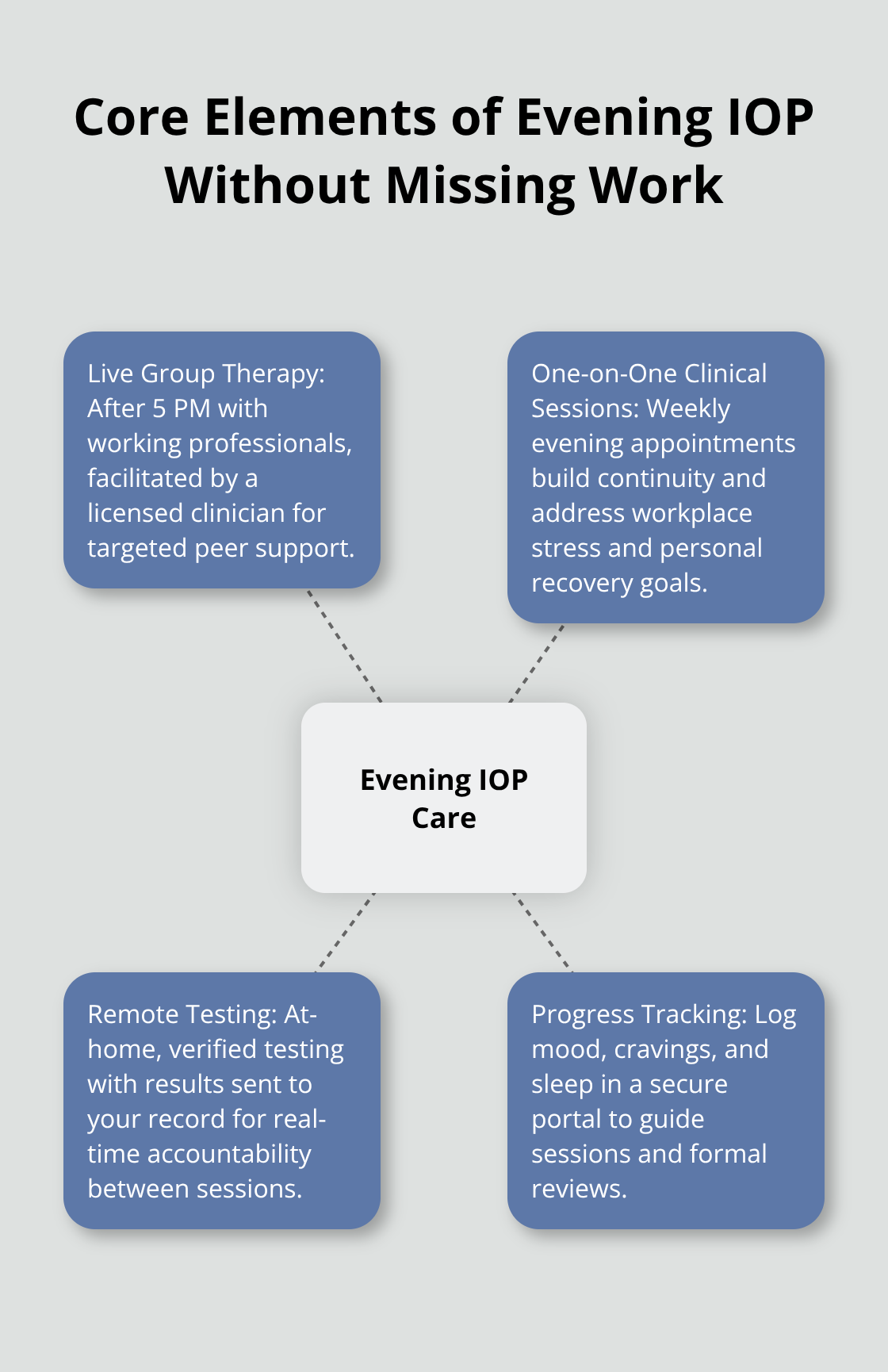
Recovery demands structure, monitoring, and honest engagement. Evening intensive outpatient programs provide this through live group sessions, one-on-one clinical work, and remote testing-all scheduled after standard business hours. You participate in peer support with other working professionals who understand your pressures. You complete clinical assessments and drug or alcohol testing from home without requesting time off. You maintain continuity with the same licensed clinicians week after week.
Your employer benefits too. Employees who access evening mental health and addiction treatment show higher retention rates and fewer absences than those who delay care. You’re not choosing between your recovery and your paycheck. Evening programs let you invest in both simultaneously. This foundation of flexibility and accountability sets the stage for what actually happens inside treatment-the clinical structure that makes recovery sustainable.
How Evening Programs Treat Substance Use Without Interrupting Work
Live Group Therapy with Working Professionals
Evening intensive outpatient programs structure treatment around what actually works for professionals in recovery. Live group therapy happens after 5 PM with other working professionals who face similar pressures. Peer support from people who understand workplace stress and recovery simultaneously proves far more effective than generic support groups. You don’t sit in a room during business hours explaining to colleagues where you’re going. You log in from home after your workday ends and engage with licensed clinicians and peers who understand what it means to maintain employment while addressing substance use.
Research from the American Journal of Psychiatry shows that therapeutic alliance in virtual settings reaches comparable strength to in-person care, meaning the clinical relationship is just as strong when sessions happen at times you can actually attend.
One-on-One Clinical Sessions on Your Schedule
Individual sessions with your assigned clinician occur on the same evening schedule, so you build continuity with someone who knows your specific situation, your workplace pressures, and your recovery goals. The structure is intensive-you receive the clinical depth of outpatient treatment, not a watered-down version-but the timing makes it sustainable. You attend sessions consistently because they fit your life. You don’t rationalize skipping because the appointment conflicts with a meeting or because driving across town feels impossible that day.
That consistency separates people who complete treatment from those who drop out.
Remote Testing That Removes Friction
Remote drug and alcohol testing eliminates another major barrier to sustained recovery. Instead of scheduling time off for lab visits, you complete testing from home on your schedule, and results feed directly into your clinical records. This creates real accountability without the friction that causes people to skip sessions or delay treatment. Medicaid telehealth usage in Texas increased significantly between fiscal years 2020 and 2021, signaling that payers and employers both recognize evening programs actually keep people engaged in treatment.
The combination of live group work, individual clinical depth, and remote accountability creates the structure recovery demands-without forcing you to choose between your job and your health. What happens inside these sessions, however, requires you to show up ready to engage. Understanding what actually occurs during evening teletherapy treatment helps you prepare for the work ahead.
What Actually Happens During Evening Treatment Sessions
Clinical Assessment and Treatment Planning
Licensed clinicians structure evening sessions differently than daytime outpatient care because they work with people who have already completed a full workday. Your first session involves a clinical assessment where your therapist identifies your substance use history, co-occurring mental health conditions, workplace stressors, and specific recovery goals. This assessment takes 60–90 minutes and determines your treatment plan. Subsequent sessions run 45–60 minutes and follow evidence-based protocols like cognitive behavioral therapy or motivational interviewing. Research on telehealth treatment found it as effective as in-person care in terms of retention and therapeutic alliance, meaning the clinical relationship strengthens when you attend sessions while actually present and engaged rather than rushing between obligations.
Group Therapy with Working Professionals
Group therapy happens twice weekly in most evening programs, running 90 minutes each. You sit with four to eight other working professionals addressing substance use, not a generic support group of random participants. These peers understand workplace pressure, maintaining employment during recovery, and the specific shame that comes with addiction while holding professional responsibility. One clinician facilitates structured discussions around relapse triggers, coping strategies, and accountability. Individual sessions occur weekly with your assigned clinician, building continuity that generic group work cannot provide. This person knows your boss is demanding, your family dynamics are strained, and your specific triggers. They adjust interventions based on what actually works in your life, not theoretical best practices.
Remote Testing and Real-Time Accountability
Remote drug and alcohol testing removes the single biggest friction point in outpatient treatment. Instead of requesting time off for lab visits, you complete testing from home using a verified service, and results feed directly into your clinical record within hours. Your clinician reviews results in your individual session and adjusts your treatment plan based on patterns. If you test positive unexpectedly, your therapist addresses it immediately in your next session rather than waiting weeks for a lab appointment. This real-time accountability keeps people engaged rather than disappearing into shame and relapse.
Progress Tracking and Treatment Reviews
Progress tracking happens continuously through session notes, testing results, and informal check-ins. Many evening programs use secure patient portals where you log mood ratings, cravings, and sleep quality between sessions. Your clinician reviews these entries before your appointment and uses them to guide discussion. This isn’t busy work-it’s the difference between vague recovery goals and measurable progress. After four weeks, your clinician conducts a formal treatment review examining attendance consistency, testing results, clinical improvement, and whether your current plan needs adjustment. Most people see measurable reduction in cravings and improvement in sleep within the first month when they attend consistently.
Final Thoughts
Evening programs eliminate the false choice between recovery and employment. You no longer request time off, explain absences to your boss, or skip treatment because appointments conflict with work. Teletherapy evenings for professionals remove these barriers entirely by scheduling clinical care when you’re actually available, delivering the same clinical intensity as daytime intensive outpatient programs on a schedule that respects your professional responsibilities.
Professional-grade care means evidence-based treatment delivered by licensed clinicians who understand workplace pressure and recovery simultaneously. It means real accountability through remote testing and progress tracking, not vague check-ins. It means consistent attendance because sessions fit your life instead of disrupting it-and research shows that when people attend treatment consistently, outcomes improve dramatically.
Taking the first step toward sustainable sobriety starts with choosing a program that makes recovery realistic. We at EveningIOP built teletherapy specifically for working professionals and families who need clinical care without sacrificing employment or stability. Contact us today to schedule an assessment and start building sustainable sobriety without choosing between your job and your health.