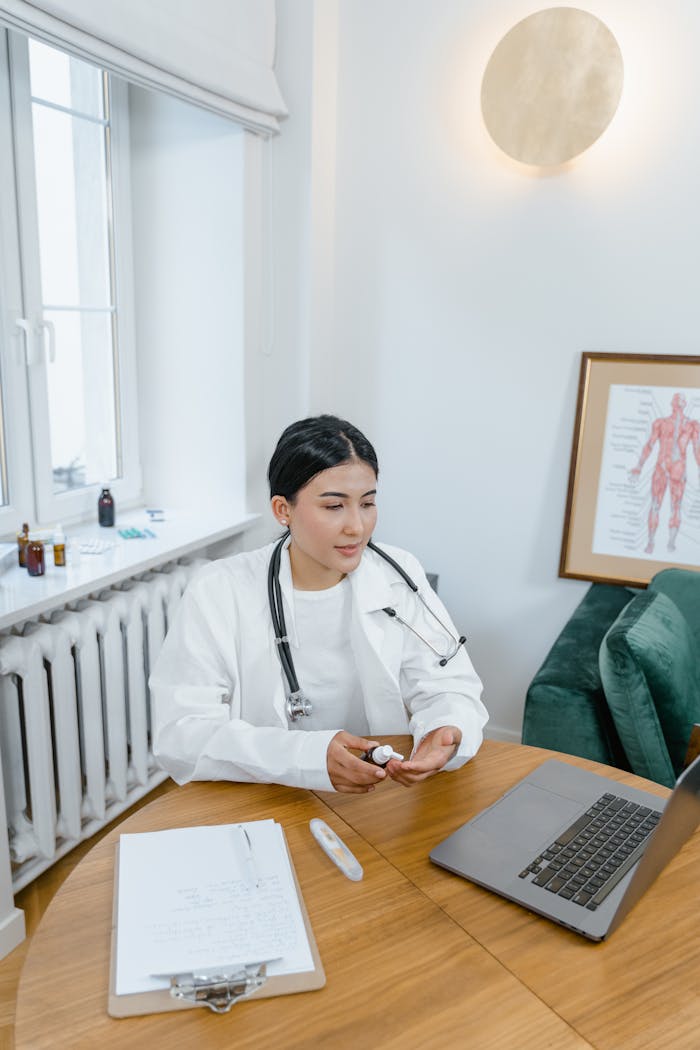


Work and recovery shouldn’t compete for your time. At EveningIOP, we’ve built a treatment program that fits into your life, not the other way around.
Evening IOP clinicians online are available when traditional programs aren’t, giving you access to expert care after hours. This means you can pursue treatment without sacrificing your job, family, or responsibilities.
Why Evening Programs Work for Working Professionals
Treatment Fits Your Schedule, Not the Other Way Around
Traditional daytime IOP programs force a choice between your paycheck and your recovery. Most programs run during standard business hours, which means taking time off work, risking your job stability, or explaining absences to your employer. Evening IOP eliminates this false choice entirely. When treatment runs from 5 p.m. to 9 p.m., you attend sessions after work ends, keeping your employment intact and your income flowing. This matters because financial stress is a known relapse trigger. Research shows that individuals who maintain employment during treatment have significantly higher completion rates than those who don’t.
Clinical Intensity Meets Evening Availability
Evening programs deliver the same clinical rigor as daytime alternatives. You receive interactive group therapy with licensed clinicians, one-on-one sessions tailored to your specific challenges, and remote drug and alcohol testing for accountability-all scheduled when your workday finishes. Your clinician adjusts your treatment plan weekly based on your progress and test results, meaning your care evolves as you do. The structured sessions provide the daily touchpoint that separates intensive outpatient care from weekly therapy. You access consistent clinical support and peer connection multiple times per week, not once. This frequency matters for building sustainable coping skills and addressing co-occurring issues that often accompany substance use disorders.
Why Extended Engagement Produces Better Outcomes
Longer duration in outpatient treatment leads to better recovery outcomes, and evening programs make extended engagement possible because people actually show up. When treatment fits your life rather than disrupting it, you complete the full program and stick with aftercare at higher rates. Remote testing adds another layer of accountability without requiring you to miss work for lab visits.

The combination of group accountability, individual clinical guidance, and objective monitoring creates conditions where real change happens. Your next step involves understanding what actually happens inside these evening sessions and how the structure supports your specific recovery needs.
What Actually Happens in Evening Sessions
Raw Conversations With Peers in Your Exact Situation
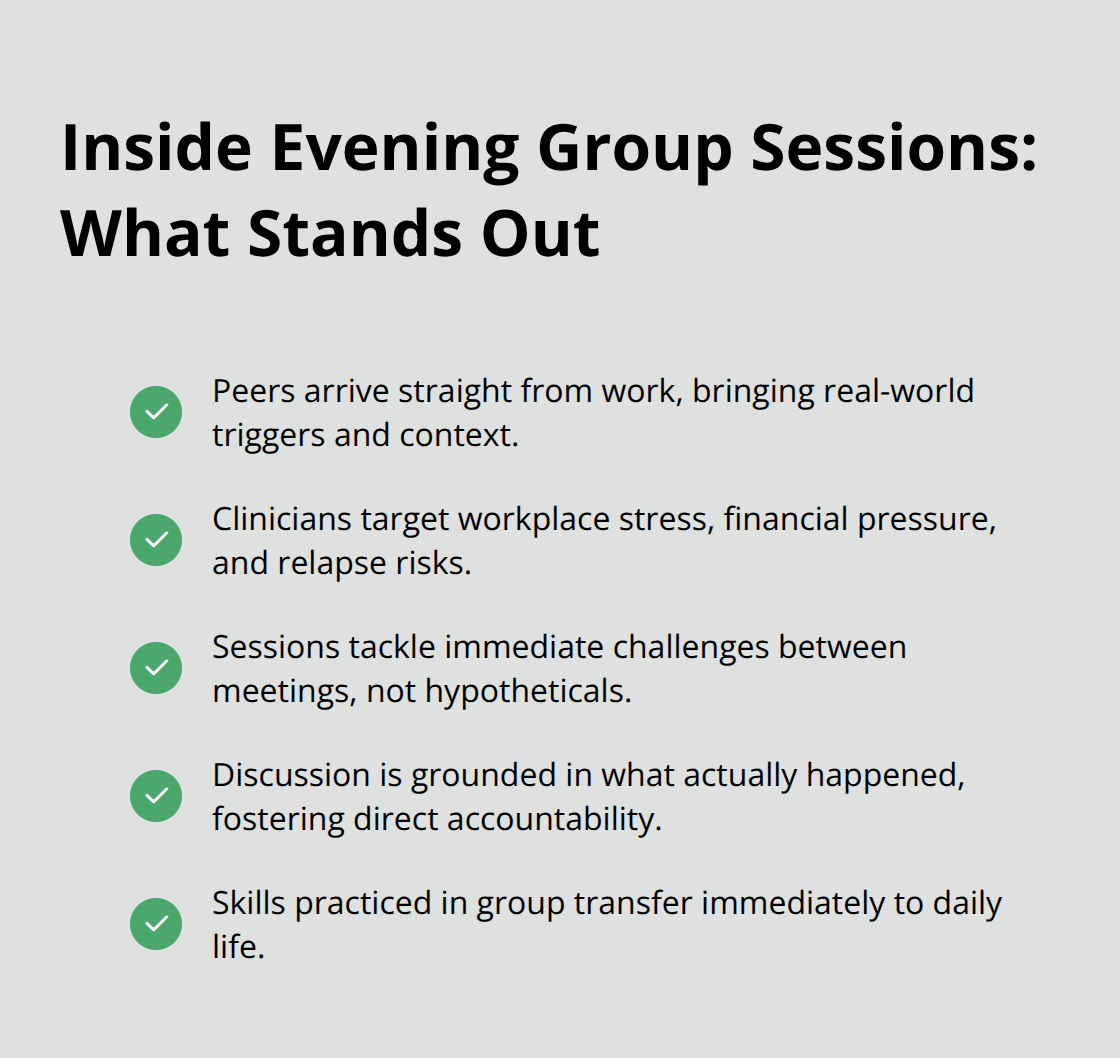
Group therapy in evening programs operates differently than daytime cohorts because participants arrive with different energy levels and immediate stressors. After a full workday, you sit in a room with peers who just left their jobs, their families, their real-world triggers-not people who’ve been in treatment all day. This creates raw, honest conversations about managing recovery while maintaining employment and relationships. Licensed clinicians facilitate these sessions with specific focus on workplace stress, financial pressure, and the particular relapse risks that working professionals face. Evening programs address immediate challenges people encounter between sessions rather than theoretical scenarios. Your clinician asks what actually happened at work yesterday and how you handled it, not what you might do if tempted. This directness matters because the skills you practice in group transfer immediately to your life.
Individual Guidance Adjusted to Your Progress Data
One-on-one sessions happen on the same evening schedule, allowing your clinician to examine patterns that emerge during group work. Your clinician reviews your remote test results weekly and adjusts your treatment plan based on objective data, not assumptions. If your results show consistent sobriety but your stress levels spike on certain days, your clinician modifies your coping strategies for those specific times. This personalized approach means your treatment evolves as you progress through the program. The individual sessions complement group work by addressing challenges that require deeper exploration and confidential discussion.
Testing That Fits Your Schedule, Not the Other Way Around
Remote drug and alcohol testing removes the barrier of traveling to a lab, which working professionals often skip or reschedule. Testing happens at home using equipment shipped to you, and results reach your clinician within 24 hours. This accountability structure works because it’s seamless; you don’t sacrifice work time or childcare to prove your commitment to recovery. The objective data your clinician receives informs every treatment adjustment and validates your progress in concrete terms.
How These Elements Work Together
The combination of group accountability with peers in your exact situation, individual clinical guidance adjusted to your progress data, and objective testing that fits your schedule creates a treatment environment that actually works for people with jobs and families. Evening programs succeed because they acknowledge that your recovery matters, and so does your paycheck. Understanding how this structure supports your specific needs is one thing; knowing what to expect on your first night is another.
Your First Night: What the Structure Actually Looks Like
The Evening Session Timeline
Your first evening session starts at 5 p.m., and you’ll spend roughly two to three hours in structured group therapy, individual clinical time, and psychoeducational components. The program runs three to five evenings per week depending on your treatment plan, which your clinician determines after your initial assessment. When you log in for your first session, you enter a telehealth platform where your licensed clinician and peer group are already present. The group typically includes six to twelve people at various stages of recovery, all working full-time jobs, all managing real responsibilities outside the program.
How Your Clinician Opens Each Session
Your clinician opens with a structured check-in where you report how the past 24 hours went: what triggered you, what coping strategies you used, and what your remote test results showed. This isn’t theoretical discussion-it’s immediate accountability tied to your actual behavior and objective data.

Your clinician asks what actually happened at work yesterday and how you handled it, not what you might do if tempted. This directness matters because the skills you practice in group transfer immediately to your life.
Individual Sessions Within the Evening Window
Individual sessions happen within that same evening window, usually 30 to 50 minutes with your assigned clinician. Your clinician reviews your test results from the past week, identifies patterns in your behavior or stress levels, and adjusts your treatment plan accordingly. If your results show consistent sobriety but your anxiety spikes on Wednesday nights, your clinician doesn’t wait-they modify your coping strategies for that specific time. This personalized approach means your treatment evolves as you progress through the program.
Remote Testing That Removes Barriers
Remote testing happens at home using equipment shipped to you, with results reaching your clinician within 24 hours. This matters because you don’t sacrifice work time to prove your commitment. The objective data your clinician receives informs every treatment adjustment and validates your progress in concrete terms. Testing removes the barrier of traveling to a lab, which working professionals often skip or reschedule.
How Structure Supports Real-World Application
The combination of immediate group accountability, personalized clinical guidance based on objective data, and seamless testing creates a treatment rhythm that actually fits professional life. Your clinician measures your progress against concrete benchmarks-test results, coping skill application, session attendance-not vague improvements. Evening IOP participants who complete the program show sustained recovery because the structure supports real-world application of skills between sessions, not isolated progress during treatment hours.
Final Thoughts
Recovery doesn’t happen in isolation from your life-it happens within it. Evening IOP clinicians online remove the forced choice between your job and your health by delivering treatment after your workday ends. We at EveningIOP built this program specifically for people who can’t afford to pause their lives, so you maintain employment, keep your income stable, and show up for treatment without sacrificing what matters.
The evidence supports what working professionals already know: people who maintain employment during treatment complete programs at significantly higher rates, and longer duration in outpatient care produces better outcomes. Evening programs succeed where others fail because they fit into how people actually live, with peers managing identical pressures and clinicians who adjust your care based on real progress data (test results, coping skill application, session attendance). Remote testing removes the barrier of lab visits that working professionals skip, creating accountability without disruption.
EveningIOP offers live, telehealth evening Intensive Outpatient Programs with interactive group therapy, one-on-one sessions with licensed clinicians, and remote drug and alcohol testing. Your recovery is possible without sacrificing your paycheck or your family-start today.