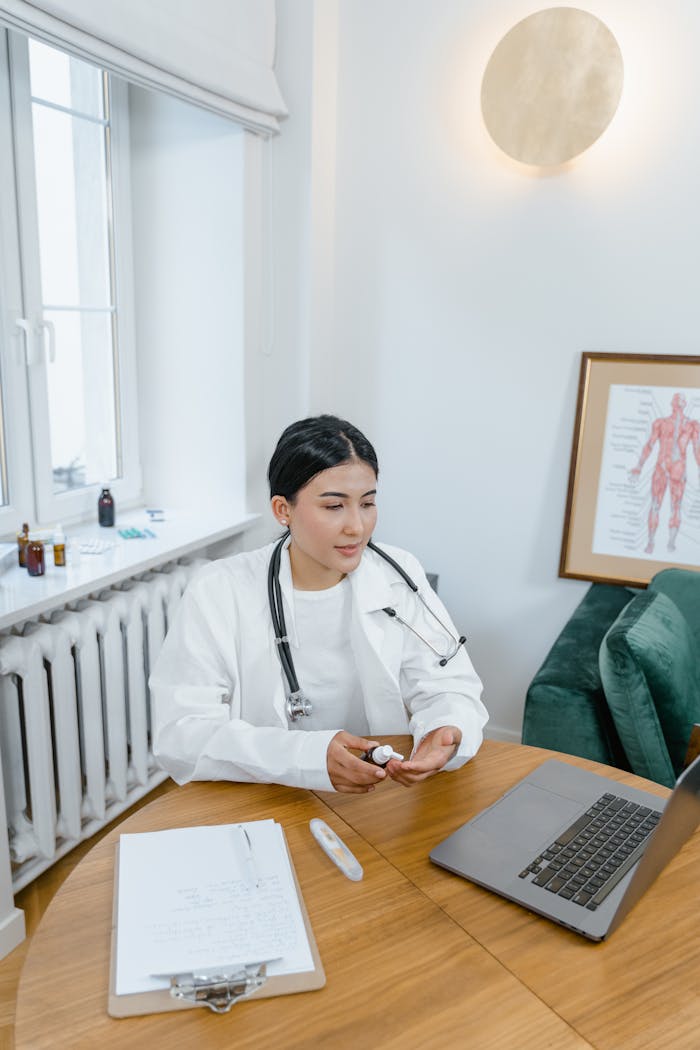


Addiction treatment shouldn’t force you to choose between recovery and your career. At EveningIOP, we built our evening IOP telehealth program specifically for working professionals who need flexibility without sacrificing quality care.
You can attend therapy sessions after work, maintain your job, and stay present for your family. Real recovery happens when treatment fits your life, not the other way around.
Why Evening Programs Actually Work for Working Professionals
SAMHSA data show that a large portion of individuals struggling with substance use disorders hold jobs, yet traditional daytime programs force them into an impossible choice-recovery or a paycheck. Evening IOP telehealth programs work because they align treatment with how working professionals actually live. You attend sessions after your workday ends, maintain your employment, and show up for your family without gaps in your schedule. This isn’t just convenience; it’s a structural advantage that changes treatment outcomes. When you don’t lose income during recovery, you stay engaged. When your family doesn’t fracture around treatment schedules, you have support at home. When therapy happens at 7 PM instead of 2 PM, your boss never needs to know you’re in treatment. Research consistently demonstrates that people who maintain employment during outpatient care show stronger commitment to their recovery plan. The reason is straightforward: your life doesn’t pause while you heal, so treatment shouldn’t demand that it does.
Group Therapy That Actually Connects
Evening group sessions bring together professionals who face the same pressures-work stress, family obligations, financial anxiety. Unlike daytime groups where participants may feel isolated or mismatched, evening cohorts naturally share similar life circumstances. You sit with accountants, nurses, teachers, and managers who understand the specific challenges of balancing a demanding career with recovery. This peer connection matters. Licensed clinicians use evidence-based modalities like Cognitive Behavioral Therapy and Dialectical Behavior Therapy within these group settings, teaching concrete skills you apply immediately: managing workplace triggers, setting boundaries with colleagues, rebuilding trust with family. The structure runs 9 to 12 hours per week across multiple evening sessions, providing the intensity needed for real change without the disruption of inpatient stays. Outcome data from similar programs show measurable improvements in mental health outcomes by discharge. That’s measurable change in how you feel and function.
Personalized Plans from Licensed Professionals
Your addiction story isn’t generic, so treatment shouldn’t be either. Intake assessments conducted through licensed clinicians match you to a primary therapist based on your specific struggles, goals, age, and the evidence-based approaches most likely to work for you. This matching process means your individual sessions aren’t generic check-ins; they’re targeted work on the exact issues driving your substance use. Your clinician adjusts your plan as you progress, recognizing that week two looks different from week eight. Remote drug and alcohol testing happens throughout your participation, providing objective accountability while you work from home or manage evening commitments. This combination-personalized therapy, regular testing, and clinicians who understand working life-creates the conditions where recovery actually sticks.
Starting Treatment Without Delay
You don’t sit in limbo wrestling with your decision. Treatment can start within 24 hours, which means you build momentum while motivation is highest. The intake process moves quickly, and licensed professionals conduct your initial assessment to determine the right fit for your situation. This speed matters because every day you wait is another day the cycle continues. Evening IOP telehealth removes the friction that stops people from seeking help in the first place. You work during the day, attend sessions at night, and maintain the structure that keeps your life stable. What happens next depends on what you actually experience in those first sessions-how the group feels, whether your therapist understands your specific challenges, and whether the schedule truly works with your obligations.
Why Evening Telehealth Beats the Traditional Rehab Model
Traditional rehab demands sacrifice in ways that evening telehealth programs simply don’t. Inpatient facilities require you to step away from work entirely, often for 28 to 90 days. That means lost income, explaining your absence to employers, and watching your responsibilities pile up while you’re gone. PHP and standard IOP programs operate on daytime schedules, forcing you to choose between therapy sessions and your job.
Work Continues While You Heal
Evening IOP telehealth removes this false choice altogether. You work your full schedule, attend sessions after 5 PM, and maintain the income that keeps your family stable. SAMHSA data show that employed individuals in treatment demonstrate stronger commitment to their recovery plans compared to those who lose employment during care. That’s not coincidence; financial stability directly supports recovery outcomes.
Your paycheck doesn’t stop. Your health insurance continues. Your employer never needs to know you’re in treatment. This stability matters far more than most people realize-it’s the difference between recovery that sticks and relapse that happens when financial pressure mounts.
Testing That Fits Your Life
Remote drug and alcohol testing eliminates another major friction point. Traditional programs require you to leave work, drive to a facility, wait in a lobby, and submit to testing during business hours. With evening telehealth, testing happens on your schedule through secure, HIPAA-compliant platforms. You complete the test from home after work or during lunch without alerting your workplace.
This accountability remains absolute-results track your progress objectively-but the logistics stop disrupting your life. You maintain the same level of clinical oversight without the constant disruption to your workday.
Real-World Skill Application
Interactive online sessions create another significant advantage over traditional rehab. In-person facilities isolate you from your normal environment, which can feel safe initially but disconnects you from the actual triggers and stressors you’ll face when treatment ends. Evening telehealth sessions happen in your real world.
You attend group therapy at 7 PM, then immediately manage the evening situations that challenge your recovery-workplace stress still fresh, family dynamics still active, environmental cues still present. Your licensed clinician guides you through these real situations as they happen, not theoretical scenarios from a treatment facility. You learn coping skills in the exact contexts where you’ll use them.
Intensity Without Isolation
The program structure runs nine to twelve hours per week across multiple evening sessions, providing genuine intensity without the residential disruption. One-on-one sessions with your primary therapist happen on a flexible schedule that accommodates your calendar, not a rigid facility timetable. Group sessions use evidence-based modalities like CBT and DBT in cohorts of working professionals who understand your actual life pressures.
This combination-real-world application, maintained employment, objective testing, and clinician-guided skill development during your actual evening-creates treatment outcomes that traditional rehab cannot match. Traditional rehab removes you from the life you’re trying to fix. Evening telehealth keeps you in it, teaching you to navigate recovery while your actual responsibilities remain present. For those who need additional support, consider exploring telehealth treatment options that can offer professional guidance during your recovery journey. What separates people who sustain recovery from those who relapse isn’t the intensity of initial treatment; it’s whether they learned to manage their real life while healing.
What Actually Happens During Evening IOP Treatment
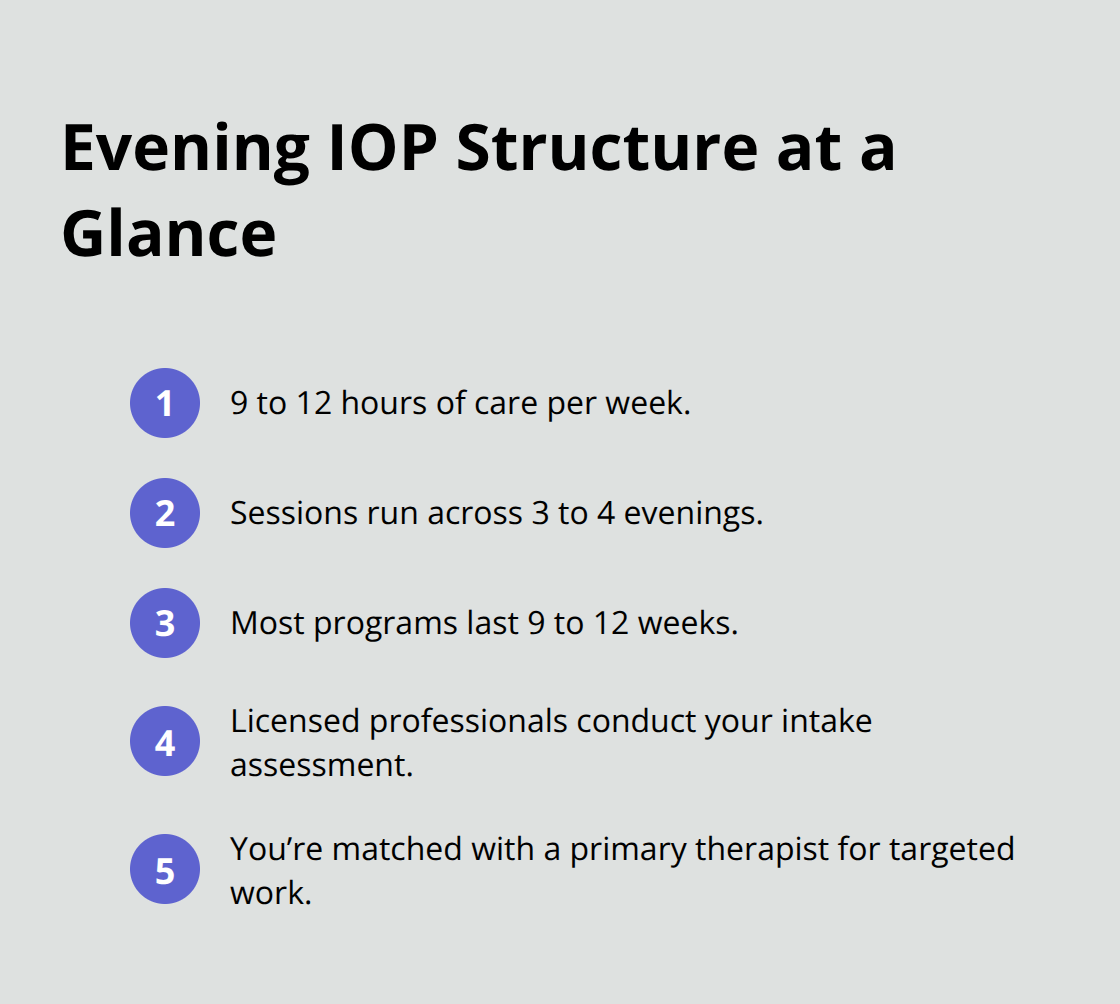
Your first session starts with clarity about structure. Evening IOP runs 9 to 12 hours per week, typically across three to four nights, with most programs lasting 9 to 12 weeks total. Licensed professionals conduct your intake assessment to match you with a primary therapist based on your specific struggles, recovery goals, and the evidence-based approaches most likely to work. This matching matters because generic treatment fails; personalized placement succeeds.
How Your Treatment Plan Takes Shape
Your group cohort consists of working professionals who face similar pressures, not a random mix of daytime participants with different life circumstances. Group sessions use Cognitive Behavioral Therapy and Dialectical Behavior Therapy modalities to teach concrete skills you apply immediately to workplace triggers, family relationships, and the specific situations that previously led to substance use. One-on-one sessions with your assigned clinician happen on a flexible schedule, allowing you to address personal issues that don’t fit group time without disrupting your work calendar. The clinician adjusts your treatment plan continuously, recognizing that week three progress looks different from week nine.
Remote Testing Maintains Accountability
Remote drug and alcohol testing provides accountability without workplace disruption. You complete testing from home through secure, HIPAA-compliant platforms on a schedule your clinician establishes, with results tracked objectively to measure your progress. This testing happens alongside therapy, not as punishment but as clinical data that informs your treatment adjustments. If you struggle with a particular coping skill, your clinician sees that pattern and intensifies work in that area during your individual sessions.
Evening Sessions Fit Your Work Schedule
The program structure assumes you work full-time, manage family obligations, and handle real-world stress simultaneously. Evening sessions start after 5 PM, allowing you to complete your workday without rushing or explaining absences. If group dynamics shift, your primary therapist recognizes it and addresses it directly.
Family therapy sessions for addiction recovery build the support system research shows predicts stronger long-term outcomes (this support network becomes essential for sustained recovery after treatment ends).
Your Timeline and Progress
Most clients complete the program within the 9 to 12 week window under their primary therapist’s guidance, though your specific timeline depends on your individual progress and clinical needs. Your clinician tracks objective data from testing results, skill application in group work, and personal breakthroughs in individual sessions to determine when you’ve built sufficient stability to transition to aftercare. The program doesn’t operate on a fixed calendar; it operates on your actual readiness.
Final Thoughts
Evening IOP telehealth programs remove the structural barriers that stop people from seeking treatment in the first place. You maintain your job, protect your income, and stay present for your family while attending sessions after work. This approach works because it acknowledges that your career, your family, and your recovery all matter simultaneously.
Licensed clinicians and proper accreditation matter because they guarantee clinical standards. When you choose an evening IOP telehealth program with rigorous licensing and oversight, you select accountability built into the system itself. These credentials represent ongoing professional standards and evidence-based practices that protect your recovery.
Starting treatment means deciding that your life matters more than the substance use controlling it. That decision happens fastest when treatment fits your actual circumstances rather than forcing you to restructure your entire existence. Your first 24 hours can begin immediately after intake, which means you build momentum while motivation is highest.