
Addiction treatment shouldn’t force you to choose between recovery and your career. At EveningIOP, we’ve built evening addiction care online specifically for working professionals who need flexibility without compromising results.
Your schedule is real. Your recovery deserves to be too.
Why Evening Programs Actually Work for Working Professionals
Most addiction treatment programs operate on a 9-to-5 schedule designed decades ago when people didn’t juggle remote work, childcare, and side gigs. That model fails working professionals. A 2022 JAMA Psychiatry study found that people who received telehealth follow-up care after addiction treatment stayed engaged three months later at 27% higher rates than those in traditional in-person programs. The reason is straightforward: evening and flexible scheduling removes the impossible choice between recovery and keeping your job. When treatment happens at 6 PM instead of 10 AM, you don’t lose income, don’t explain absences to your employer, and don’t rack up childcare costs.
How Evening Sessions Protect Your Paycheck
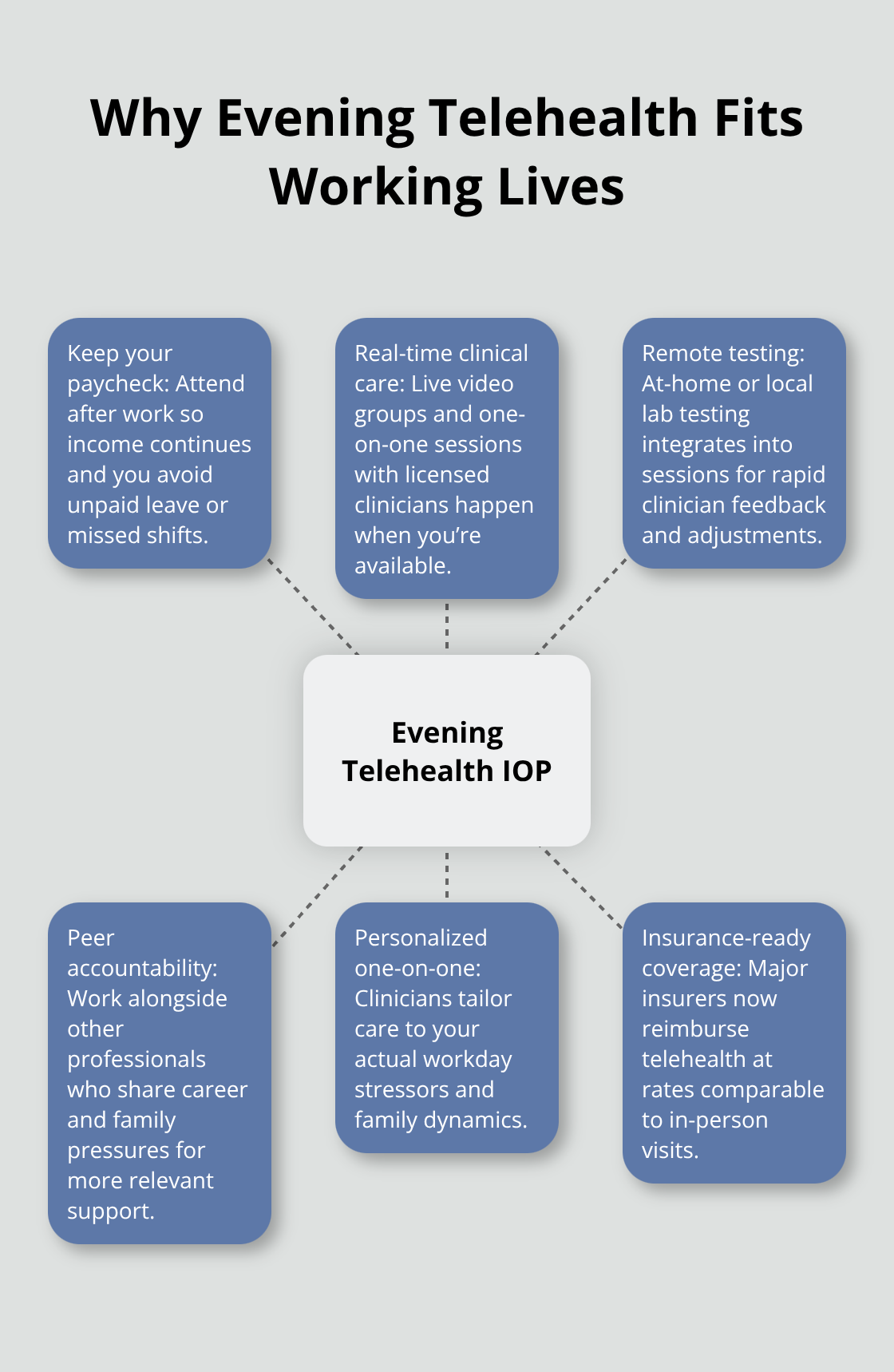
Traditional inpatient rehab costs between $15,000 and $100,000 for a 30-day stay, and that’s before calculating lost wages, childcare expenses, and unpaid leave. Evening outpatient programs cost substantially less because you maintain employment throughout treatment. For a parent earning $50,000 annually, taking two months off work for inpatient treatment means losing roughly $8,300 in gross income plus childcare costs that can easily exceed $2,000 per month. Evening programs eliminate that financial hemorrhage. You work during the day, attend therapy in the evening, and your paycheck keeps flowing.
Insurance coverage for telehealth addiction services has expanded significantly, with major insurers like Aetna, Cigna, and UnitedHealthcare now covering online sessions at rates comparable to in-person visits. Many programs accept VA benefits and other payment plans, which makes evening care accessible even if insurance doesn’t cover the full cost.
Real-Time Clinical Care After Work Hours
Live telehealth sessions specifically during evening hours mean you attend group therapy and one-on-one sessions with licensed clinicians after work ends, not during it. This isn’t pre-recorded content or asynchronous modules you complete whenever-it’s real-time clinical care that fits your actual life. Licensed clinicians provide personalized treatment that adjusts to your progress and circumstances.
Accountability That Respects Your Privacy
Remote drug and alcohol testing through evening programs maintains clinical accountability while preserving privacy. You can complete testing from home or a local lab near your workplace, and results integrate directly into your treatment plan. Licensed clinicians review results during your scheduled sessions and adjust therapy accordingly.
Group therapy happens live in the evening, meaning you interact with other working professionals in similar situations-people managing careers, families, and recovery simultaneously. This peer accountability matters more than generic support because it comes from people who understand your specific constraints. You’re not sitting in a daytime group with unemployed individuals or retirees; you’re connected with working parents, professionals, and entrepreneurs who solve the same scheduling puzzle you face.
Understanding how evening programs work is one thing. What actually happens inside those sessions-the specific therapies, the clinical structure, the measurable outcomes-is what separates effective treatment from convenient scheduling.
How Evening Telehealth Addiction Treatment Produces Measurable Recovery
Live Group Therapy Delivers Real Clinical Outcomes
Live interactive group sessions conducted over video during evening hours generate the same clinical outcomes as in-person sessions, according to research on telehealth addiction treatment. The difference is accountability happens when you’re available. Licensed clinicians facilitate real-time discussions about triggers, coping strategies, and progress with other working professionals facing identical recovery challenges. Your peers understand professional deadlines, salary negotiations, and career anxiety as genuine recovery obstacles-not theoretical problems. This peer accountability matters more than generic support because it comes from people who solve the same scheduling puzzle you face.
One-on-One Sessions Adjust to Your Real Life
One-on-one sessions with licensed clinicians adjust your treatment plan based on what you actually experience during your workday and home life, not hypothetical scenarios. Evidence-based therapies like cognitive behavioral therapy and motivational interviewing work identically in evening virtual settings as they do in daytime in-person programs. Licensed clinicians provide personalized care that addresses your specific triggers, your workplace stress patterns, and your family dynamics without generic templates. Your clinician responds to your actual circumstances rather than applying a standard protocol to everyone.
Remote Testing Closes the Feedback Loop
Remote drug and alcohol testing integrates directly into your evening sessions, meaning results appear in your treatment file within hours rather than days. Your clinician addresses any concerning patterns immediately during your next scheduled appointment. This compressed feedback loop between testing and clinical response prevents small setbacks from becoming relapses. The testing itself happens on your schedule-home collection kits, local lab visits near your office, or testing during your evening session, depending on your preference and your clinician’s recommendations.
Structured Intensity Without Residential Costs
The structured daily sessions without residential commitment keep your income flowing while delivering clinical intensity comparable to inpatient programs. You maintain employment throughout treatment, which eliminates the financial burden of lost wages and childcare expenses. Evening programs remove the impossible choice between recovery and keeping your job. What separates effective treatment from convenient scheduling, however, is understanding what actually happens inside those sessions and how your treatment plan progresses over time.
What Happens During Your Evening Intensive Outpatient Program
An evening intensive outpatient program operates on a compressed clinical schedule that delivers the same treatment intensity as traditional daytime programs, but structured around your actual availability. You attend sessions three to five nights per week for two to four hours each evening, typically starting at 5 PM or 6 PM and running until 8 PM or 9 PM. This schedule means you complete a full day of work, attend therapy, and return home with time to manage family responsibilities or rest before the next workday.
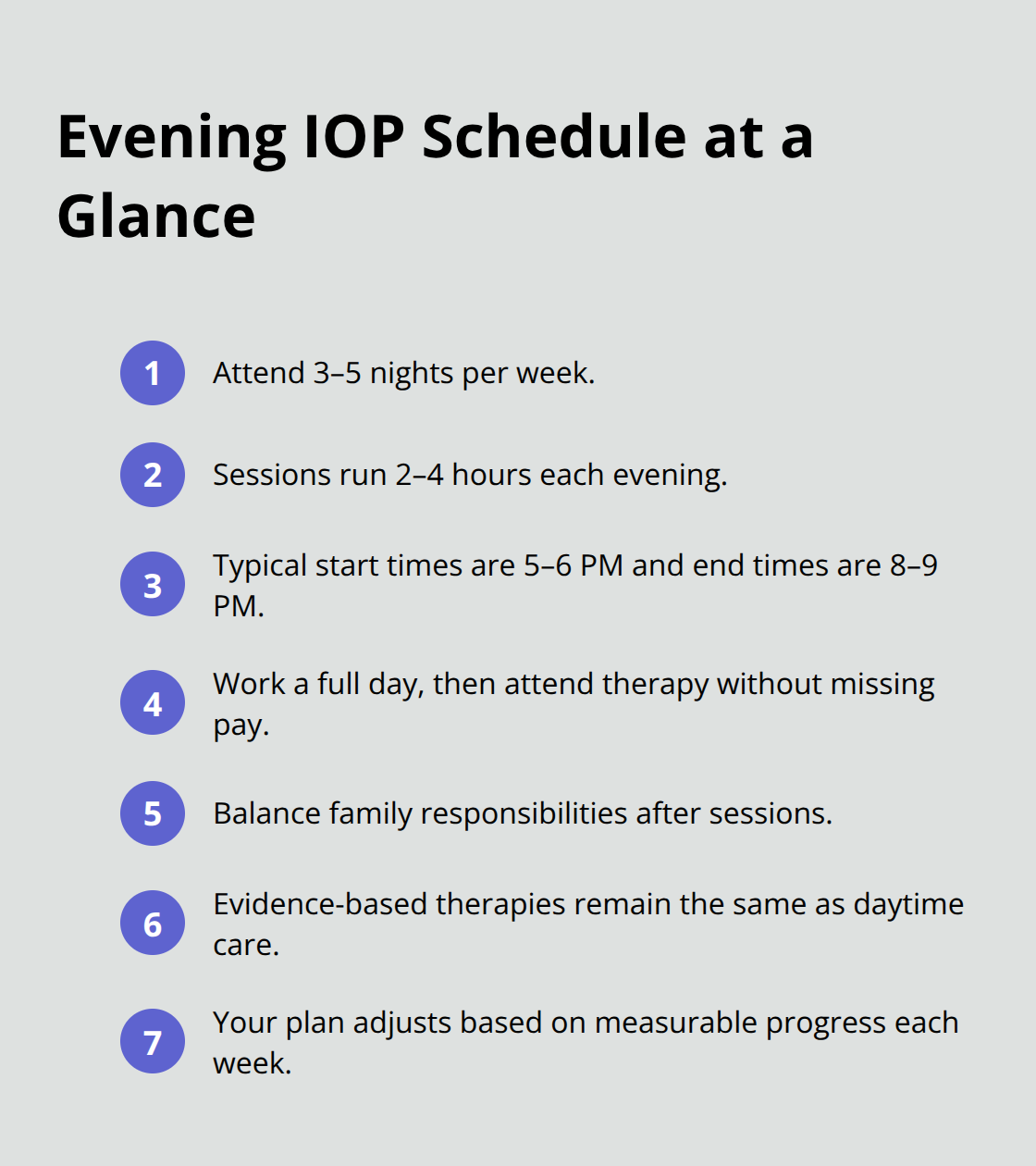
The clinical content doesn’t change because the clock changes-your therapist still applies evidence-based approaches like cognitive behavioral therapy and motivational interviewing, your group still processes real triggers and coping strategies, and your treatment plan still adjusts based on measurable progress.
How Evening Structure Protects Your Work Life
What changes is the logistics: you don’t lose eight hours of work time per week, you don’t explain repeated absences to your employer, and you don’t sacrifice income during recovery. Canadian Addiction Treatment Centres reports a 94% satisfaction rate for their virtual intensive outpatient program, with over 85% of participants achieving at least one recovery goal. This proves that evening scheduling doesn’t compromise clinical outcomes-it actually improves engagement because people can show up consistently. The structured format (same days, same times each week) creates routine and accountability without the residential commitment that costs $15,000 to $100,000 for 30 days.
What Happens Inside Your Evening Sessions
Your typical evening session includes group therapy facilitated by licensed clinicians where you work through triggers with other working professionals, one-on-one sessions where your clinician adjusts your treatment plan based on what you experienced that week at work or home, and integrated remote drug and alcohol testing that produces results within hours rather than days. Licensed clinicians provide medication-assisted treatment for substance use and co-occurring mental health conditions if needed. Between sessions, you access educational modules, progress tracking, and secure messaging with your clinical team through the telehealth platform, so support continues when your evening session ends.
Real Clinical Results from Evening Intensity
You work during the day, attend therapy at night, and maintain employment throughout treatment, which eliminates the financial devastation of lost wages and childcare expenses that typically derails recovery for working professionals. This compressed evening intensity produces real clinical results because you stay engaged enough to show up consistently and motivated enough to apply what you learn immediately in your actual work and home environment the next day. Licensed clinicians adjust your treatment based on what you actually experience during your workday and home life, not hypothetical scenarios (evidence-based therapies like cognitive behavioral therapy and motivational interviewing work identically in evening virtual settings as they do in daytime in-person programs).
Final Thoughts
Evening addiction care online removes the artificial barrier that forces working professionals to choose between recovery and financial survival. Traditional treatment demands you disappear from your job for weeks or months, sacrificing income and career momentum while paying $15,000 to $100,000 for residential care. Evening intensive outpatient programs eliminate that impossible choice by letting you work during the day, attend live clinical sessions in the evening, and maintain employment throughout treatment.
Clinical evidence supports what working professionals already know: evening scheduling improves engagement and outcomes. A 2022 JAMA Psychiatry study found that people receiving telehealth follow-up care stayed engaged at 27% higher rates than those in traditional programs, while Canadian Addiction Treatment Centres reports 94% satisfaction rates for virtual intensive outpatient programs, with over 85% of participants achieving at least one recovery goal.
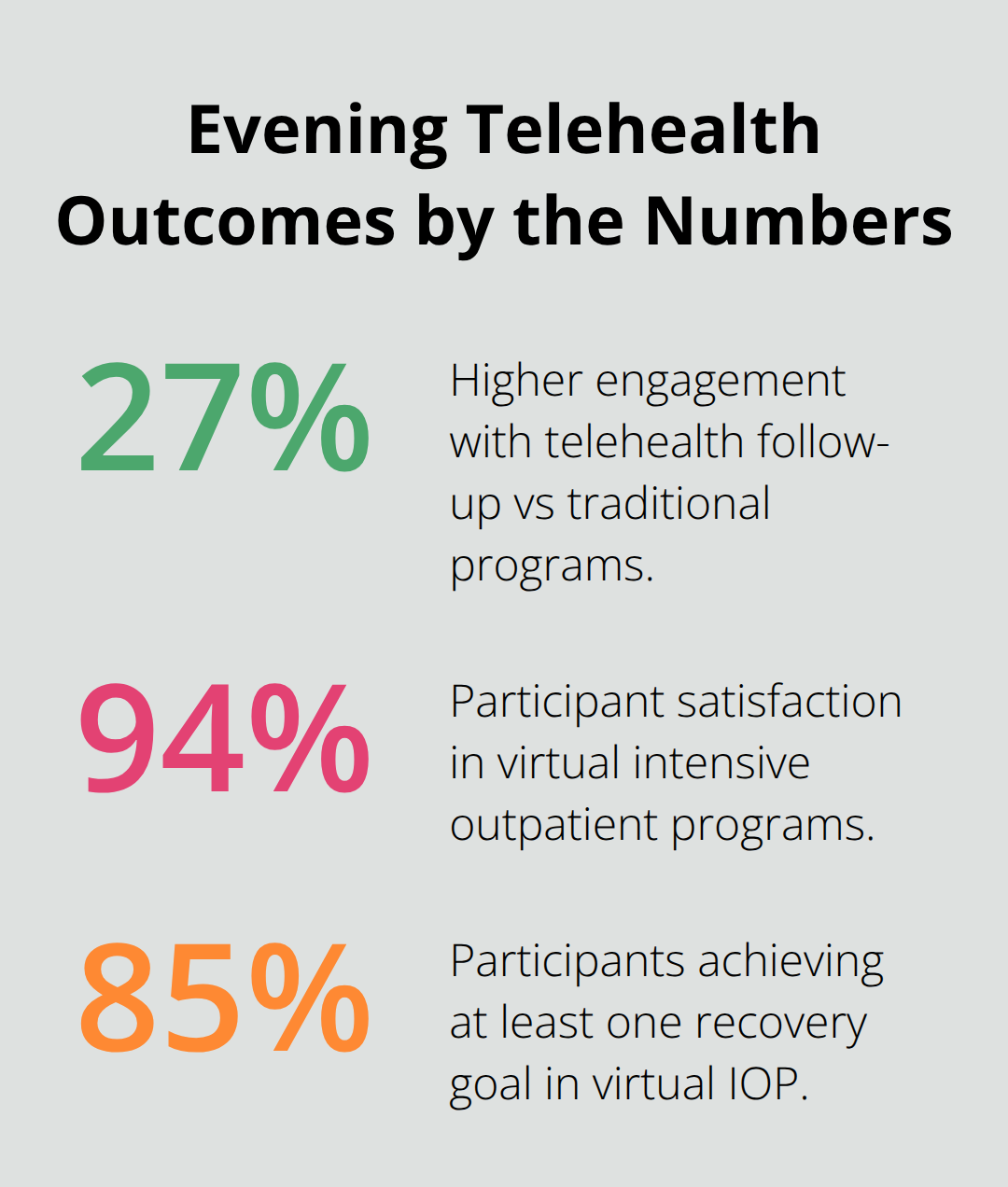
These numbers prove that evening intensity strengthens results because people show up consistently and apply what they learn immediately in their real lives.
EveningIOP provides live telehealth evening intensive outpatient programs that combine interactive group therapy, one-on-one sessions with licensed clinicians, and remote drug and alcohol testing. Your recovery happens when you’re available, not when treatment schedules demand it. That alignment between your life and your treatment changes everything about whether you stay engaged long enough to build sustained sobriety.