
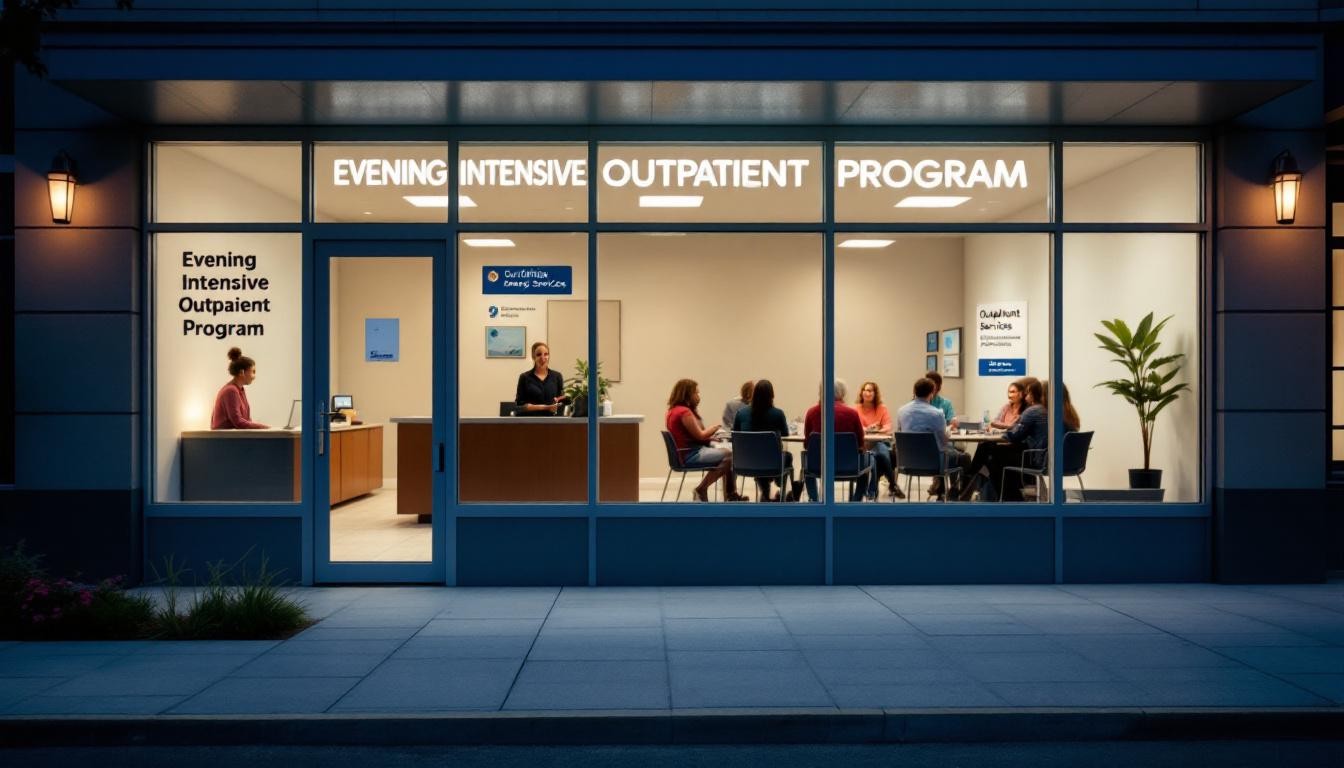
Substance use disorder treatment shouldn’t force you to choose between recovery and your career. At EveningIOP, we know that traditional daytime programs don’t work for everyone-especially working professionals who need flexibility.
An evening intensive outpatient program removes that barrier. You get comprehensive clinical care, therapy, and peer support scheduled around your work life, not against it.
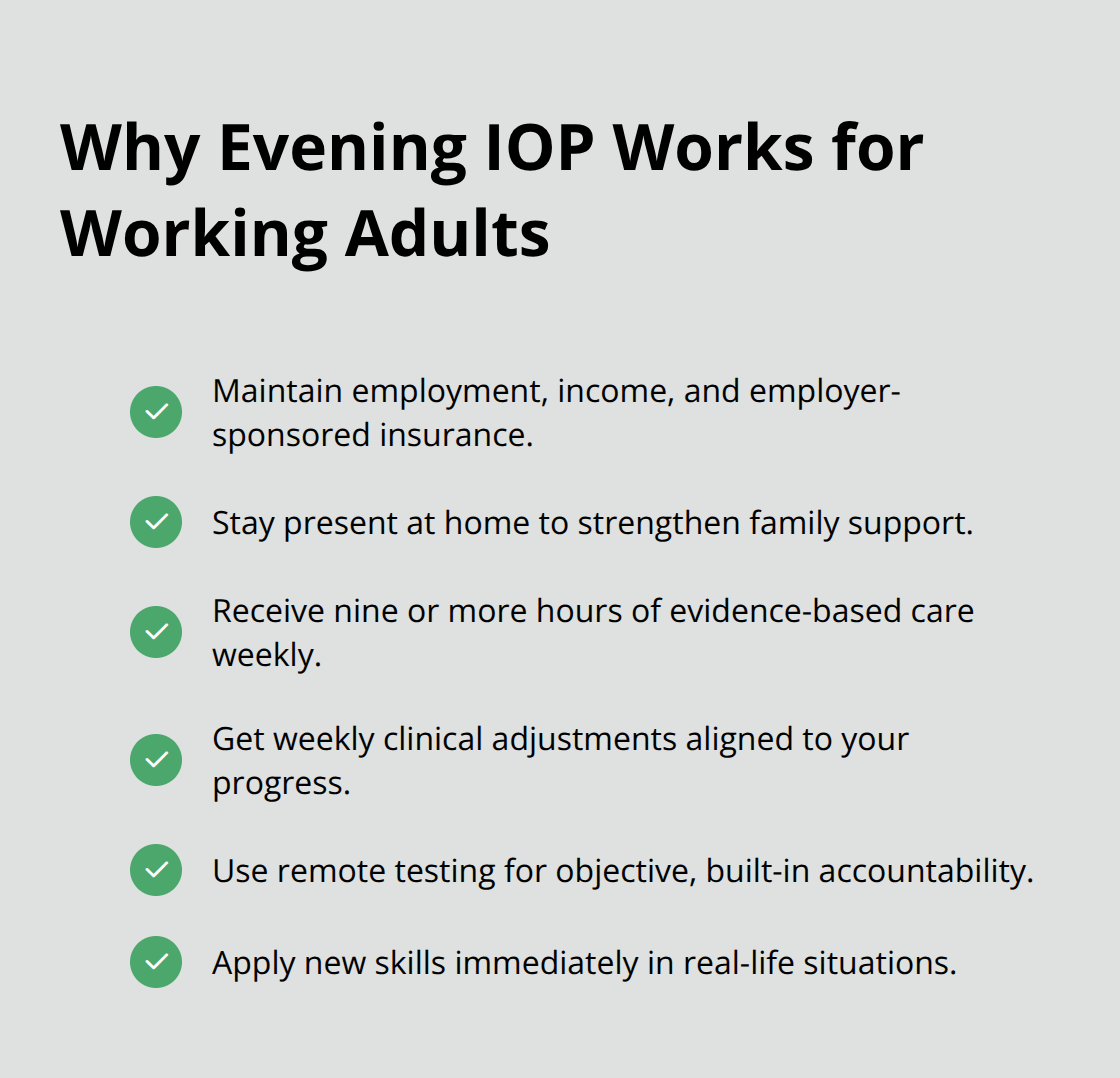
Why Evening Programs Work for Working Adults
Employment Protects Recovery
The statistics are clear: people who maintain employment during treatment achieve significantly better recovery outcomes. Research from the Substance Abuse and Mental Health Services Administration shows that outpatient treatment combined with consistent personal commitment produces lasting results. Evening intensive outpatient programs remove the false choice between keeping your job and getting help. You attend sessions after work ends, which means you keep your paycheck, your health insurance through your employer, and the stability that employment provides. This matters because financial stress is a known relapse trigger. When you worry about losing income or benefits, your recovery becomes harder. An evening program eliminates that pressure entirely.
Structured Care Without Life Disruption
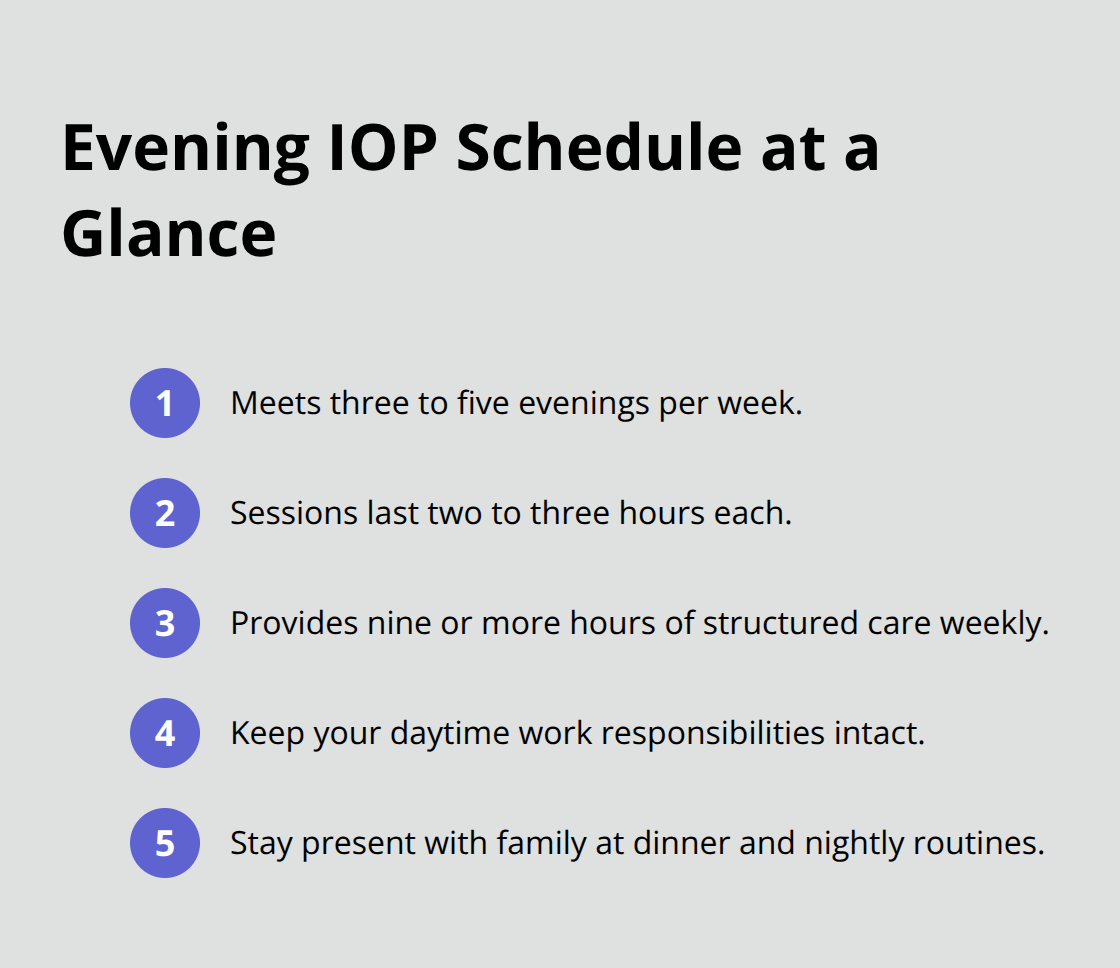
Most evening programs meet three to five evenings per week for two to three hours each session, which totals nine or more hours of structured clinical care weekly without requiring you to disappear from your life. You handle your morning responsibilities, show up at work, and arrive at treatment afterward. Your family sees you at dinner.
Your kids experience a parent who remains present and engaged. Your spouse or partner maintains their own routine without becoming a temporary single parent. This stability at home actually accelerates recovery because people in supportive environments show higher treatment retention and better long-term outcomes.
How Evening Sessions Fit Real Life
The practical advantage extends beyond working hours. Evening programs allow you to live at home while receiving comprehensive care (individual therapy, group sessions, and clinical monitoring) that rivals residential treatment intensity. You apply skills learned in sessions to real-life situations immediately, which improves how well you transfer what you learn into daily life. This model works because it acknowledges that recovery happens in context-within your actual relationships, your actual job, your actual home. When treatment fits around your life instead of replacing it, you stay engaged longer and build recovery skills that stick.
What Comprehensive Evening Care Includes
Evening intensive outpatient programs deliver evidence-based therapies such as Cognitive-Behavioral Therapy and Dialectical Behavior Therapy, combined with group support and individual clinical work. Licensed clinicians evaluate your progress weekly and adjust your treatment plan accordingly. You participate in peer-led group therapy where accountability and shared progress reinforce your commitment. Case management coordinates your services and supports ongoing recovery. This combination of clinical rigor and peer support creates the conditions where people actually change.
The structure and flexibility of evening programs address what working professionals need most: care that works with their reality, not against it. Understanding how these programs operate reveals why they produce results for people who thought treatment meant sacrificing everything else.
How Evening IOP Programs Actually Work
The Weekly Schedule That Fits Your Life
Evening intensive outpatient programs operate on a straightforward principle: deliver clinical intensity during hours when working professionals can actually attend. A typical evening program runs three to five nights per week, with each session lasting two to three hours. This schedule totals nine or more hours of structured care weekly, which matches the minimum threshold that research identifies as necessary for measurable treatment outcomes. The sessions start after work ends, typically between 5 and 7 PM, and run into the evening. This timing eliminates the scheduling conflict that derails most working people from treatment. You don’t need to negotiate time off, arrange childcare, or explain absences to your employer.
What Happens Inside Each Evening Session
The actual structure of an evening session combines individual therapy, group therapy, and clinical monitoring into a cohesive treatment experience. A typical evening includes a group therapy session where you work through coping strategies with peers facing similar challenges, followed by individual sessions with a licensed clinician who adjusts your treatment plan based on your weekly progress.
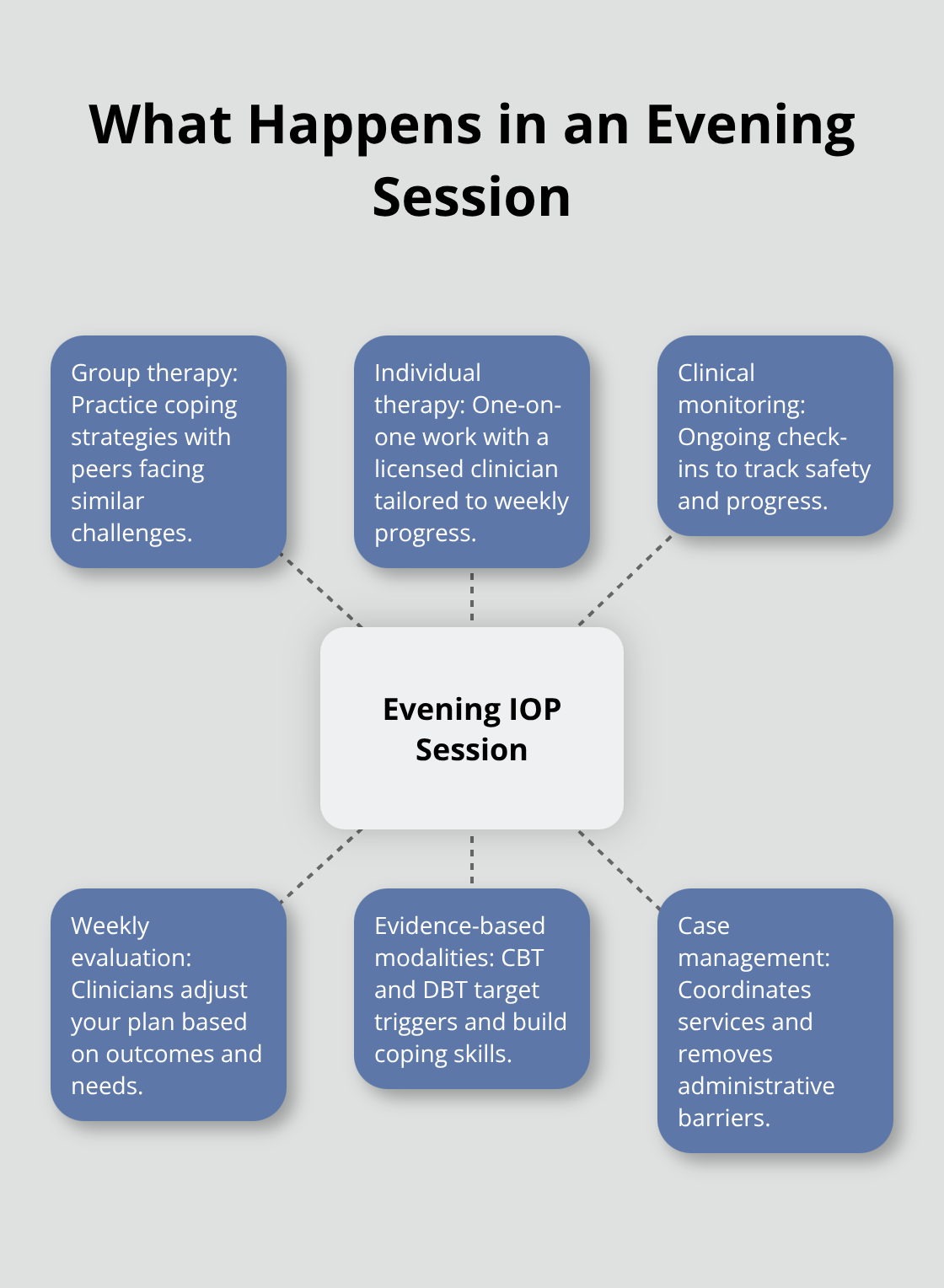
Licensed clinicians evaluate your advancement regularly and modify your clinical approach as needed, which means your treatment adapts to your actual recovery trajectory rather than following a generic template.
Evidence-based modalities like Cognitive-Behavioral Therapy and Dialectical Behavior Therapy form the foundation of these sessions, targeting specific triggers and building concrete coping skills you can apply immediately. Case management runs parallel to therapy, coordinating your services and removing administrative barriers that often derail recovery.
Accountability Built Into Treatment
Remote drug and alcohol testing provides objective accountability without requiring you to visit a separate lab location. This integration keeps the focus on treatment rather than logistics. Group therapy sessions emphasize peer support and accountability, which research shows produces measurable effects on treatment outcomes. The peer environment creates genuine motivation because you see others progressing through recovery and experience the mutual reinforcement of shared commitment.
Licensed clinicians adjust your treatment plan weekly based on your actual progress, which means your clinical approach responds to your recovery trajectory in real time. This responsiveness distinguishes evening intensive outpatient programs from standard outpatient care, where you might see a clinician once monthly and receive minimal adjustment to your treatment strategy. The combination of weekly clinical evaluation, evidence-based therapy, and peer accountability creates conditions where people actually change their relationship with substances and build sustainable recovery skills.
What you experience in these sessions translates directly to your daily life, which is where the real work of recovery happens.
What Actually Happens in Evening IOP Sessions
Individual Therapy Targets Your Specific Triggers
Evidence-based individual therapy forms the foundation of evening intensive outpatient programs. A licensed clinician works with you one-on-one to address your specific triggers, coping gaps, and recovery goals. These sessions happen weekly and focus on concrete skill-building rather than open-ended discussion. Your clinician uses Cognitive-Behavioral Therapy to identify the thought patterns that precede substance use, then teaches you to interrupt those patterns before they lead to use. Dialectical Behavior Therapy addresses emotional regulation-many people use substances to manage difficult feelings they lack other tools to handle. This targeted approach means your treatment responds to your actual recovery needs rather than following a generic template.
Group Therapy Builds Peer Accountability
Group therapy combines five to ten people in evening sessions focused on relapse prevention, stress management, and peer accountability. You work through practical problem-solving where you hear how others handle specific situations you face at work or home, then apply those strategies to your own life. Research shows that group settings produce stronger outcomes than individual therapy alone because peer feedback carries weight that clinician feedback cannot match. The peer environment creates genuine motivation because you see others progressing through recovery and experience the mutual reinforcement of shared commitment. This isn’t theoretical discussion about recovery-it’s practical application of skills to real situations.
Clinical Monitoring Provides Objective Accountability
Remote drug and alcohol testing integrates into your evening schedule and removes excuses while providing objective accountability without disrupting your workday. Licensed clinicians evaluate your progress during each session and adjust your therapy approach, group assignments, or clinical focus accordingly. This responsiveness matters because recovery isn’t linear-some weeks you struggle with cravings, other weeks with stress at work, and your treatment needs to match your current reality. Case management runs parallel to therapy, handling insurance verification, coordinating medication management if needed, and removing logistical barriers that derail people from attendance.
Weekly Adjustments Keep Treatment Aligned With Your Progress
Your treatment plan changes weekly based on your actual progress, not on a predetermined schedule. Licensed clinicians evaluate what’s working and what isn’t during each session, then modify your clinical strategy in real time. The combination of individual therapy, peer accountability, weekly clinical adjustment, and objective monitoring creates the conditions where behavioral change actually sticks because you practice new skills immediately in your actual life rather than waiting weeks between appointments.
Final Thoughts
Evening intensive outpatient programs work because they acknowledge a simple truth: recovery happens while you manage work deadlines, support your family, and navigate the real world where triggers exist. These programs remove the artificial barrier that forces people to choose between treatment and their life. You maintain employment, which protects your income and health insurance while eliminating financial stress as a relapse trigger. You stay present at home, which strengthens the support system that research shows accelerates recovery outcomes.
The clinical intensity-nine or more hours weekly of evidence-based therapy, peer accountability, and licensed clinician oversight-arrives without residential disruption. Weekly clinical adjustments mean your treatment responds to your actual progress rather than following a predetermined template. Remote drug and alcohol testing provides objective accountability integrated into your schedule, not as a separate burden. You apply skills learned in therapy immediately to your actual relationships and situations, which strengthens how well those skills stick.
An evening intensive outpatient program removes obstacles that derail most working professionals from treatment. Sessions fit after work ends, so you need not negotiate extended time off, arrange emergency childcare, or explain absences to your employer. Start your recovery journey with EveningIOP, where we offer live, telehealth evening programs specifically designed for working professionals and families.