

Substance use recovery doesn’t have to mean putting your career on hold. At EveningIOP, we’ve designed evening IOP group therapy specifically for working professionals who need treatment that fits their lives, not the other way around.
Group therapy works because it combines peer support with professional guidance. You’ll connect with others facing similar challenges while licensed clinicians lead evidence-based sessions that actually move the needle on recovery.
Why Group Therapy Actually Works for Recovery
Peer Support Breaks Through Isolation and Shame
Isolation kills recovery faster than almost anything else. When you struggle alone, shame compounds daily, and relapse becomes inevitable. Group therapy shatters this isolation immediately because you sit with four to eight people who face identical challenges. They’ve experienced the same cravings, questioned whether recovery matters, and feared judgment from others. That shared reality eliminates pretense fast.
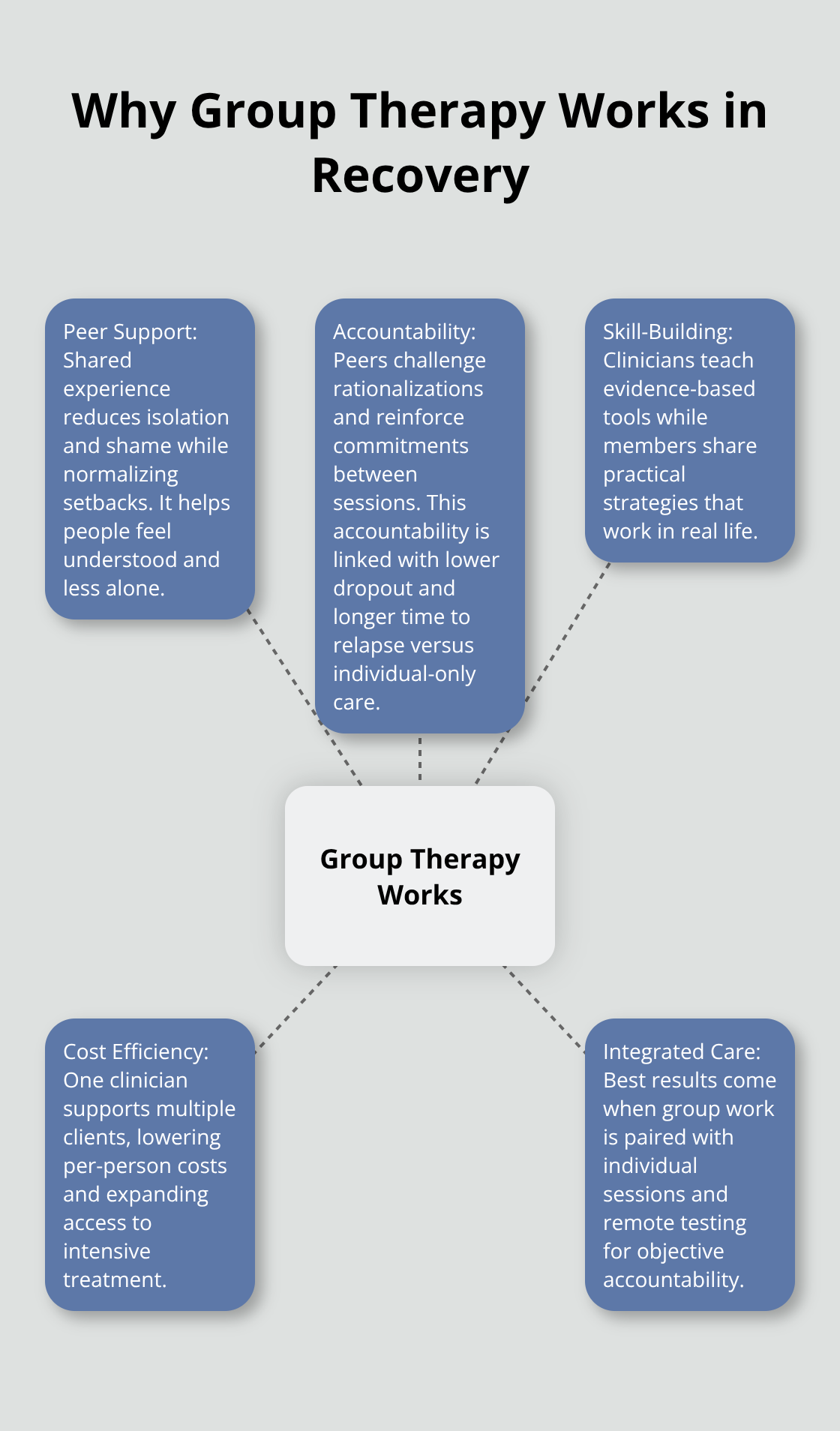
Research on substance use treatment confirms that peer support cuts dropout rates and extends time to relapse compared to individual-only approaches. The accountability that emerges in group settings operates differently than a therapist’s clinical observations. Your peers recognize your excuses because they’ve used them. That honest feedback from someone in your position lands harder than any professional assessment.
Real Skill-Building Through Shared Experience
Group therapy multiplies your learning because everyone contributes strategies and insights. When a licensed clinician facilitates a session on relapse prevention or managing cravings, you absorb approaches from multiple perspectives. One person shares how they handle a stressful workday without using. Another discusses rebuilding family relationships. You discover techniques you’d never have found alone.
This multiplier effect means your treatment investment covers substantially more ground. A clinician working with a group reaches more people than the same clinician working one-on-one. Group sessions cost significantly less per person than individual therapy because the clinician’s time distributes across multiple clients, making intensive treatment accessible to more people who need it.
Combining Group Work With Personal Accountability
Group therapy works best when combined with individual clinical attention and concrete accountability measures. One-on-one sessions with licensed clinicians address your specific triggers and goals. Remote drug and alcohol testing maintains objectivity and prevents relapse before it starts. Together, these elements create a treatment structure that fits around your work and family obligations while keeping recovery on track.
The evening format means you access this combination of peer support, professional guidance, and accountability testing without sacrificing your career or family time. This flexibility transforms recovery from something that demands you step away from life into something that integrates with your actual responsibilities.
How Evening IOP Fits Into Your Actual Life
Sessions That Work Around Your Schedule
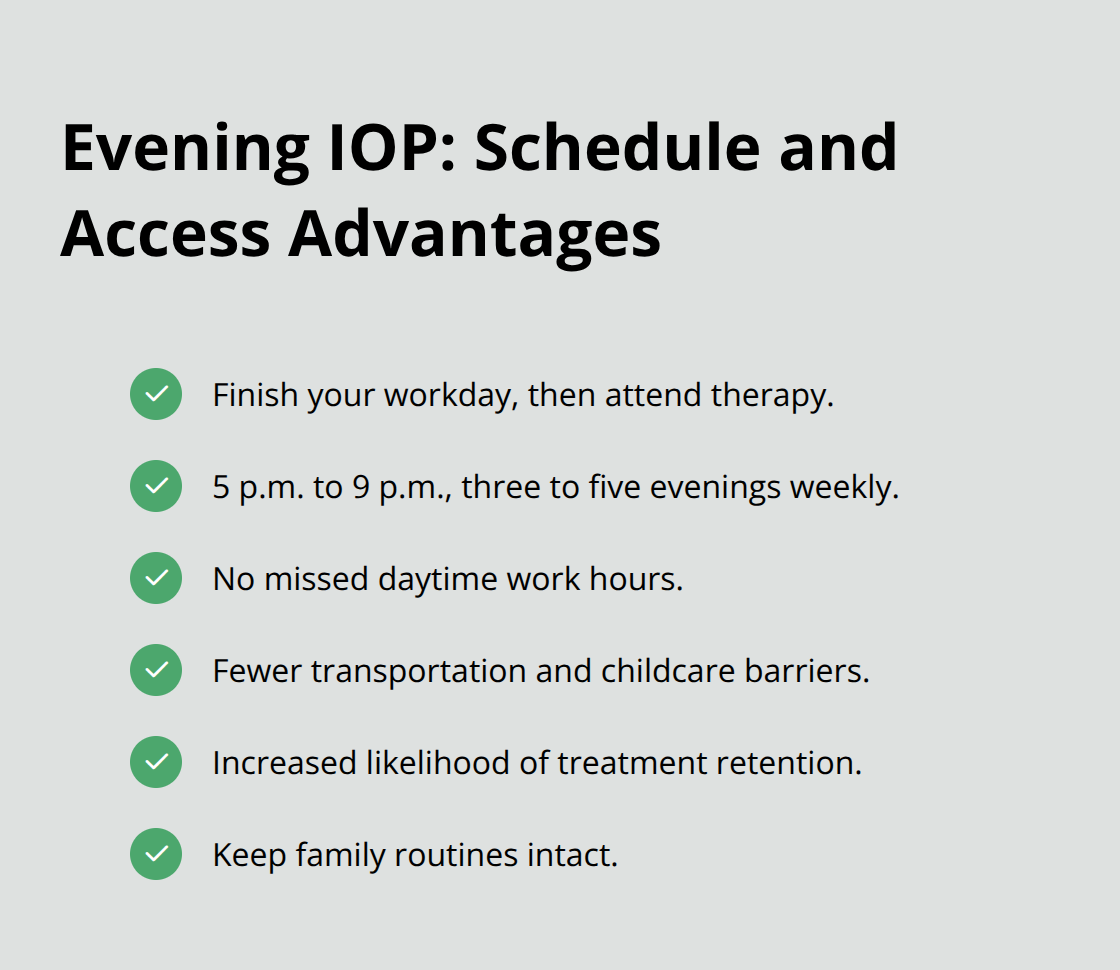
Recovery programs that demand you abandon your job, skip family dinners, or arrange childcare don’t work for most people. Evening group therapy runs from 5 p.m. to 9 p.m., three to five evenings per week, which means you finish your workday, attend therapy, and still have time for dinner with your family or evening responsibilities. This schedule eliminates the false choice between recovery and your career.
Research on flexible scheduling in intensive outpatient programs shows that clients have increased likelihood of being retained in treatment. The after-hours format directly addresses why people skip treatment: transportation barriers, childcare logistics, and the financial pressure of missing work hours.
Protecting Your Paycheck and Your Privacy
When you attend sessions in the evening, you don’t lose eight hours of billable time or scramble to cover your shift. Your employer doesn’t need to know you’re in treatment, and your paycheck stays intact. This financial stability matters enormously during early recovery when stress about money can trigger relapse.
Privacy concerns also fade with evening programming. You attend treatment without risking encounters with colleagues or acquaintances in waiting rooms. The confidentiality of your recovery remains protected because you control who knows about your treatment schedule.
Remote Access Removes Logistical Barriers
EveningIOP delivers live, interactive online group therapy so you join from home, your car before heading somewhere, or a quiet office space. You eliminate commute time, parking fees, and the anxiety of sitting in a physical waiting room. Research on remote intensive outpatient programs shows telehealth as a viable care alternative with no significant differences between in-person and telehealth groups in depressive symptom reduction.
The virtual format doesn’t compromise clinical quality because licensed clinicians still facilitate evidence-based group discussions in real time, and you still connect with peers facing identical challenges. What changes is access. A single parent working retail joins without hiring a babysitter. Someone without reliable transportation attends from anywhere with an internet connection.
What This Flexibility Actually Enables
The combination of evening timing and remote access transforms intensive treatment from logistically impossible into something that actually fits your life. You maintain your job, keep your family routines intact, and still receive the peer support and professional guidance that drive recovery forward. This flexibility matters most during the critical early weeks when relapse risk runs highest and your support system needs to feel accessible, not burdensome. The next section examines what actually happens inside these evening group sessions and how licensed clinicians structure them to produce measurable change.
What Happens Inside Evening IOP Group Sessions
Evidence-Based Structure Replaces Unguided Discussion
Licensed clinicians structure group sessions around evidence-based modalities like Cognitive Behavioral Therapy and Dialectical Behavior Therapy rather than allowing unstructured conversation. A typical evening session runs two to three hours with eight to twelve participants, and the clinician establishes a specific clinical agenda before the group convenes. One night might focus on identifying triggers and coping responses. Another addresses communication skills or managing cravings during high-stress work situations. This structure prevents sessions from becoming support meetings without clinical direction.
The clinician introduces a skill or concept, walks the group through application, and then asks participants to share how that skill applies to their specific circumstances. Research shows that DBT delivered in group format reduces suicidal ideation and self-harm in high-risk populations, and the same structured approach translates directly to substance use recovery.
Individual Sessions Customize Your Treatment Plan
Between group sessions, you attend one-on-one appointments with a licensed clinician who addresses your individual treatment plan, medication management if needed, and specific barriers unique to your situation. That individual work prevents your recovery from becoming generic. A clinician notices you struggle with work-related stress triggering cravings and designs interventions specifically for that pattern. They coordinate with your prescribing provider if medications support your recovery. They adjust your treatment plan based on progress and setbacks.
Group therapy teaches you skills and connects you to peers. Individual sessions customize those skills to your actual life.
Remote Testing Maintains Accountability Without Shame
Remote drug and alcohol testing removes the guesswork from accountability. You complete tests from home using a phone or computer at randomized intervals, and results reach your clinician within hours. This objectivity stops relapse before it compounds into a full return to use. Testing also prevents the rationalization that often precedes relapse. Someone facing a test scheduled for tomorrow has concrete incentive to stay abstinent tonight.
The testing protocol integrates into your treatment plan without shame or punishment language. A positive result triggers an immediate clinical conversation about what happened, what triggered it, and how your treatment plan needs adjustment rather than program discharge. This approach reflects the medical reality that recovery involves setbacks and the clinician’s job is to respond clinically, not punitively.
Multiple Reinforcement Points Work Simultaneously
Group sessions build skills and peer connection. Individual sessions customize treatment. Testing maintains concrete accountability. Together, these elements create a recovery environment where relapse prevention operates through multiple channels rather than depending on willpower alone.
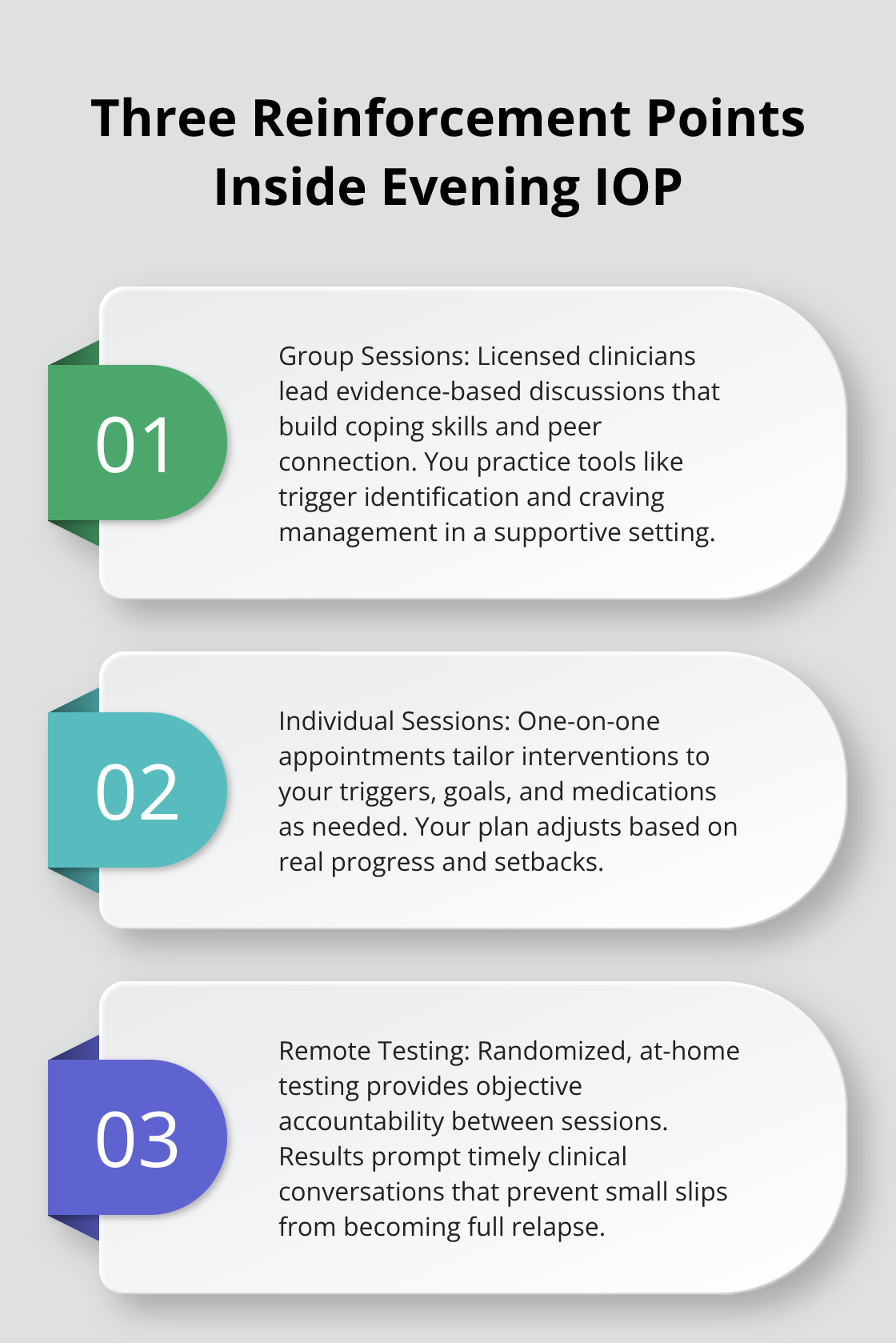
Evening IOP combines this accountability structure with group and individual therapy so your recovery has multiple reinforcement points operating simultaneously.
Final Thoughts
Evening IOP group therapy works because it solves the real problem most people face: recovery programs demand you abandon your life to save it. The approach throughout this post rejects that false choice entirely. You attend sessions from 5 p.m. to 9 p.m., three to five evenings per week, which means your paycheck stays intact, your family routines continue, and your career doesn’t pause while you rebuild your foundation.
The clinical effectiveness comes from combining three elements that reinforce each other: group sessions with licensed clinicians teach you evidence-based skills while connecting you to peers who understand your exact struggles without judgment, individual appointments customize your treatment to your specific triggers and circumstances, and remote drug and alcohol testing maintains accountability through objective measurement rather than willpower alone. This combination produces better outcomes than any single element could achieve independently. Evening IOP group therapy acknowledges your actual life as a working professional, a parent, someone with financial obligations and career momentum.
If you’ve been waiting for a recovery program that fits your life instead of demanding you fit into it, EveningIOP offers the structure and flexibility you need. Your recovery doesn’t have to cost you your career or your family.