

Addiction treatment works best when people feel safe enough to seek help. Stigma and fear of judgment keep millions from reaching out, but private telehealth addiction treatment changes that equation by letting you recover from home.
At EveningIOP, we’ve built a platform where confidentiality and clinical quality go hand in hand. This guide shows you what to look for in an accredited provider and how remote care can work for your recovery.
Why Privacy Matters in Addiction Treatment
Stigma delays treatment by an average of 8 to 10 years after first experiencing a substance use disorder. The fear of judgment from colleagues, family members, or community members creates a barrier that clinical evidence alone cannot overcome. Telehealth removes this barrier entirely because treatment happens behind closed doors. You attend sessions from your home, with no one at work knowing you’re in care, no commute to a visible treatment facility, and no risk of running into someone you know in a waiting room. This privacy shift matters more than many realize-patients who feel their treatment is truly confidential disclose the full extent of their substance use and comply with treatment plans at significantly higher rates.
Confidentiality Builds Trust with Clinicians
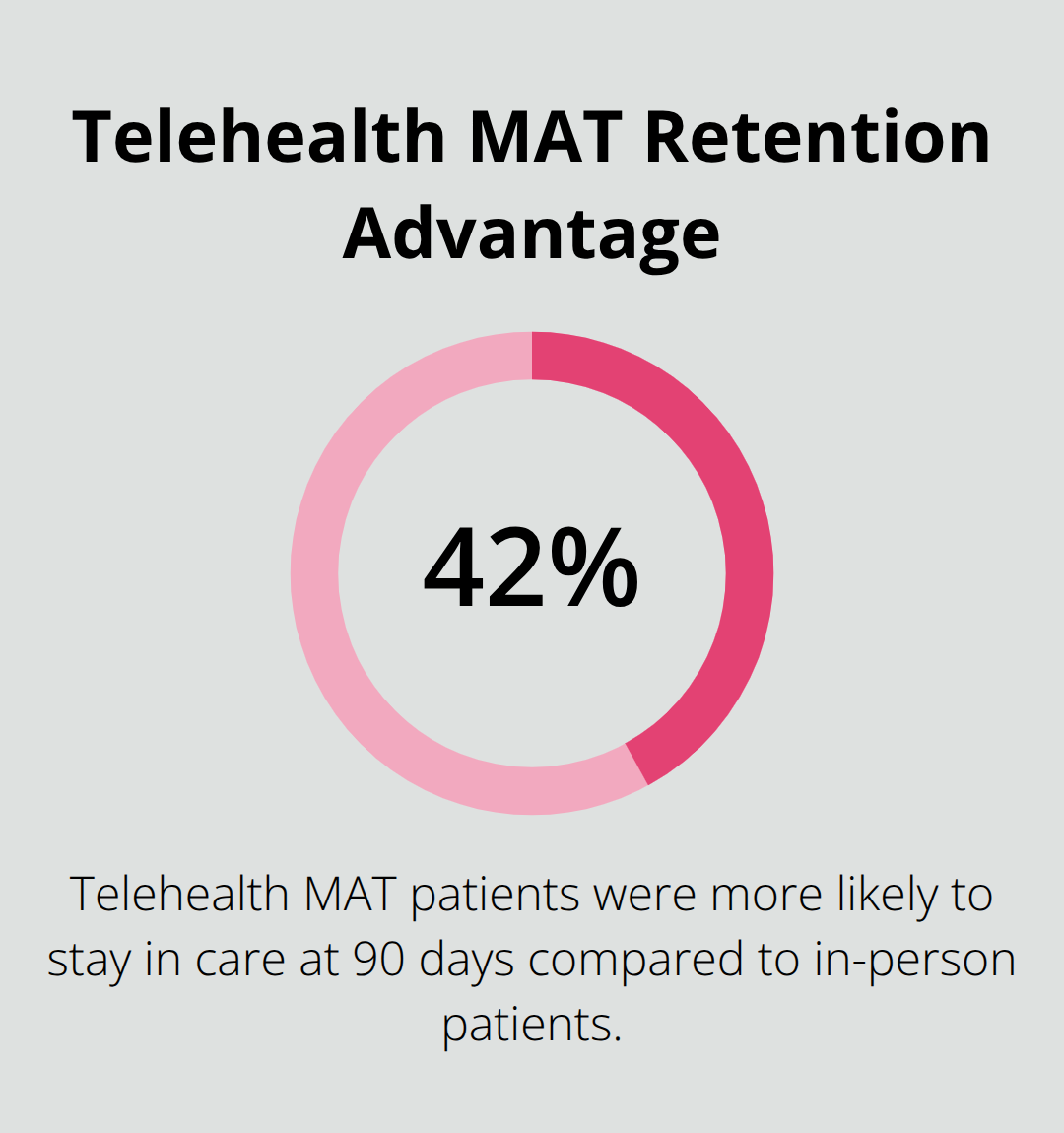
Licensed clinicians understand that addiction treatment requires brutal honesty. You cannot recover while hiding parts of your story, and you cannot hide effectively when you sit in a public waiting room or drive to an office in your neighborhood. Remote one-on-one sessions with licensed clinicians create a space where confidentiality feels genuine because it is-the session happens in your private space, not in a shared facility. Telehealth MAT patients were 42% more likely to stay in care at 90 days compared to in-person patients, partly because the privacy of remote sessions reduced dropout driven by shame or social anxiety. Evening sessions allow you to control your environment completely, so you speak openly about triggers, relapses, cravings, and co-occurring mental health issues without constant worry that someone might overhear.
Geography and Daily Life No Longer Block Access
Rural and remote patients face concrete barriers to addiction treatment: no local providers, transportation costs, time away from work or caregiving responsibilities. Telehealth eliminates these obstacles. A person in a rural area accesses the same licensed clinicians and evidence-based treatment as someone in a major city. A parent working full-time attends evening group therapy without arranging childcare or taking unpaid time off. A person without reliable transportation recovers from home. Telehealth has expanded access to addiction treatment across underserved communities, and flexible evening scheduling accommodates working professionals and families who cannot attend daytime programs. Remote drug and alcohol testing further removes friction: you complete tests at home rather than traveling to a lab, reducing missed appointments and increasing accountability without logistical strain.
What Accreditation Signals About a Provider
When you evaluate a telehealth addiction provider, accreditation matters because it signals clinical standards and accountability. Joint Commission accreditation, DHCS licensing, and LegitScript certification indicate that a provider meets rigorous requirements for clinician credentials, treatment protocols, and patient safety. These standards protect you-they mean licensed clinicians deliver evidence-based care, not unqualified practitioners offering generic support. Integrated medical monitoring and drug testing (conducted remotely) show that a provider takes clinical rigor seriously and tracks your progress with objective data rather than assumption. Licensed clinicians trained in evidence-based models like cognitive behavioral therapy and medication-assisted treatment deliver measurable results. Accreditation is not a marketing claim; it is a verifiable commitment to the standards that make recovery possible.
Evening Programs Fit Real Life
Addiction treatment that demands daytime attendance fails working professionals, parents, and people with caregiving responsibilities. Evening Intensive Outpatient Programs (IOP) deliver the same clinical intensity as daytime programs but at times that fit your schedule. Live group therapy sessions from home connect you with peers in recovery without disrupting your work or family obligations. One-on-one sessions with licensed clinicians address your specific needs and co-occurring mental health issues. Remote drug and alcohol testing holds you accountable without office visits that consume your time. This combination-clinical depth, privacy, and scheduling flexibility-addresses the real barriers that keep people from treatment.
What Makes a Telehealth Provider Actually Trustworthy
Accreditation Separates Legitimate Treatment from Corner-Cutting Operations
Accreditation separates legitimate addiction treatment from operations that cut corners on clinician credentials or safety protocols. Joint Commission accreditation means an independent body has verified that the provider meets rigorous standards for clinical staff qualifications, treatment protocols, patient safety, and record management. DHCS licensing in states like California confirms the provider operates legally and transparently with clear privacy policies and meets state-specific requirements for substance use treatment. LegitScript certification adds another layer of verification, confirming the provider operates transparently and follows pharmacy and prescribing regulations. These certifications are not marketing language-they are measurable commitments that protect you from unlicensed practitioners or programs that prioritize speed over outcomes.
When you evaluate a telehealth provider, verify these credentials directly on the provider’s website or by contacting the accrediting bodies. A provider that cannot clearly display its Joint Commission status or DHCS license number should raise immediate concerns.
Licensed Clinicians Deliver Evidence-Based Care
Licensed clinicians trained in evidence-based models like cognitive behavioral therapy and medication-assisted treatment deliver measurable results. Accreditation requires providers to employ clinicians with proper credentials-not peer counselors or wellness coaches, but licensed addiction specialists who understand the neuroscience of substance use and the complexity of co-occurring mental health disorders. These clinicians interpret clinical data and adjust your treatment plan based on objective progress, not guesswork. The difference matters: a licensed clinician recognizes when depression or anxiety drives relapse risk and addresses both conditions simultaneously, whereas unlicensed practitioners often miss these connections entirely.
Remote Testing Removes Friction While Maintaining Accountability
Drug and alcohol testing conducted remotely removes a major friction point in addiction treatment. Instead of traveling to a lab, waiting in a facility, and scheduling around office hours, you complete tests at home on a schedule that fits your life. This convenience paradoxically increases compliance because patients actually show up for tests rather than skipping them due to transportation barriers or schedule conflicts.
Integrated medical monitoring tracks your progress objectively-urine screens, breath tests, and clinical assessments generate data that your clinician uses to adjust your treatment plan in real time. If cravings spike or relapse risk increases, the data surfaces the problem before it becomes a crisis. Licensed clinicians interpret these results within the context of your recovery journey, not as punitive measures but as clinical signals that guide your care. Remote testing also protects your privacy because you avoid the stigma of walking into a testing facility where you might encounter people from your community.
How to Verify Provider Credentials Before You Commit
Start by requesting the provider’s accreditation documentation directly. Legitimate providers display Joint Commission status, DHCS license numbers, and LegitScript certification prominently on their websites. Contact the accrediting bodies themselves to confirm the provider’s standing-Joint Commission maintains a public directory, and state licensing boards publish active licenses.
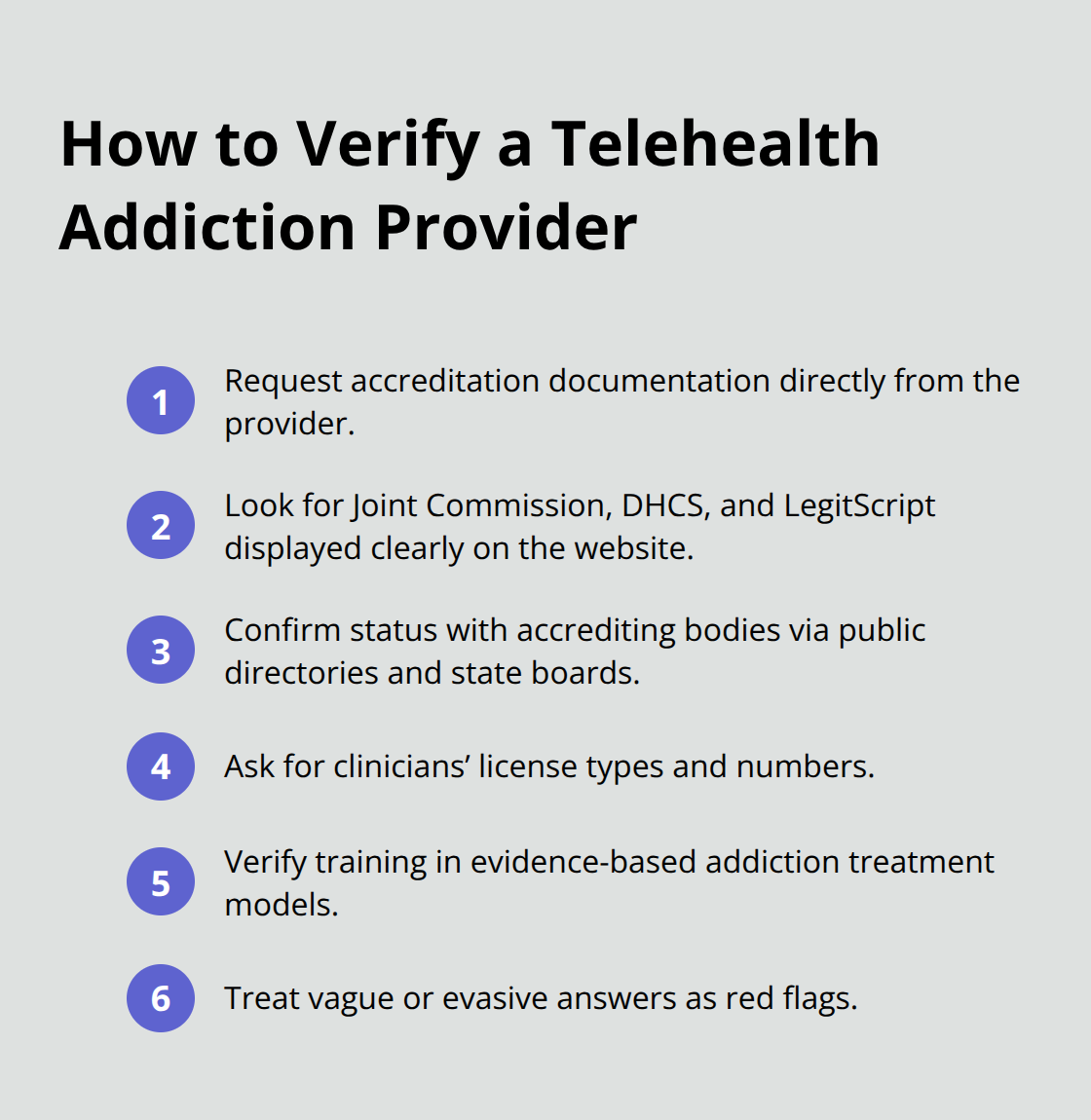
Ask about the clinicians’ credentials: Are they licensed clinical social workers, addiction counselors, or physicians? What training have they completed in evidence-based addiction treatment? A provider that hesitates to answer these questions or provides vague responses signals that something is off.
The combination of accreditation, licensed clinicians, and integrated remote testing creates a foundation for effective care. With these standards in place, you can focus on recovery rather than worrying whether your provider cuts corners on safety or clinical quality. The next step is understanding how evening programs specifically fit the schedules and lives of working professionals and families seeking treatment.
How Evening IOP Works in Practice
Live Group Therapy Sessions from Home
Live group therapy sessions happen in the evening from your home, connecting you with peers in recovery without taking time off work or arranging childcare around daytime program schedules. These sessions are interactive, real-time groups led by licensed clinicians who facilitate peer accountability and shared recovery strategies. The structure matters: research shows telehealth patients benefit from evening scheduling because it removes the logistical friction that causes dropout. A working parent attends group at 7 p.m. from their living room instead of missing work or paying for childcare. A person in recovery who dreads the commute to a treatment facility joins from home, eliminating one more barrier to showing up consistently.
One-on-One Sessions Address Your Specific Needs
One-on-one sessions with licensed clinicians address your specific recovery needs-co-occurring depression, anxiety, trauma, or the particular triggers that drive your substance use. These sessions happen remotely, which means you control the environment completely and avoid the vulnerability of sitting in a waiting room. Licensed clinicians trained in evidence-based models for addiction treatment adjust your treatment plan based on clinical data and your progress, not generic protocols. They recognize when depression or anxiety drives relapse risk and address both conditions simultaneously, whereas generic approaches often miss these connections entirely.
Remote Drug and Alcohol Testing Increases Compliance
Remote drug and alcohol testing removes a major friction point in addiction treatment. You complete tests at home on a schedule that fits your life rather than traveling to a lab during office hours. This convenience increases compliance because you actually complete tests instead of skipping them due to transportation barriers or scheduling conflicts. Integrated medical monitoring tracks your progress objectively-urine screens, breath tests, and clinical assessments generate data that your clinician uses to adjust your treatment plan in real time. If cravings spike or relapse risk surfaces, the data alerts your treatment team before a crisis develops. Remote testing also protects your privacy because you avoid the stigma of walking into a testing facility where you might encounter people from your community.
How the Pieces Work Together
The combination of evening scheduling, licensed clinicians, interactive group therapy, and remote testing creates a program that fits working professionals and families without compromising clinical depth or accountability. Evening Intensive Outpatient Programs deliver clinical intensity without requiring you to step foot in an office. Interactive, real-time groups led by licensed clinicians facilitate peer accountability and shared recovery strategies.
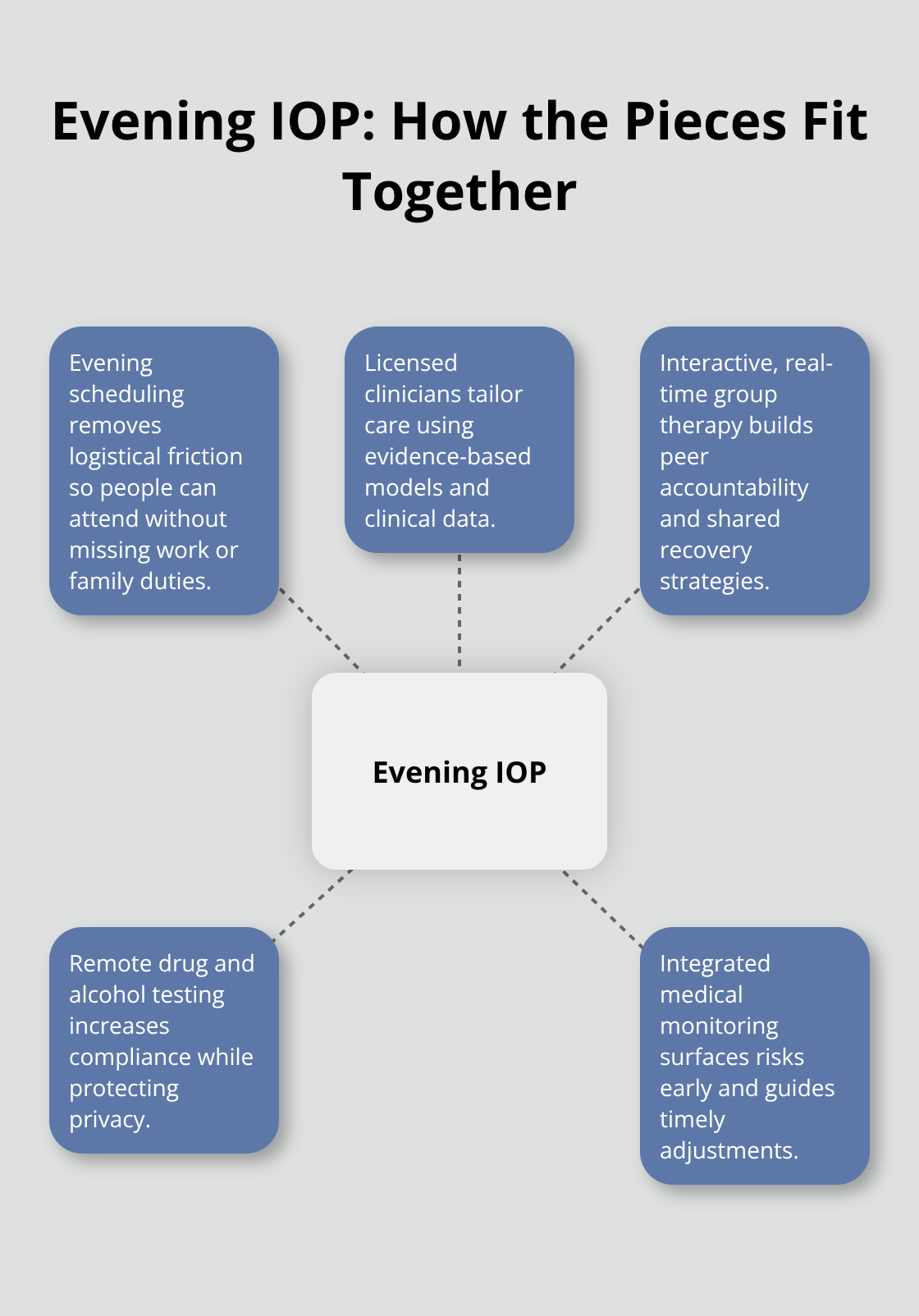
Licensed clinicians trained in evidence-based models adjust your treatment plan based on clinical data and your progress. Remote testing removes logistical barriers that typically cause patients to skip appointments or drop out of care entirely.
Final Thoughts
Addiction treatment has historically forced people to choose between recovery and their daily lives-attend daytime programs and sacrifice work, or skip treatment to keep your job. Private telehealth addiction treatment eliminates this false choice by delivering clinical depth without disruption to your career, family, or privacy. The evidence proves this works: a 2023 JAMA Psychiatry study found telehealth MAT patients stayed in care 42% more likely at 90 days, while programs with peer support achieved 32% lower relapse rates and 21% fewer hospital readmissions.
Accreditation separates legitimate providers from operations that cut corners on clinician credentials or safety protocols. Joint Commission accreditation, DHCS licensing, and LegitScript certification signal that a provider meets rigorous standards for treatment protocols and patient safety. Licensed clinicians trained in evidence-based models deliver measurable results, and remote drug and alcohol testing removes friction while maintaining accountability-these standards protect you and create the foundation for real recovery.
We at EveningIOP deliver live evening Intensive Outpatient Programs that combine interactive group therapy, one-on-one sessions with licensed clinicians, and remote testing. Your recovery does not require you to sacrifice your career, your family responsibilities, or your privacy-it requires a provider committed to clinical excellence and the flexibility to meet you where you are.