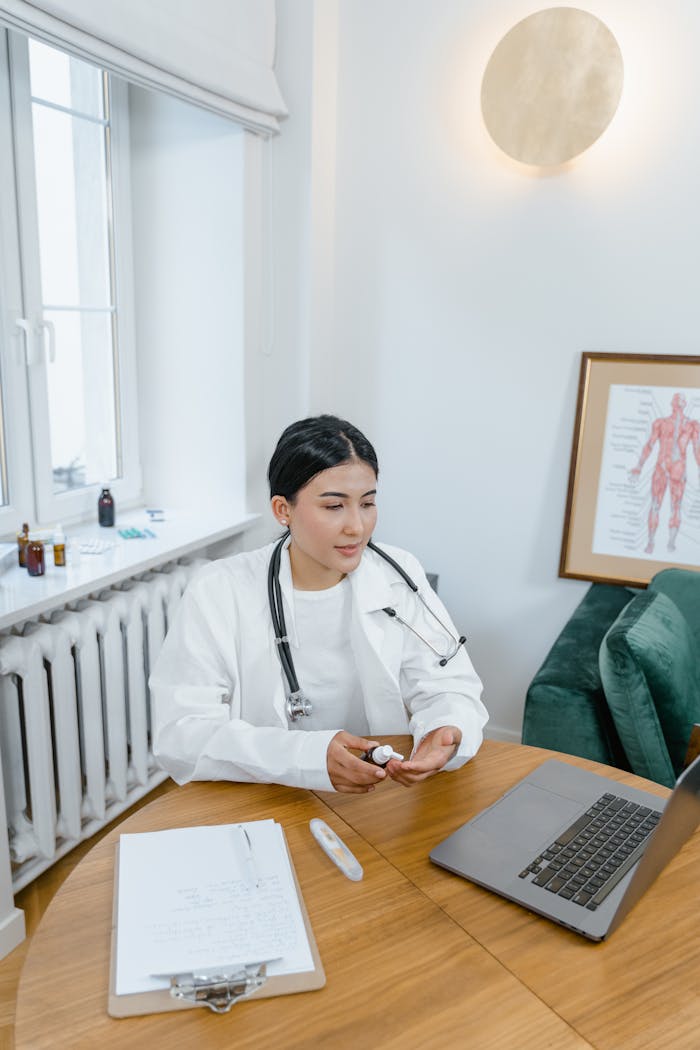


Substance use disorder treatment works best when patients feel safe sharing openly with their clinicians. At EveningIOP, we’ve built confidential SUD telemedicine around clinical rigor and privacy protections that meet the highest standards.
Working professionals need treatment that fits their lives, not the other way around. Remote care removes barriers-but only when it’s genuinely secure and clinically sound.
How Confidentiality Really Works in SUD Telemedicine
Substance use disorder treatment requires patients to share openly with clinicians, and that openness depends on trust that their information stays private. HIPAA compliance forms the foundation, but SUD treatment confidentiality extends far beyond standard healthcare privacy rules.
HIPAA and Part 2: Two Layers of Protection
The Health Insurance Portability and Accountability Act requires covered entities and their business associates to operate secure platforms with end-to-end encryption, role-based access controls, and audit logs that track who accesses patient data and when. The Office for Civil Rights enforces these standards and has issued specific guidance on telehealth security, including requirements for unique user authentication and the minimum necessary principle-meaning clinicians access only the information truly needed for treatment.
However, HIPAA alone does not address the full scope of substance use disorder confidentiality. 42 CFR Part 2, the federal confidentiality regulations for SUD treatment records, imposes stricter protections than HIPAA. Part 2 requires written patient consent before any disclosure of SUD treatment information, and that consent can be narrowly scoped or revoked at any time. This means your telehealth platform must handle SUD data separately from general health information, with distinct consent forms and access restrictions.
When evaluating a telemedicine provider, ask directly: Does your platform comply with both HIPAA and Part 2? Are SUD records stored separately? Can patients revoke consent without affecting other care? These specifics matter because non-compliance can result in loss of federal funding and regulatory sanctions for treatment organizations.

Encryption and Platform Architecture Stop Breaches
Your telehealth platform should use end-to-end encryption for all audio and video sessions, meaning data is scrambled before it leaves your device and unscrambled only on the clinician’s end. Secure messaging, if offered, must follow the same standard. Data stored on servers should be encrypted at rest, and the provider should maintain detailed audit logs showing access timestamps and user identity.
Beyond encryption, the platform architecture matters. Ask whether your provider uses single sign-on with strong authentication (multi-factor if possible), restricts screen sharing to prevent accidental exposure of other patients’ information, and maintains business associate agreements with all vendors handling your data. The FTC enforces consumer protection standards for health privacy and requires breach notification within 60 days if your data is compromised. State privacy laws may extend protections further-for example, California’s Consumer Privacy Act gives patients rights to know, access, and control their health data-so confirm your provider understands applicable state requirements. A red flag is any platform that stores video recordings without explicit consent or uses your data for marketing or research without opt-in permission.
Informed Consent Must Address SUD-Specific Protections
Informed consent for telehealth must cover what data is collected, how it is transmitted, where it is stored, who can access it, and how long it is retained. For SUD treatment, consent must specifically address the confidentiality protections under Part 2, including the patient’s right to revoke consent and the limits on redisclosure. Many treatment organizations fail here by using generic consent forms that do not mention substance use specifics.
Your provider should give you a separate, detailed privacy notice before your first session and ask you to confirm understanding. This notice should explain whether session recordings are made (and if so, who can access them), whether text messages or chat are monitored, and whether data is shared with insurers or employers for billing purposes. If your treatment organization uses a third-party app or monitoring tool, the consent must name that vendor and explain its data practices.
Part 2 regulations also protect you from unauthorized redisclosure: a clinician cannot share your SUD treatment information with your employer, school, or another healthcare provider without your written permission, even if they have a treatment reason. This protection is stronger than standard HIPAA and reflects the historical stigma and discrimination SUD patients face. These privacy safeguards exist for a reason-and they set the stage for the clinical outcomes that remote SUD treatment can actually deliver.
Clinical Effectiveness of Remote SUD Treatment
Remote substance use disorder treatment produces measurable outcomes when it supplements in-person care. A comprehensive meta-analysis in Addiction (2025) covering 34 randomized controlled trials and 6,461 participants across OECD countries from 2004–2023 found that when remote interventions backed up face-to-face treatment, relapse odds dropped 39 percent compared to in-person care alone. Participants also used substances fewer days on average.

The evidence matters because it moves past theory: researchers tracked real relapse rates and days of use across internet-based programs, telephone therapy, mobile apps, and self-guided tools delivered to actual patients in the United States and abroad.
Self-Guided and Therapist-Supported Remote Interventions Show Strongest Results
Self-guided therapy showed particularly strong results in specific subgroups, cutting relapse odds by 69 percent in some cases and reducing substance use days by 23 percent on average across 12 interventions. Telephone-based therapy and remote recovery support also reduced relapse in certain populations, though effects varied by how frequently patients engaged. Alcohol-focused remote interventions trended toward lower relapse rates overall, while evidence for drugs-only programs remained mixed due to smaller study samples. The takeaway is direct: if you combine remote sessions with in-person treatment, you gain real protection against relapse. Without that in-person anchor, results become less certain.
Videoconferencing and One-on-One Sessions Require Clinical Oversight
The practical reality of remote SUD treatment hinges on engagement and what you actually measure. Most relapse data in the research came from patient self-report, which carries bias risk, but studies using objective toxicology tests showed more reliable results. This means when you choose a provider, ask whether they verify outcomes through drug and alcohol testing, not just patient reports. Group therapy delivered via videoconferencing works when clinicians can see and hear participants clearly, manage group dynamics, and intervene if someone is in crisis. One-on-one sessions over secure video allow clinicians to assess medication response, adjust treatment plans, and build the trust that confidentiality protections enable.
Remote Monitoring and Objective Testing Improve Accountability
Remote monitoring tools, including at-home drug and alcohol testing, reduce missed appointments and provide real-time data on treatment progress. The 2025 meta-analysis flagged that about 69 percent of studies had high bias risk, mostly from missing data and self-report measurement, so the evidence base calls for cautious interpretation. What this means for you: seek providers who combine videoconferencing with objective testing, maintain low patient-to-clinician ratios in group settings, and report outcomes transparently.
Rural Access and Reduced Stigma Expand Treatment Reach
Rural populations especially benefit because telehealth removes travel barriers and reduces stigma, letting people access licensed clinicians without a three-hour drive. The studies show that video-based therapy produces outcomes comparable to face-to-face care when the technology is HIPAA-compliant and clinicians are trained to manage the virtual setting. Engagement and adherence remain critical because high attrition affects all addiction research. If a provider offers remote treatment without structure, accountability, or objective verification, the clinical evidence does not support its effectiveness. These clinical foundations-live sessions, objective testing, and clinician oversight-set the stage for understanding why evening programs specifically address the needs of working professionals and families.
Why Evening Treatment Fits Working Life
Working professionals face a hard choice: take time off work for daytime treatment and risk job security, or skip treatment entirely. Evening programs eliminate that false choice by delivering clinically rigorous care when you can actually attend. Live group therapy, one-on-one sessions with licensed clinicians, and remote drug and alcohol testing fit into evening hours so you keep your job, maintain family responsibilities, and still access evidence-based treatment. The data supports this model. A 2024 study in mHealth tracked Medicaid telehealth claims across North Dakota and Minnesota from 2018 to 2022 and found that substance use disorder telehealth claims rising sharply during the pandemic and sustaining at higher levels afterward. Rural populations especially benefited because remote care eliminated travel time, yet the same advantage applies to working professionals in urban and suburban areas who cannot afford to lose eight hours a week to commuting and waiting rooms.
Cost and Clinical Outcomes Beat Inpatient Models
Inpatient residential treatment averages 28 to 30 days and costs between $15,000 and $60,000 depending on amenities and location, often only partially covered by insurance. Evening intensive outpatient programs cost a fraction of that while delivering equivalent clinical outcomes when they combine live therapy with objective testing and licensed clinician oversight. You attend sessions after work, test regularly to verify sobriety, and maintain employment that provides income and health insurance. Licensed clinicians in evening programs can prescribe medications like buprenorphine or naltrexone, manage medication-assisted treatment, and adjust care plans in real time based on test results and clinical progress.
Peer Support From People Who Understand Your Pressures
Peer support happens in group settings where other working professionals share similar pressures, making the recovery process less isolating and more relatable than generic daytime groups. A 2025 meta-analysis in Addiction showed that when remote interventions replaced in-person care, relapse odds dropped 49 percent compared to in-person care alone.

Self-guided therapy combined with clinician contact produced even stronger results in specific populations. Evening programs operationalize this evidence by pairing structured group accountability with flexible scheduling, objective verification through testing, and licensed clinical oversight that adjusts treatment based on real outcomes, not assumptions.
Remote Testing Provides Real Accountability
Remote drug and alcohol testing reduces missed appointments and provides real-time data on treatment progress. Objective verification matters because research shows high bias risk in addiction studies, mostly from missing data and self-report measurement. This calls for cautious interpretation of outcomes that rely solely on patient reports. Providers who combine videoconferencing with objective testing, maintain low patient-to-clinician ratios in group settings, and report outcomes transparently offer stronger clinical foundations than those without verification systems.
Access Without the Travel Barrier
Rural populations especially benefit because telehealth removes travel barriers and reduces stigma, letting people access licensed clinicians without a three-hour drive. Video-based therapy produces outcomes comparable to face-to-face care when the technology is HIPAA-compliant and clinicians are trained to manage the virtual setting. Engagement and adherence remain critical because high attrition affects all addiction research. Evening programs that structure live sessions, objective testing, and clinician oversight create the accountability that evidence supports.
Final Thoughts on Trustworthy Telemedicine
Accreditation separates legitimate confidential SUD telemedicine from platforms that cut corners on privacy and clinical standards. Joint Commission accreditation requires organizations to maintain detailed policies on informed consent, staff competency, medication management, and patient rights, and surveyors conduct unannounced inspections to verify compliance with telehealth-specific standards for secure technology and adequate patient assessment. State licensing through the Department of Health Care Services confirms that an organization meets California requirements for substance use disorder treatment, including clinician credentials and treatment planning standards, while LegitScript certification verifies that a telehealth provider operates legally and transparently with clear privacy policies.
These three credentials signal that a provider has passed independent scrutiny on clinical quality, legal compliance, and patient protection. Accredited providers face real consequences for breaches or poor outcomes-a DHCS-licensed organization risks losing its license and federal funding if it violates confidentiality, and a Joint Commission-accredited program can lose accreditation if it fails to protect patient data or maintain clinical standards. This accountability creates incentive to invest in secure platforms, train staff on Part 2 confidentiality, and measure outcomes honestly.
EveningIOP combines all three credentials, delivering live evening group therapy, one-on-one sessions with licensed clinicians, and remote drug and alcohol testing within a DHCS-licensed, Joint Commission-accredited, LegitScript-certified framework. Your treatment is delivered by verified clinicians, your data is protected under both HIPAA and Part 2 standards, and your outcomes are tracked against evidence-based benchmarks. Accreditation does not guarantee perfection, but it does mean an organization has committed to the systems, training, and transparency that confidential, clinically sound remote care requires.