


Your job demands everything-your energy, your focus, your time. By the time evening arrives, stress from work has already taken its toll on your mental health.
At EveningIOP, we understand that traditional counseling hours don’t work for professionals juggling demanding careers. Nighttime counseling for professionals fills a real gap, offering mental health support when you actually have time to access it.
Why Professionals Can’t Wait for 9-to-5 Therapy
The Stress That Doesn’t Clock Out
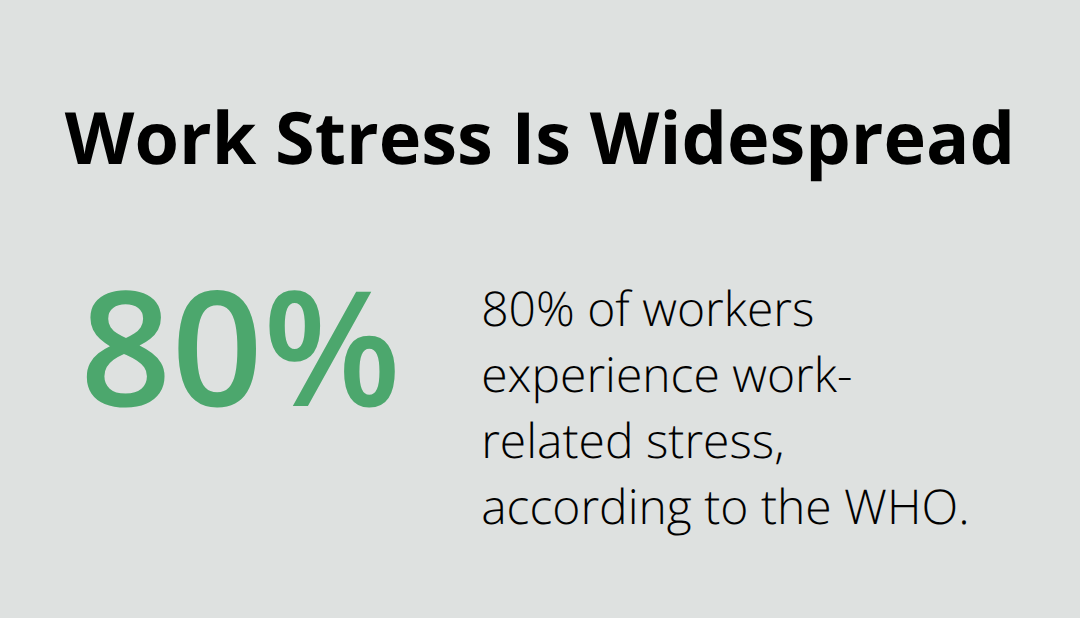
Work-related stress affects 80% of workers globally, according to the World Health Organization. For professionals in demanding roles, that stress doesn’t clock out at 5 p.m.-it follows them home, disrupts sleep, and compounds over weeks and months. Anxiety, depression, and burnout don’t respect business hours, yet most therapists operate exclusively during the times when you’re sitting in meetings or managing client demands.
This mismatch between when professionals actually need support and when it’s available creates a dangerous gap.
Untreated mental health issues don’t stay compartmentalized. The World Health Organization also notes that work-related stress directly links to anxiety, depression, and burnout that spill into personal life, affecting relationships, sleep quality, and long-term health. Chronic workplace stress contributes to cardiovascular issues, digestive problems, and sleep disturbances. When you manage a high-pressure job, waiting weeks for a Tuesday afternoon appointment while your anxiety peaks at night simply doesn’t work.
The Access Problem That Leaves Professionals Behind
Most therapists limit evening availability to protect their own boundaries, and that’s understandable. But it leaves working professionals with two bad options: take time off work for therapy sessions, which signals vulnerability to employers and creates scheduling stress, or skip treatment entirely. According to CDC data, loneliness was significantly more common among women than among men, and lack of social and emotional support affects many working adults. For professionals working long hours, isolation deepens when evening and weekend support isn’t available.
The consequence shows up in job performance, workplace relationships, and decision-making. Untreated anxiety clouds judgment. Depression saps motivation and productivity. Burnout erodes focus and creativity. These aren’t theoretical problems-they translate directly into missed opportunities, strained team dynamics, and career setbacks.
What Professionals Actually Need
The gap between when you need help and when it’s available demands a different approach. Evening counseling programs address this reality head-on, offering support that aligns with your actual schedule rather than forcing you to choose between your career and your mental health. The next section explores how these programs work and why they’re reshaping access to care for working professionals.
How Evening Programs Fit Into Your Work Week
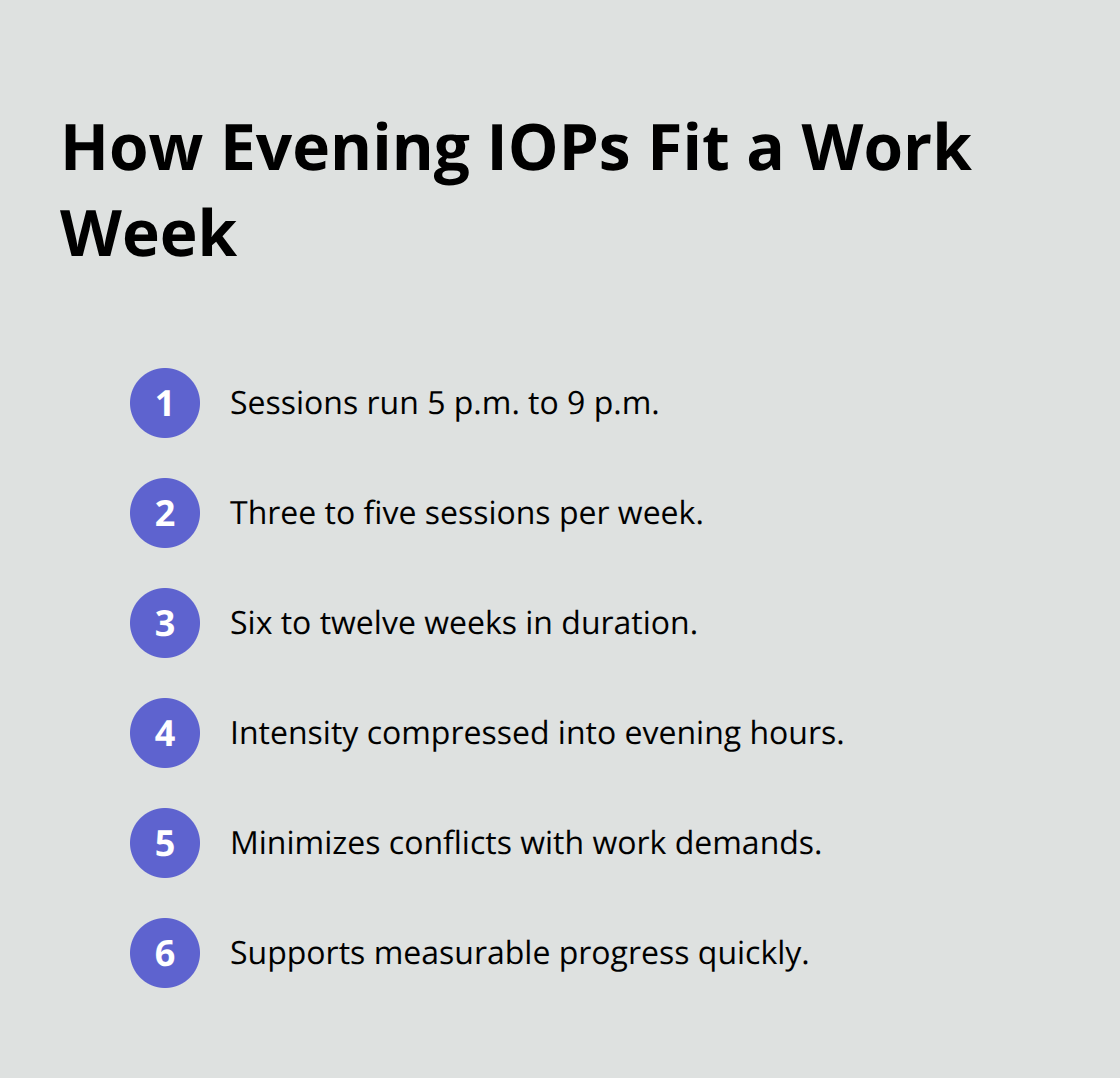
Evening counseling programs operate on a fundamentally different schedule than traditional therapy. Professionals need sessions during hours that don’t conflict with client meetings, project deadlines, or workplace visibility. Most evening intensive outpatient programs run from 5 p.m. to 9 p.m., typically offering three to five sessions per week. This structure delivers the intensity of treatment-what would normally require daily attention-compressed into evening hours when you can actually attend. The program duration typically spans six to twelve weeks, depending on your progress and clinical needs.
This timeframe allows meaningful therapeutic work without the indefinite commitment of traditional weekly therapy, which can stretch for months or years while you’re still struggling.
Remote Access Removes Geographic and Logistical Barriers
Telehealth evening counseling eliminates commute time, childcare coordination, and the need to leave your office looking like you’re heading to a therapy appointment. For professionals juggling tight schedules, this reclaimed time translates directly into less rushing, lower cortisol levels, and the ability to attend sessions from home without explaining your whereabouts to colleagues. Live, interactive online group therapy combined with one-on-one sessions with licensed clinicians delivers remote-first care that removes geographic limitations. You access specialists regardless of where you live or work. Virtual evening programs also accommodate professionals who travel frequently or work across multiple locations, since you can join sessions from any secure internet connection.
Group and Individual Sessions Address Different Therapeutic Needs
Evening programs combine group therapy with individual sessions because each serves a distinct purpose. Group sessions expose you to peer experiences-hearing how other professionals manage similar workplace stress, anxiety, or burnout reduces the isolation that intensifies mental health struggles. Nearly one in five conversations on Crisis Text Line involve loneliness or isolation, signaling how common professional isolation truly is. Individual sessions with licensed clinicians allow personalized treatment addressing your specific triggers, trauma history, or medication management needs. The combination means you’re not choosing between peer support and clinical expertise; you’re getting both. Individual sessions typically run 30 to 60 minutes, while group sessions span 90 minutes to two hours, allowing therapists to cover psychoeducation, skills development, and peer connection simultaneously. This mixed format costs less than pure individual therapy while delivering more clinical depth than support groups alone.
What Happens Inside Evening Sessions
Evening programs structure each week around skill-building and emotional regulation. Therapists teach cognitive behavioral techniques that help you identify and reframe negative thought patterns driving workplace stress. Mindfulness-based practices reduce anxiety and enhance resilience when you face high-pressure situations. Licensed clinicians also coordinate medication management if needed, working with prescribing professionals to ensure your treatment plan addresses both therapy and pharmacological support. Sessions emphasize practical coping strategies-boundary-setting with colleagues, assertive communication, stress reduction techniques-that you can apply immediately in your work environment. This practical focus distinguishes evening programs from traditional therapy, which often takes weeks to translate insights into real-world action.
Why Evening Programs Work Better for Working Professionals
The timing itself matters more than most people realize. Evening sessions align with when stress actually peaks for professionals-after a full day of meetings, emails, and workplace demands. You address anxiety and burnout when they’re most acute, not days later in a Tuesday afternoon appointment. The intensity of three to five sessions per week (compared to traditional weekly therapy) accelerates progress and prevents the common pattern where clients struggle all week, then forget their concerns by the time their next appointment arrives. Peer support in group settings also creates accountability; other professionals in the room understand your specific challenges because they face similar workplace pressures. This shared context builds trust faster than traditional therapy groups, where participants often come from different industries and life stages.
The structure of evening programs-fixed duration, clear goals, intensive frequency-also appeals to professionals who value efficiency and measurable outcomes. You know when treatment ends, what you’re working toward, and how progress will be measured. This clarity reduces the open-ended anxiety that some clients feel with indefinite therapy commitments. As you move through the program and develop stronger coping skills, the next step involves building a sustainable support system that extends beyond the formal treatment period.
Does Evening Treatment Actually Work for Working Professionals
Evening programs deliver measurable results for professionals who can’t access daytime care, and the data backs this up. Research on teletherapy CBT shows that internet-delivered CBT may reduce symptom severity compared with wait-list or usual care, which directly matters for professionals burning out under workplace pressure. That improvement reflects how evening programs compress intensive treatment into a shorter timeframe while meeting clients when their stress is highest. Professionals attending evening intensive outpatient programs complete treatment in six to twelve weeks rather than the months or years that traditional weekly therapy requires. This compressed timeline works because the frequency of three to five sessions per week maintains momentum; clients don’t slip back into old patterns between appointments the way they do with weekly therapy.
How Blended Care Keeps Professionals Engaged
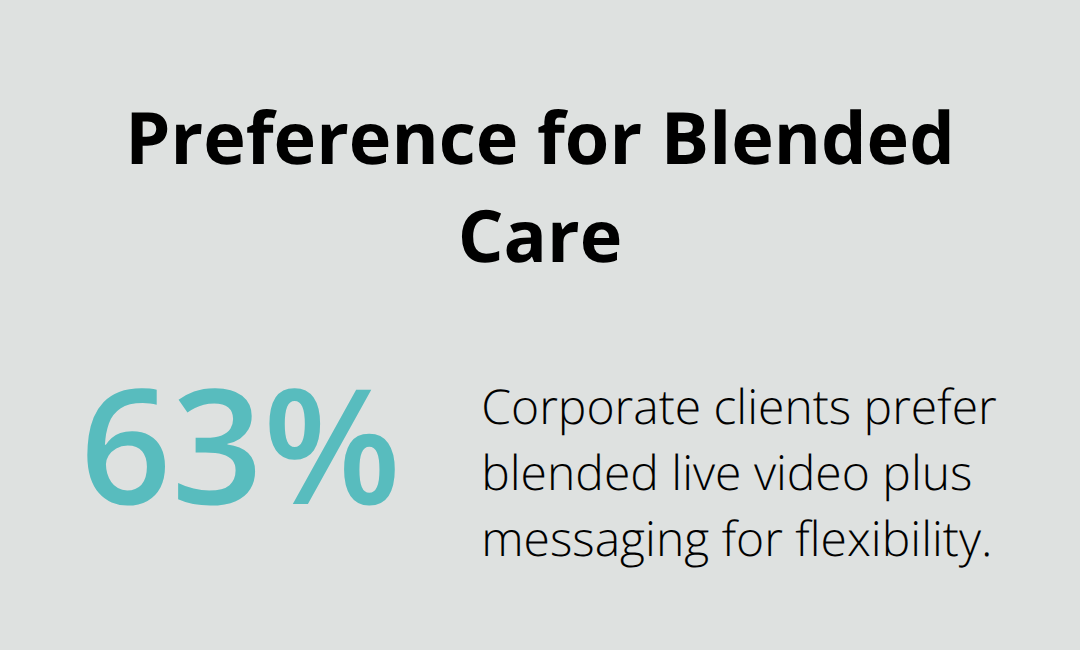
Research on blended care models shows that 63% of corporate clients prefer combining live video sessions with asynchronous messaging for flexibility, and this approach keeps professionals engaged throughout treatment. The structure prevents the common dropout pattern where clients attend sporadically or abandon therapy when life gets busy. Professionals report higher session retention rates and faster symptom reduction when evening programs combine group and individual formats, because the peer context makes the clinical work feel relevant to their actual lives rather than theoretical.
Peer Support Counters Professional Isolation
Peer support in evening group sessions creates accountability that solo therapy simply can’t match. When professionals sit in a room with others facing similar workplace stress, anxiety, or burnout, they stop feeling isolated and start recognizing that their struggles aren’t personal failures. Research shows that isolation affects many professionals, yet group evening programs directly counter this reality. These programs normalize professional mental health challenges across industries and help participants understand that their experiences reflect common workplace pressures rather than individual weakness.
Clinical Skills Meet Real-World Application
Therapists in evening programs teach cognitive behavioral techniques and mindfulness practices that professionals apply immediately in their work environment-boundary-setting with demanding colleagues, reframing catastrophic thinking during high-pressure projects, using breathing techniques before difficult meetings. Individual sessions coordinate medication management when needed, ensuring pharmacological support aligns with therapy. The combination of clinical expertise and peer connection means professionals develop stronger coping skills than they would in either format alone. Licensed clinicians address specific triggers, trauma history, and personalized treatment needs while group participants benefit from shared experiences and mutual accountability. This mixed approach delivers both depth and breadth of support that addresses the full scope of professional mental health challenges.
Final Thoughts
Evening counseling for professionals addresses a real problem that traditional therapy ignores. Work stress peaks at night, yet most therapists operate during business hours, leaving professionals to struggle alone or sacrifice career visibility for treatment. We at EveningIOP built our programs around your actual schedule, not clinic convenience, because nighttime counseling for professionals works only when it fits your life.
The evidence shows that professionals who access evening mental health support complete treatment faster, maintain higher session attendance, and develop stronger coping skills than those waiting for daytime appointments. Group sessions reduce the isolation that intensifies burnout, while individual therapy addresses your specific triggers and medication needs. This combination meets you where you actually are-managing demanding work while handling anxiety, depression, or substance use challenges that refuse to respect business hours.
EveningIOP offers live, telehealth evening intensive outpatient programs that combine interactive group therapy, one-on-one sessions with licensed clinicians, and flexible scheduling designed for working professionals. The programs run from 5 p.m. to 9 p.m., typically three to five sessions per week, compressed into six to twelve weeks of focused treatment. Professionals who prioritize mental health during intensive evening programs report sustained improvements in job performance, stronger workplace relationships, better sleep quality, and genuine confidence in managing future stress.