


Addiction doesn’t follow a 9-to-5 schedule, and neither should your treatment. Many people struggling with substance use can’t take time off work or arrange childcare during standard clinic hours, so they never get help at all.
At EveningIOP, we built nighttime addiction care online specifically for people whose lives don’t fit traditional recovery programs. Our evening sessions let you get professional treatment without sacrificing your job, family, or responsibilities.
Why Evening Treatment Actually Works
Treatment engagement hinges on one factor: whether people show up consistently. Research shows that regular evening follow-up sessions are linked to higher treatment engagement and lower relapse risk. When addiction care fits your actual life instead of forcing you to reshape your life around clinic hours, you attend. Professionals skip daytime appointments because they cannot take another sick day. Parents cannot afford childcare during business hours. Shift workers’ schedules simply do not align with traditional 9-to-5 treatment.
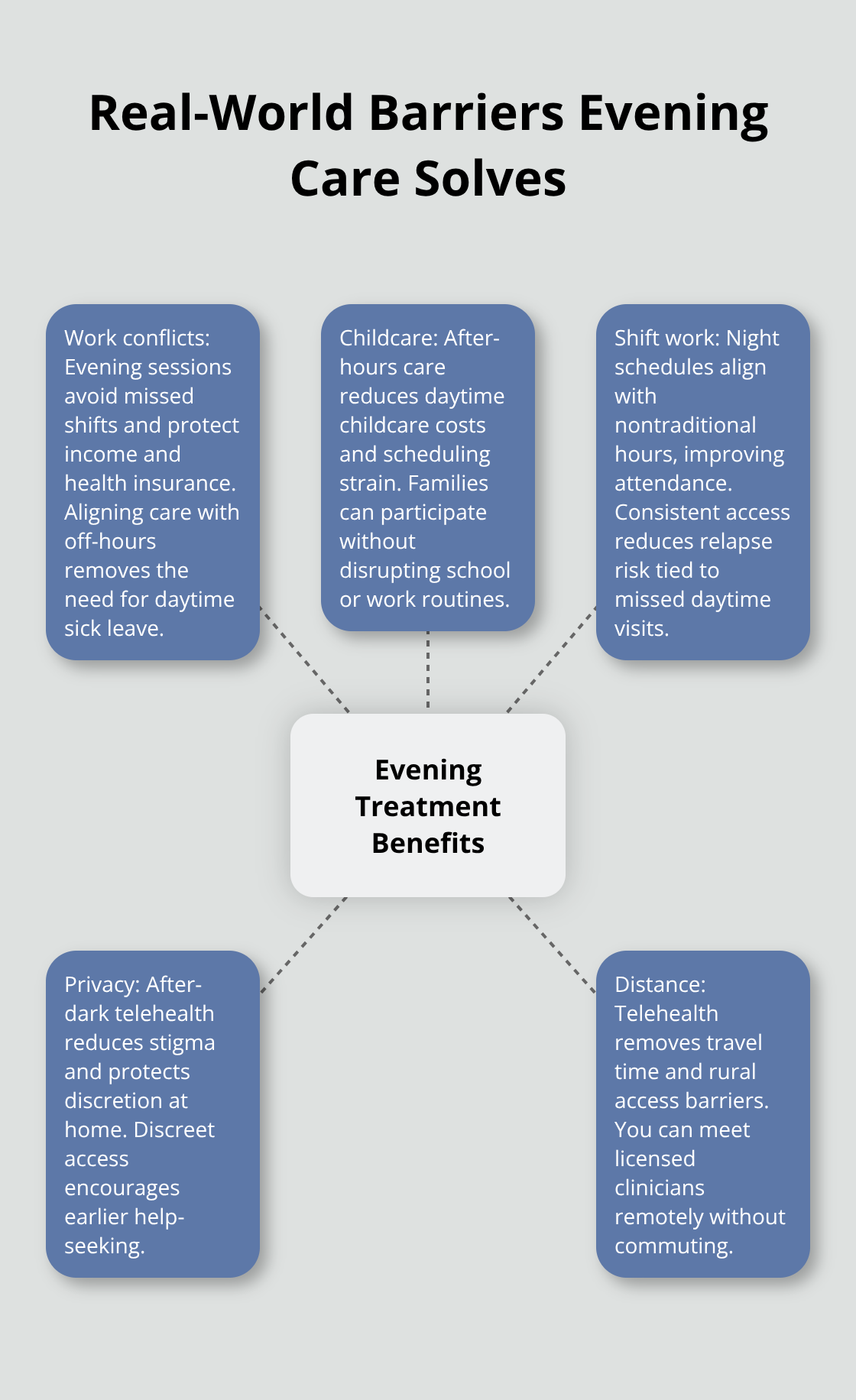
Evening sessions eliminate the false choice between recovery and financial stability. Flexible evening addiction appointments help maintain employment and health insurance benefits by avoiding frequent sick days or income loss, which means you keep the stability you need to stay in treatment long-term.
Transportation and Access Remove Real Barriers
Telehealth expands after-hours access dramatically, connecting you to licensed clinicians remotely and eliminating travel costs and time off work. Rural patients particularly benefit-telehealth reduces geographic barriers that make in-person evening care impossible. Evening scheduling also reduces stigma and privacy concerns, especially when combined with secure telehealth platforms you can access from home. Shame often keeps people from seeking help, and knowing you can receive treatment discreetly after dark changes the decision to reach out. This shift matters because it removes one more obstacle between you and recovery.
Family Involvement Becomes Possible
Evening appointments lessen childcare challenges and facilitate family involvement, enabling spouses or relatives to attend family therapy or education sessions while you receive care. Family support directly strengthens recovery outcomes. When loved ones understand addiction and learn how to recognize relapse triggers, they become part of your safety net, not an additional source of stress during vulnerable nighttime hours. This support structure helps you navigate the emotional and mental challenges that surface after dark.
What to Expect From Evening Programs
Evening Intensive Outpatient Programs typically include three to four sessions per week, each lasting several hours, allowing time to address crises while meeting personal obligations. These programs combine live group therapy sessions with licensed clinicians, one-on-one counseling between group meetings, and remote drug and alcohol testing for accountability. A multidisciplinary team (physicians, psychiatrists, counselors) collaborates to design a holistic plan that adapts to changing schedules.

This structure provides the clinical intensity you need without the inflexibility that keeps people away from treatment altogether.
How Your Evening Treatment Sessions Actually Work
Group Therapy After Work Stress Accumulates
Group therapy at night operates differently than daytime programs because participants arrive after work stress, family obligations, and mental fatigue have already accumulated. Evening group sessions with licensed clinicians address the reality that your brain chemistry and emotional state shift throughout the day. You attend three to four sessions per week, each lasting several hours, which gives clinicians time to address acute crises while keeping you accountable to recovery goals.
Live group therapy works because you hear directly from peers facing identical struggles. Someone shares a relapse trigger from their shift work, another discusses managing cravings while their family sleeps, and you realize isolation was the lie addiction told you. Research on treatment engagement shows that consistent session attendance predicts lower relapse risk, and evening scheduling removes the employment conflict that causes people to skip daytime appointments.
Individual Counseling Addresses Your Specific Triggers
Between group sessions, you meet one-on-one with a licensed clinician to address your specific triggers, medication concerns, or family dynamics that group time cannot adequately cover. These individual sessions typically last 50 to 60 minutes and happen either in person or via secure telehealth, depending on your schedule and preference. Your clinician tailors each conversation to the challenges that surface in your particular life-not a generic recovery template.
Remote drug and alcohol testing provides accountability without requiring you to take time off work or travel to a lab during business hours. Testing happens at home through secure platforms, and results reach your clinical team immediately, creating transparency that strengthens your commitment to abstinence.
Real-Time Treatment Adjustments When You Need Them
What separates effective evening programs from mediocre ones is clinical depth combined with scheduling flexibility. A multidisciplinary team-physicians, psychiatrists, and counselors-reviews your test results, monitors withdrawal symptoms, and adjusts your treatment plan in real time rather than waiting for a monthly review. If you experience insomnia from withdrawal, your physician can address it during evening hours. If family conflict emerges on a Thursday night, your counselor schedules immediate support instead of making you wait until the following week.
This responsiveness matters because nighttime is when relapse risk peaks, and delays in care can cost you months of progress. Insurance covers evening sessions for most people, though coverage varies by plan and state, so verify your benefits directly with intake staff rather than assuming denial.
What Happens When You’re Ready to Move Forward
The structure of evening intensive outpatient care combines clinical rigor with the practical reality that your life doesn’t pause for traditional business hours. Once you complete the intensive phase of treatment, your clinical team transitions you into continuing care-a critical step that determines whether the progress you made in evening sessions actually sticks.
How to Spot a Legitimate Evening Program
Addiction treatment has no shortage of operators willing to take your money without delivering results. Some programs claim accreditation they do not have. Others hire counselors without proper credentials or run telehealth platforms that expose your medical records to data brokers. Start by verifying that any evening program holds state licensing through your state’s Department of Health Services or equivalent agency. DHCS licensing in California, for example, requires documented clinical oversight, staff credentials, and financial accountability. Joint Commission accreditation means an independent third party has inspected the facility’s clinical practices, infection control, and medication management. LegitScript certification confirms that the telehealth platform meets pharmaceutical industry standards for data security and prevents unlicensed providers from operating under a legitimate name. Request documentation directly from intake staff and verify credentials through your state’s licensing board or the National Association of Addiction Treatment Providers database rather than relying on website claims.
Clinical Staff Credentials Separate Real Programs From Pretenders
Ask specifically whether counselors hold state licensure as Licensed Marriage and Family Therapists, Licensed Professional Counselors, or Licensed Clinical Social Workers. A program might employ 50 staff members, but if most lack credentials beyond a high school diploma, you pay for supervision, not specialized addiction treatment. Physicians should hold board certification in addiction medicine or psychiatry, not simply licensure to prescribe. Request the résumé or credentials verification for the specific clinician who will treat you, not a generic staff list. Insurance companies reject claims from unlicensed providers, so if a program cannot name your clinician’s credentials before enrollment, that signals a red flag. Evening programs that operate at clinical depth employ psychiatrists and physicians during night hours because medication adjustments, withdrawal management, and co-occurring mental health conditions require real-time medical oversight.
Telehealth Platforms Must Meet Healthcare Privacy Standards
Telehealth platforms should comply with HIPAA standards, which means encrypted communication, secure patient portals, and staff trained in privacy protocols. Ask whether the program uses a dedicated clinical platform or a consumer video service like Zoom, which does not meet healthcare privacy standards. Request a demo session or trial access to the telehealth system before you enroll. Poor platforms freeze mid-session, have laggy video that makes group therapy awkward, or display your name and photo to other participants without privacy protections.

Confirm that remote drug testing occurs through a legitimate laboratory partner with chain-of-custody documentation, not through a third-party app that stores your test results on a consumer server.
Data Security Determines Whether Your Recovery Stays Private
If a program cannot explain how it protects your data or seems defensive about security questions, that hesitation tells you something important. Your evening recovery depends on confidentiality-if your employer discovers you are in treatment through a data breach, the consequences destroy the employment stability that evening programs are supposed to protect. Test the platform security before you commit. Poor security practices expose you to risks that extend far beyond treatment itself (job loss, family conflict, legal complications). Programs that take data protection seriously answer your questions directly and provide transparent documentation of their security measures.
Final Thoughts
The barrier between you and recovery was never your commitment to sobriety. It was the inflexible schedule of traditional treatment programs that forced you to choose between your job, your family, and your health. Evening programs eliminate that false choice entirely, and nighttime addiction care online works because it meets you where you actually live, not where treatment administrators think you should be. Research consistently shows that people who attend treatment regularly stay abstinent longer than those who drop out due to scheduling conflicts.
Quality online care delivers real results because clinical depth does not depend on whether sessions happen at 2 p.m. or 7 p.m. Licensed psychiatrists, physicians, and counselors provide the same evidence-based treatment in the evenings that they provide during the day, and remote drug testing creates accountability without requiring you to take time off work. Group therapy connects you with peers who understand shift work stress and family obligations because they live them too, while individual counseling addresses your specific triggers rather than a generic recovery template.
We at EveningIOP offer live, telehealth evening Intensive Outpatient Programs that combine interactive online group therapy, one-on-one sessions with licensed clinicians, and remote drug and alcohol testing. Contact our intake staff directly to verify your insurance coverage and schedule your first session with a DHCS-licensed, Joint Commission-accredited, and LegitScript-certified program that provides clinically effective, flexible nighttime care.