


Substance use disorder treatment works best when it’s built on research, not guesswork. At EveningIOP, we’ve seen firsthand how evidence-based SUD care produces measurable results that traditional approaches simply can’t match.
The difference comes down to data. When treatment decisions are guided by clinical evidence rather than convention, people recover more consistently and stay in recovery longer.
What Research Actually Proves About Treatment
Evidence-based SUD care means treatment decisions rest on clinical data, not tradition or intuition. The Surgeon General’s Report on Alcohol, Drugs, and Health from 2016 established clear benchmarks: effective treatment reduces substance use, improves employment outcomes, strengthens family relationships, and lowers overdose risk. Researchers evaluate a treatment by measuring whether it delivers these results across multiple studies with diverse populations. The National Institute on Drug Abuse tracks which interventions consistently work and which don’t. Medication-assisted treatment with buprenorphine or methadone reduces illicit opioid use and cuts overdose mortality according to meta-analyses in JAMA Psychiatry. Behavioral therapies like cognitive-behavioral therapy and motivational interviewing show documented improvements in treatment retention and relapse prevention.
How accountability separates evidence-based from traditional approaches
The difference between evidence-based and traditional approaches comes down to accountability. Traditional programs might rely on philosophy, peer support alone, or detoxification without follow-up care. Evidence-based programs measure outcomes systematically. They test patients regularly, adjust treatment when progress stalls, and track whether people stay employed and maintain family connections after discharge. Treatment duration matters enormously-staying in care for an adequate period produces substantially better long-term outcomes than brief interventions. Someone in a 90-day program outperforms someone in a 30-day program across nearly every metric.
Clinical monitoring as the foundation of recovery
Treatment programs that incorporate regular drug testing, psychiatric assessments, and standardized outcome measurements catch problems early. A person showing signs of relapse receives intervention immediately rather than waiting for a crisis. Programs using the Addiction Severity Index or DAST-10 screening tools know exactly where each patient stands across employment, family, legal, and health dimensions. Programs without this structure operate blind, hoping for the best rather than managing toward measurable recovery.
Matching treatment to the individual
Data reveals which treatments work for which substances. For alcohol use disorder, naltrexone combined with counseling increases abstinence rates. For opioid use disorder, medication forms the foundation-attempting to treat it with counseling alone produces inferior results. The research is unambiguous on this point, yet many traditional programs still resist medication. Evidence-based care matches the treatment to the specific substance, the individual’s co-occurring mental health needs, and their life circumstances. Someone working full-time needs flexible evening programming. Someone with depression requires integrated psychiatric care alongside addiction treatment. Someone with family instability benefits from involving relatives in therapy. Traditional approaches apply a one-size-fits-all model. Evidence-based programs customize the intervention because the science shows customization produces recovery.
This customization extends beyond scheduling and into the core structure of how treatment unfolds. The next section examines the specific components that evidence-based programs implement to achieve these measurable results.
Core Components That Drive Real Recovery Outcomes
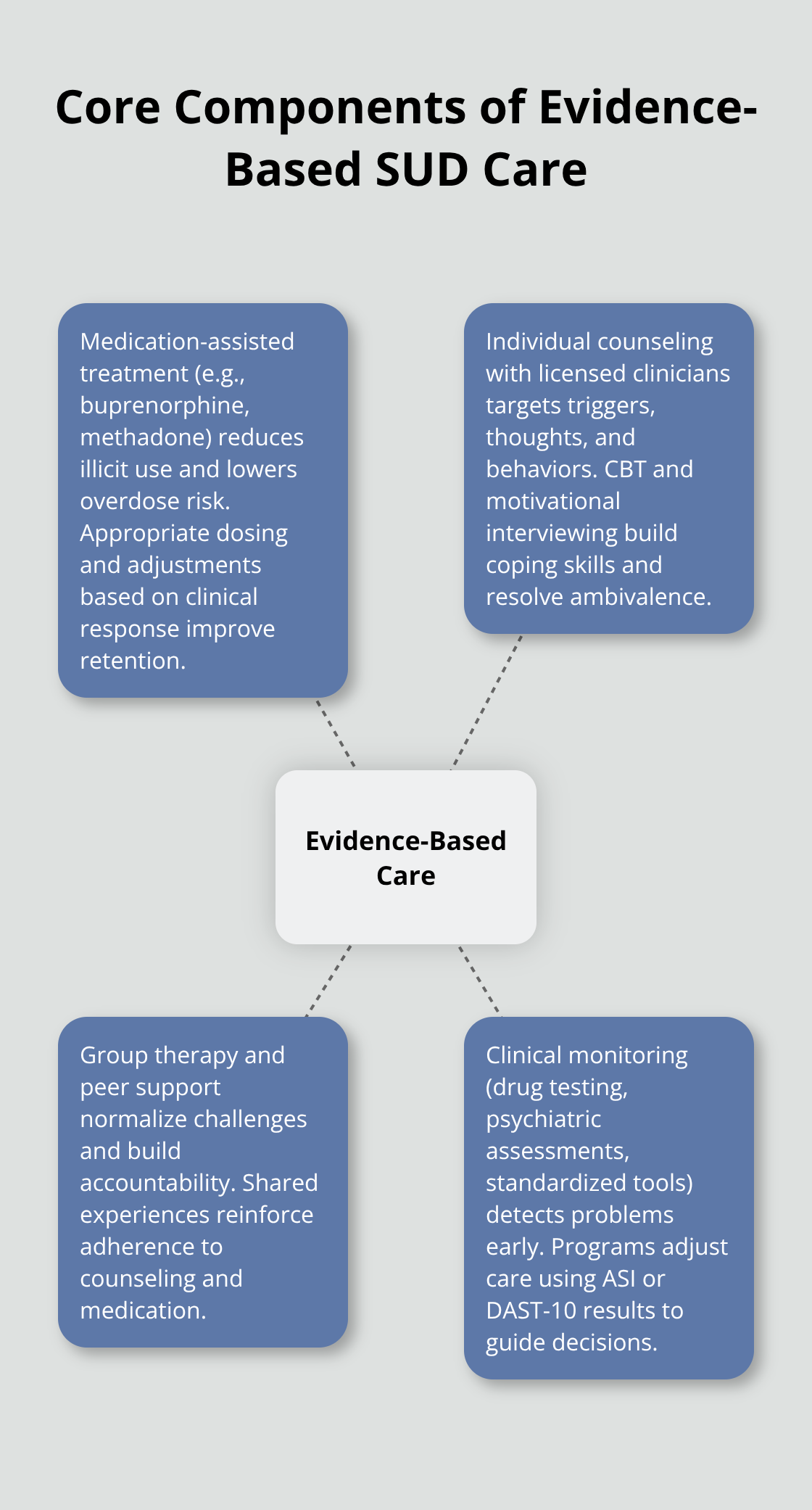
Medication-assisted treatment with buprenorphine and methadone reduces illicit opioid use by 50 to 70 percent compared to counseling alone. The Surgeon General’s 2016 report confirmed that medication combined with behavioral therapy produces superior outcomes to either approach independently. For alcohol use disorder, naltrexone decreases heavy drinking days and reduces cravings when paired with counseling, while acamprosate lowers relapse risk in individuals committed to abstinence.
How medication removes the neurochemical barrier to recovery
The critical insight most traditional programs miss is that medication does not substitute for recovery-it removes the neurochemical barrier that makes recovery possible. Someone taking buprenorphine can actually engage in therapy, rebuild relationships, and address the behavioral patterns driving their use. Without medication, their brain chemistry works against them. Dosing matters significantly; research from SAMHSA shows that adequate buprenorphine doses of 16 to 24 milligrams daily produce better retention and lower illicit use than inadequate dosing. Programs that adjust medication based on clinical response and patient feedback see dramatically higher success rates than programs using fixed protocols.
Individual counseling with licensed clinicians drives behavior change
One-on-one sessions with licensed therapists address the specific triggers, thought patterns, and life circumstances fueling substance use. Cognitive-behavioral therapy in individual sessions helps patients identify high-risk situations and develop concrete coping strategies before they encounter triggers in the real world. Motivational interviewing resolves ambivalence about recovery-many people entering treatment feel conflicted about change, and skilled clinicians help them clarify their own reasons for recovery rather than imposing external pressure. The therapeutic relationship itself predicts outcomes; research shows that patients who feel heard and respected by their clinician stay in treatment longer and achieve better results. Licensed clinicians maintain clinical notes, track progress, and adjust treatment when someone shows warning signs.
Group therapy and peer support create accountability
Group therapy and peer support structures complement individual work by normalizing recovery struggles and building accountability. Hearing from others further along in recovery creates hope and practical strategies. Peers who have navigated similar challenges offer credibility that clinicians alone cannot provide. Group members witness each other’s progress and setbacks, which reinforces the reality that recovery requires sustained effort across multiple dimensions of life. This peer accountability often motivates people to maintain medication adherence and attend counseling sessions consistently.
Integration of monitoring and measurement
Treatment programs that incorporate regular drug testing, psychiatric assessments, and standardized outcome measurements catch problems early. A person showing signs of relapse receives intervention immediately rather than waiting for a crisis. Programs using the Addiction Severity Index or DAST-10 screening tools know exactly where each patient stands across employment, family, legal, and health dimensions. Remote drug testing technology now allows patients to submit samples from home, which removes barriers for working professionals and parents managing multiple responsibilities. This combination of medication, individual counseling, group accountability, and regular monitoring addresses recovery from multiple angles simultaneously-the approach that research consistently shows produces sustained abstinence and life stability.
The next section examines how modern treatment settings implement these components in ways that fit the lives of working adults and families.
Making Evidence-Based Care Work Around Your Schedule
Evidence-based treatment only matters if people can actually access it. The research proving medication-assisted treatment and intensive counseling works means nothing to someone working until 6 p.m. or managing childcare during business hours. Modern treatment delivery has solved this access problem through telehealth and evening programming, removing the false choice between recovery and keeping your job.
Telehealth removes barriers that block working adults from treatment
Telehealth eliminates geographic and logistical barriers that once made treatment impossible for working adults. Remote drug testing technology now allows patients to submit samples from home using video verification, removing the need for midday clinic visits that disrupt employment. SAMHSA data shows that expanding access through telehealth increases treatment initiation rates and improves retention because people encounter fewer obstacles to showing up. Individual counseling sessions conducted via secure video call work as effectively as in-person sessions for cognitive-behavioral therapy and motivational interviewing, with research from multiple treatment centers confirming equivalent outcomes.
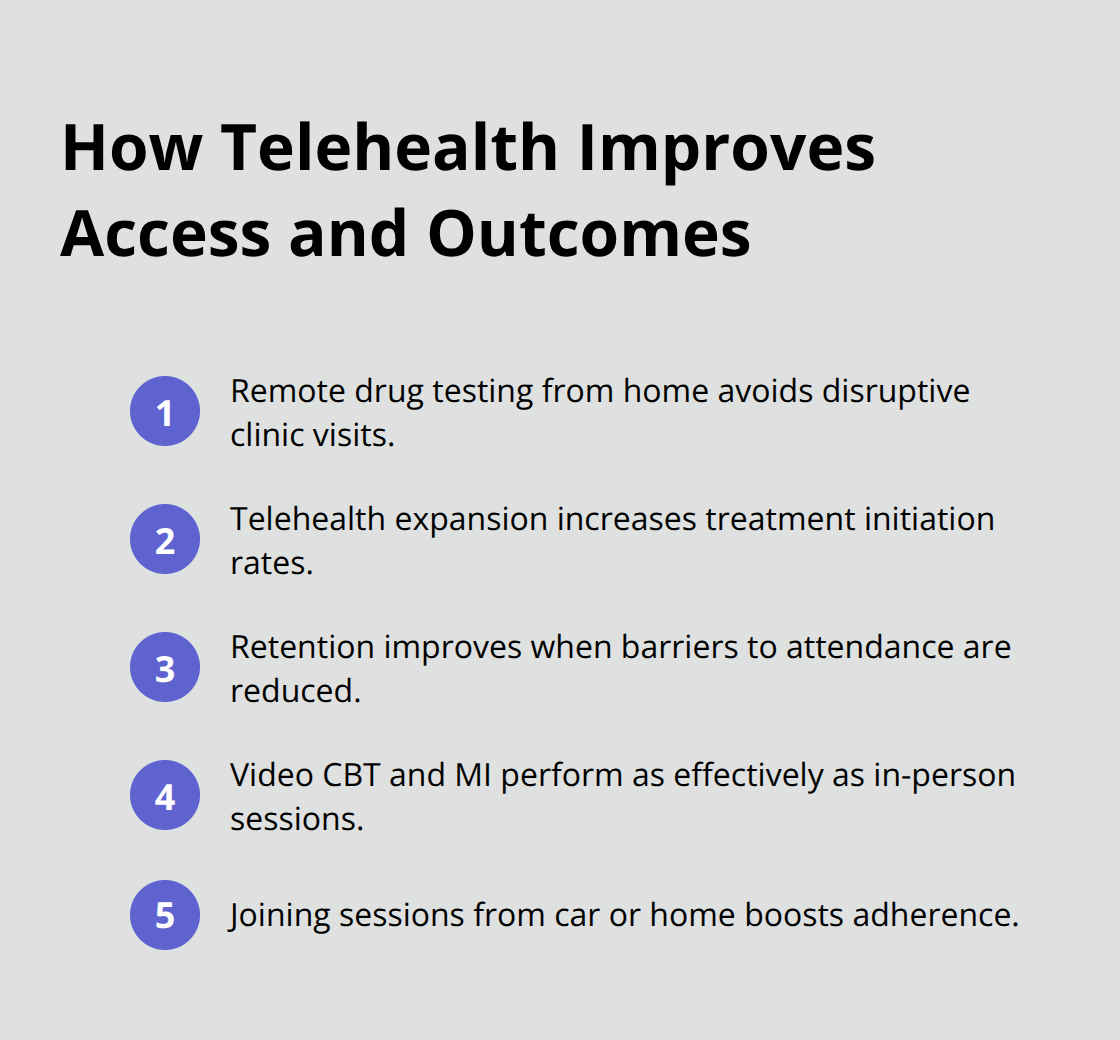
Patients report higher adherence when they can join sessions from their car during a lunch break or from home after dinner rather than traveling across town.
Evening programming lets working professionals maintain employment and income
Evening intensive outpatient programs specifically address the working professional’s reality by scheduling group therapy, individual sessions, and clinical monitoring during nighttime hours. A person attending treatment from 5 p.m. to 8 p.m. maintains full-time employment, keeps their income stable, and preserves family relationships that might collapse during a residential program. This matters clinically because employment stability and maintained social connections predict long-term recovery success according to the Surgeon General’s 2016 report. Programs that accommodate work schedules see higher completion rates than those requiring daytime attendance because people do not face the impossible choice of losing income to attend treatment.
Remote monitoring maintains clinical accountability without sacrificing convenience
Clinical monitoring integrates seamlessly into remote treatment delivery without compromising quality. Urine drug testing conducted at home with video supervision provides the same clinical data as in-office testing while removing transportation barriers. Licensed clinicians review results within 24 hours and adjust treatment immediately if someone shows relapse warning signs, meaning remote monitoring actually accelerates clinical response compared to programs with delayed result processing. Standardized outcome measurement tools like the Addiction Severity Index work identically whether administered in person or remotely, so programs operating entirely through telehealth maintain full clinical accountability. The integration point that matters most is ensuring medication prescribing happens with licensed physicians who can adjust doses based on clinical response and patient feedback, not through automated protocols or less regulated providers.
Why Evidence-Based SUD Care Produces Better Long-Term Results
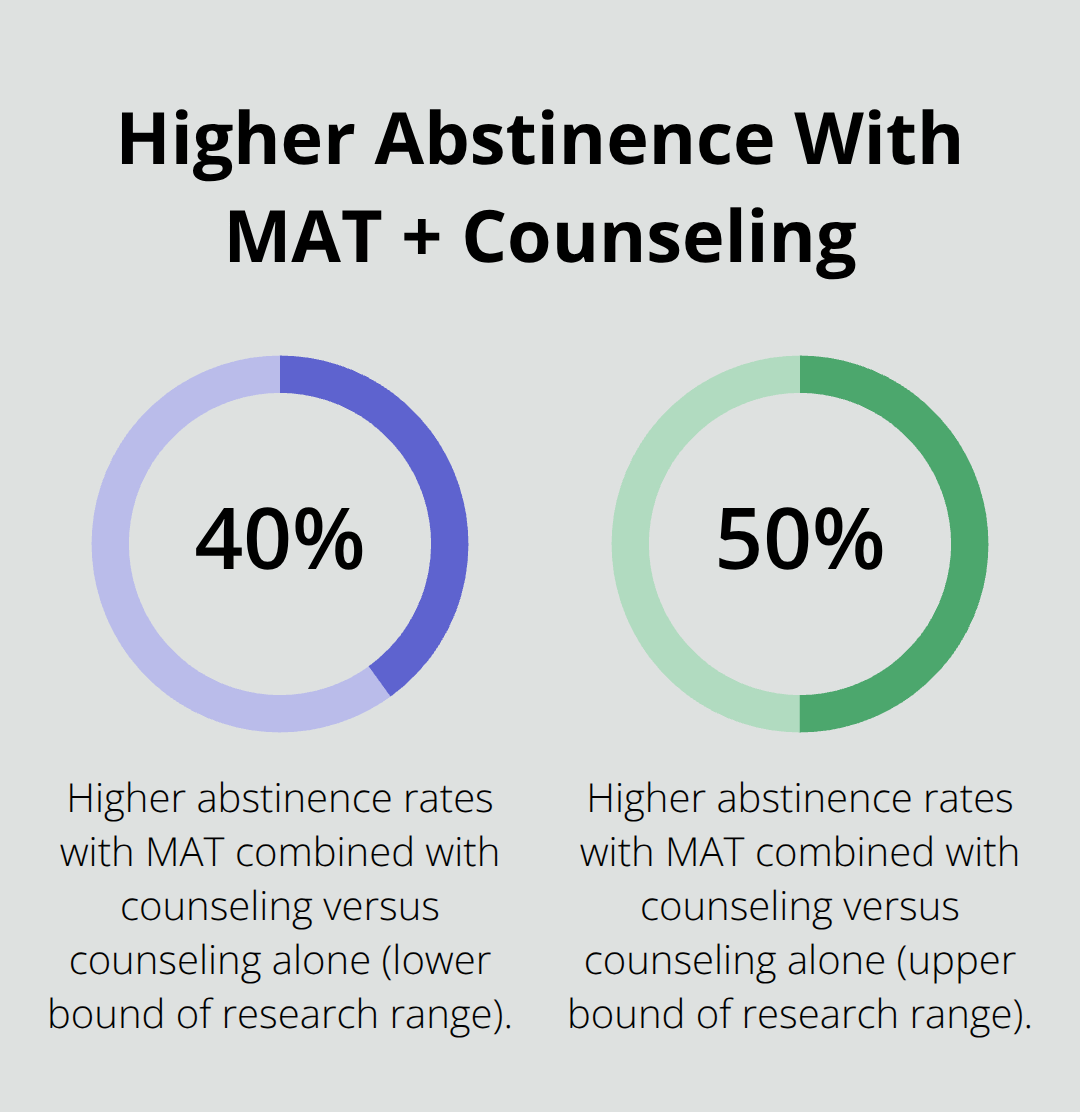
People completing programs built on clinical research maintain recovery at substantially higher rates than those in unstructured settings. Research from SAMHSA shows that individuals receiving medication-assisted treatment combined with counseling maintain abstinence at rates 40 to 50 percent higher than those attempting recovery through counseling alone. This gap widens further when programs incorporate regular monitoring and adjust treatment based on clinical response rather than following fixed protocols.
Employment stability and family relationships improve dramatically under evidence-based SUD care because treatment addresses the whole person, not just substance use.
The Surgeon General’s 2016 report documented that people in structured programs return to work faster, maintain employment longer, and experience measurable improvements in family functioning compared to those in traditional programs. Someone staying in a job generates income that stabilizes housing, reduces legal problems, and creates the foundation for sustained recovery. Family members report lower stress and improved relationships when treatment includes family therapy and clear communication about recovery progress. Accreditation and licensing matter because they enforce accountability that protects patients and ensures clinical quality-programs accredited by The Joint Commission meet rigorous standards for medication management, clinician qualifications, and outcome tracking.
Evidence-based SUD care works when treatment fits your life. EveningIOP delivers proven clinical methods at times that accommodate your schedule, combining medication-assisted treatment, individual counseling with licensed clinicians, and remote drug testing during evening hours. This structure removes the barriers that prevent people from accessing effective care while maintaining the clinical rigor that produces sustained recovery.