
Substance use disorder treatment shouldn’t force you to choose between recovery and your career. At EveningIOP, we’ve built a program that works around your schedule, not against it.
Nighttime recovery via telehealth means you get clinical-grade treatment from home, after work ends. This introduction walks you through how evening programs deliver real results without derailing your life.
Why Daytime Treatment Doesn’t Fit Your Life
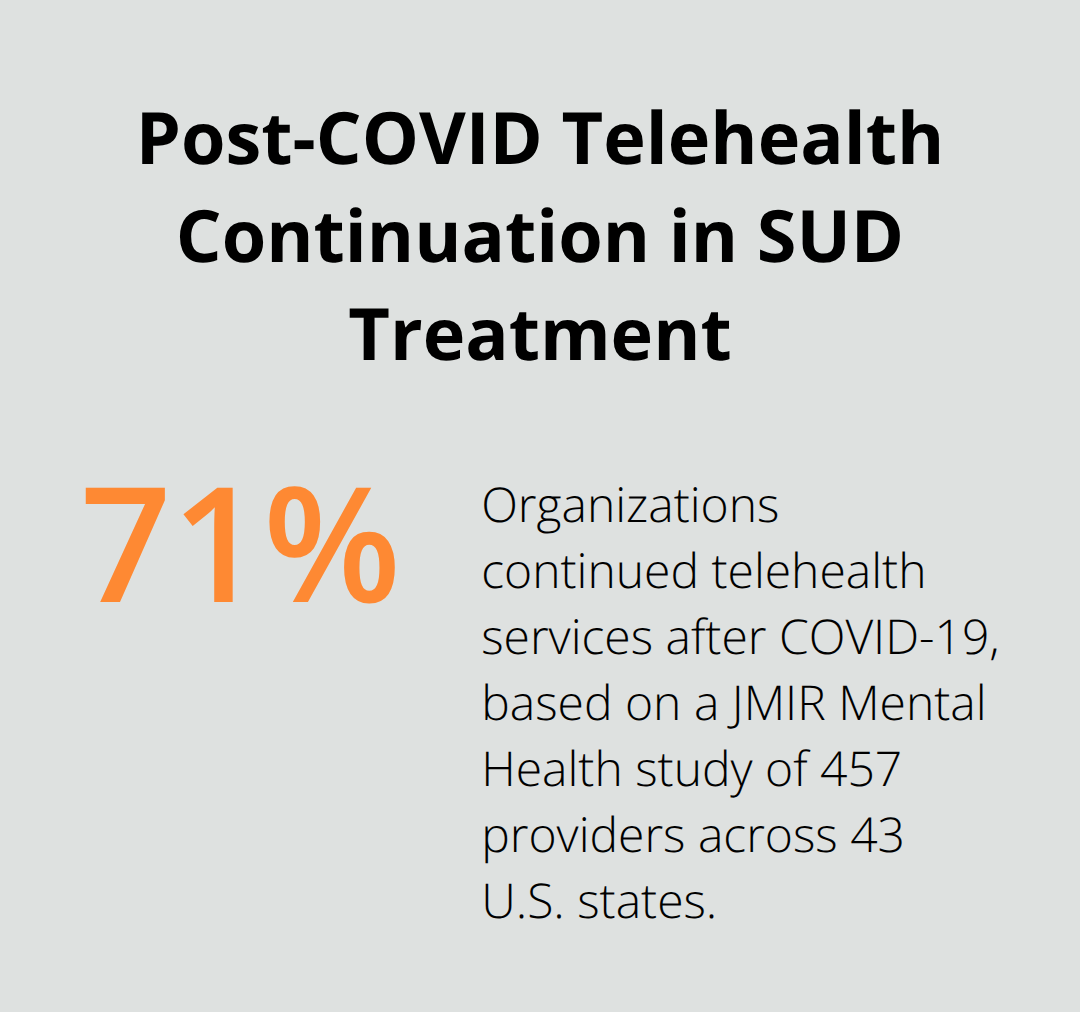
Daytime intensive outpatient programs operate on a schedule designed for people without jobs, caregiving responsibilities, or complex lives. Most traditional IOPs run between 9 a.m. and 5 p.m., which means you either take unpaid time off, lie to your employer about where you are, or skip treatment altogether. A study from JMIR Mental Health involving 457 substance use disorder treatment organizations across 43 states found that nearly 71% of organizations continued telehealth services post-COVID, yet the vast majority still clustered appointments during standard business hours. This creates an impossible situation: show up for recovery and risk your job, or protect your paycheck and delay treatment.
Scheduling conflicts remain a known barrier to care. For working professionals, this isn’t a minor inconvenience-it’s the reason they never start treatment in the first place.
The Collision Between Work and Recovery
Your employer doesn’t care about your recovery timeline. Missing three to five hours daily for a daytime program signals that something is wrong, and many workplaces don’t accommodate substance use disorder treatment the way they do other medical conditions. Parents face even steeper obstacles: daytime programs mean your kids get picked up late from school, childcare costs skyrocket, or you constantly explain absences to teachers. The burnout compounds quickly. You manage addiction and treatment while also managing job insecurity, family stress, and the shame of feeling like you fail at everything.
How Evening Telehealth Changes the Equation
Evening telehealth programs eliminate this collision entirely. Live group therapy sessions and clinical support happen after work ends, which means you attend treatment without fabricating excuses or sacrificing your paycheck. One-on-one sessions with licensed clinicians fit into your evening, and remote drug and alcohol testing integrates seamlessly into your schedule without requiring time off. You stop choosing between recovery and stability-you get both.
EveningIOP delivers this model through DHCS-licensed, Joint Commission-accredited care that combines interactive online group therapy, individual sessions with licensed clinicians, and remote drug and alcohol testing. The program lets busy professionals and families pursue recovery without disrupting work or home responsibilities. Your treatment happens when you’re ready, not when a clinic’s calendar permits it.
What Makes Evening Programs Clinically Viable
The shift to evening telehealth isn’t just convenient-it’s clinically sound. Research shows that telehealth can yield outcomes equivalent to in-person care in substance use disorder treatment, with videoconferencing often linked to high patient satisfaction. When treatment fits your actual life (not an imaginary one without obligations), you show up consistently. Consistent attendance drives better outcomes. The data supports what working people already know: removing barriers to care means more people actually receive it.
How Evening Programs Deliver Real Clinical Outcomes
Live Group Therapy Builds Accountability in Real Time
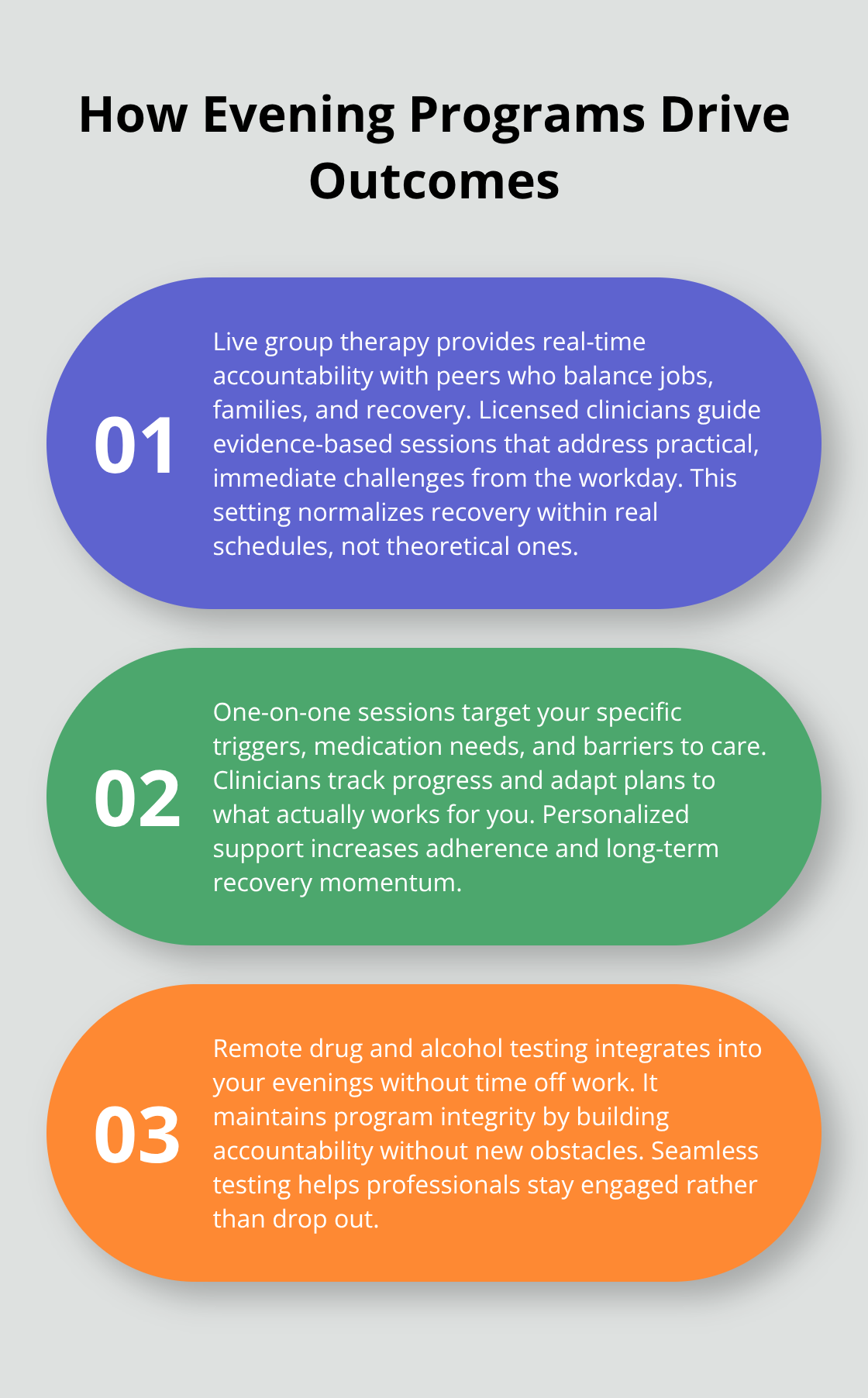
Video-delivered group therapy isn’t watered-down treatment-it’s the same evidence-based intervention delivered at a time that actually works for your life. Licensed clinicians facilitate live group therapy in evening telehealth where peers face identical challenges. In evening group settings, you hear directly from people managing jobs, families, and recovery simultaneously. That peer accountability isn’t theoretical-it’s immediate and practical. Someone in your group just navigated a difficult conversation with their boss about taking medical leave. Another member maintains three months of sobriety while working full-time as a manager. You witness recovery happening in real schedules, not imaginary ones. The group becomes your evidence that this works.
One-on-One Sessions Address Your Specific Needs
Individual sessions with licensed clinicians address what group therapy cannot: your specific triggers, your particular medication regimen, your individual treatment barriers. These sessions happen on your evening schedule, which means you avoid rushing between work and treatment or squeezing clinical care into a lunch break. Licensed clinicians monitor your progress, adjust your approach based on what actually works, and provide the personalized support that drives sustained recovery. The clinician knows your history, your goals, and your obstacles-not a generic version of addiction recovery.
Remote Testing Removes Compliance Barriers
Remote drug and alcohol testing eliminates the friction that traditionally derails compliance. You don’t take time off to visit a testing center. You complete tests from home on your schedule, which removes one more barrier between you and consistent participation. This integration of testing into evening telehealth maintains program integrity by creating accountability without creating new obstacles. The combination of group accountability, individual clinical attention, and seamless testing creates a system where working professionals stay engaged rather than drop out-and that engagement directly shapes what happens next in your recovery journey.
How to Prepare Your Home for Evening Treatment
Create a Dedicated Space for Therapy
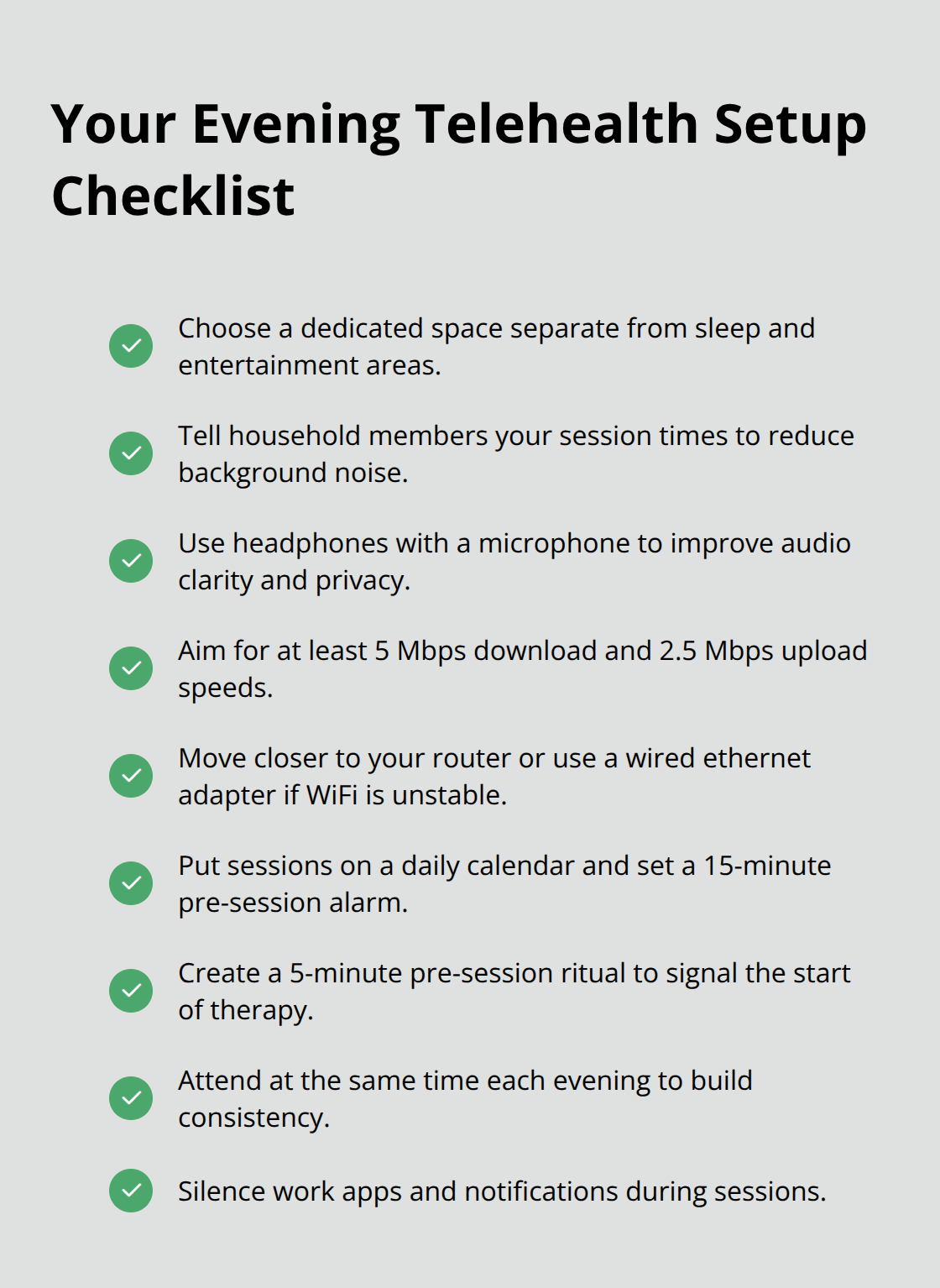
Your physical environment determines whether you show up consistently or gradually make excuses. Evening telehealth requires more intentionality than daytime treatment because you manage work fatigue, household distractions, and the temptation to skip sessions when life gets hectic. The space where you attend therapy needs to be separate from where you sleep, watch television, or handle work stress. A dedicated corner of a bedroom works better than your kitchen table, which works better than your couch. This separation signals to your brain that therapy time is different from everything else happening at home.
Noise matters significantly. Research on telehealth adoption from 457 substance use disorder treatment organizations across 43 states showed that perceived ease of use directly influenced sustained engagement with virtual care. Background noise from roommates, pets, or traffic undermines that ease. If you live in a shared space, communicate your session times to household members and ask them to minimize noise during those windows. Closing a door, using headphones with a microphone, and positioning your device away from windows that face busy streets all reduce distractions that make you want to cut sessions short.
Optimize Your Technology Setup
Internet connectivity is non-negotiable. You need a stable connection capable of supporting video without frequent drops. Test your connection speed before your first session-try for at least 5 Mbps download and 2.5 Mbps upload. If your WiFi is unreliable, move closer to your router or consider a wired connection using an ethernet adapter. Poor video quality creates friction that compounds over weeks, and friction is what causes people to rationalize missing sessions.
Build Routines That Anchor Your Commitment
Routines anchor behavior in ways that willpower never does. Evening programs work because they replace the daytime schedule you lost with a new structure that actually fits your life. Schedule your sessions on a calendar you check daily, not just in your phone’s therapy app where you might miss notifications. Set a phone alarm fifteen minutes before each session as a reminder-not because you’ll forget, but because the alarm breaks whatever you’re doing and forces a transition.
Treat evening therapy with the same seriousness you give work meetings. Shower beforehand, close work applications on your computer, and prepare mentally rather than logging in while still in your work headspace. The transition matters more than people admit. Establish a five-minute routine before sessions: make tea, sit somewhere specific, write one thing you want to address that evening. This small ritual signals your nervous system that recovery time has started.
Protect Your Evening Blocks
Consistency is what changes outcomes. Organizations sustaining telehealth services post-COVID prioritized leadership support and clinical champions who modeled engagement. In your home, you are both. Attend sessions at the same time each evening-this trains your brain to expect therapy the way it expects dinner. Skipping one session is how people eventually skip three. Protect your evening blocks the way you protect work hours. Tell people you’re unavailable. Turn off notifications from work apps. Your job now is making sure nothing competes with the time you’ve already claimed for recovery.
Final Thoughts
Evening telehealth fundamentally changes who can access substance use disorder treatment. Traditional daytime programs exclude working professionals, parents, and students by design, but nighttime recovery via telehealth removes that exclusion entirely. You attend treatment after work ends, from home, without sacrificing your job or your family’s stability, and research consistently shows that videoconferencing delivers outcomes matching face-to-face sessions.
Clinical accreditation matters more than convenience alone. We at EveningIOP operate under DHCS licensing and Joint Commission accreditation, which means your treatment meets the same rigorous standards as any in-person facility. You gain both quality and flexibility simultaneously, not one at the expense of the other.
The future of substance use disorder treatment builds systems where recovery becomes part of your life rather than something that requires you to pause everything else. Remote drug and alcohol testing, live group therapy with licensed clinicians, and one-on-one sessions all happen on your schedule, so you show up consistently because treatment finally works around your actual obligations. Start your recovery tonight at EveningIOP.