

Substance use treatment doesn’t have to mean taking time away from work. At EveningIOP, we’ve seen countless professionals reclaim their careers while getting the clinical care they need.
Evening therapy for professionals is changing how people approach recovery. When treatment fits your schedule instead of disrupting it, you’re far more likely to stay committed and see real results.
Why Evening Programs Actually Work for Professionals
Scheduling conflicts block access to care
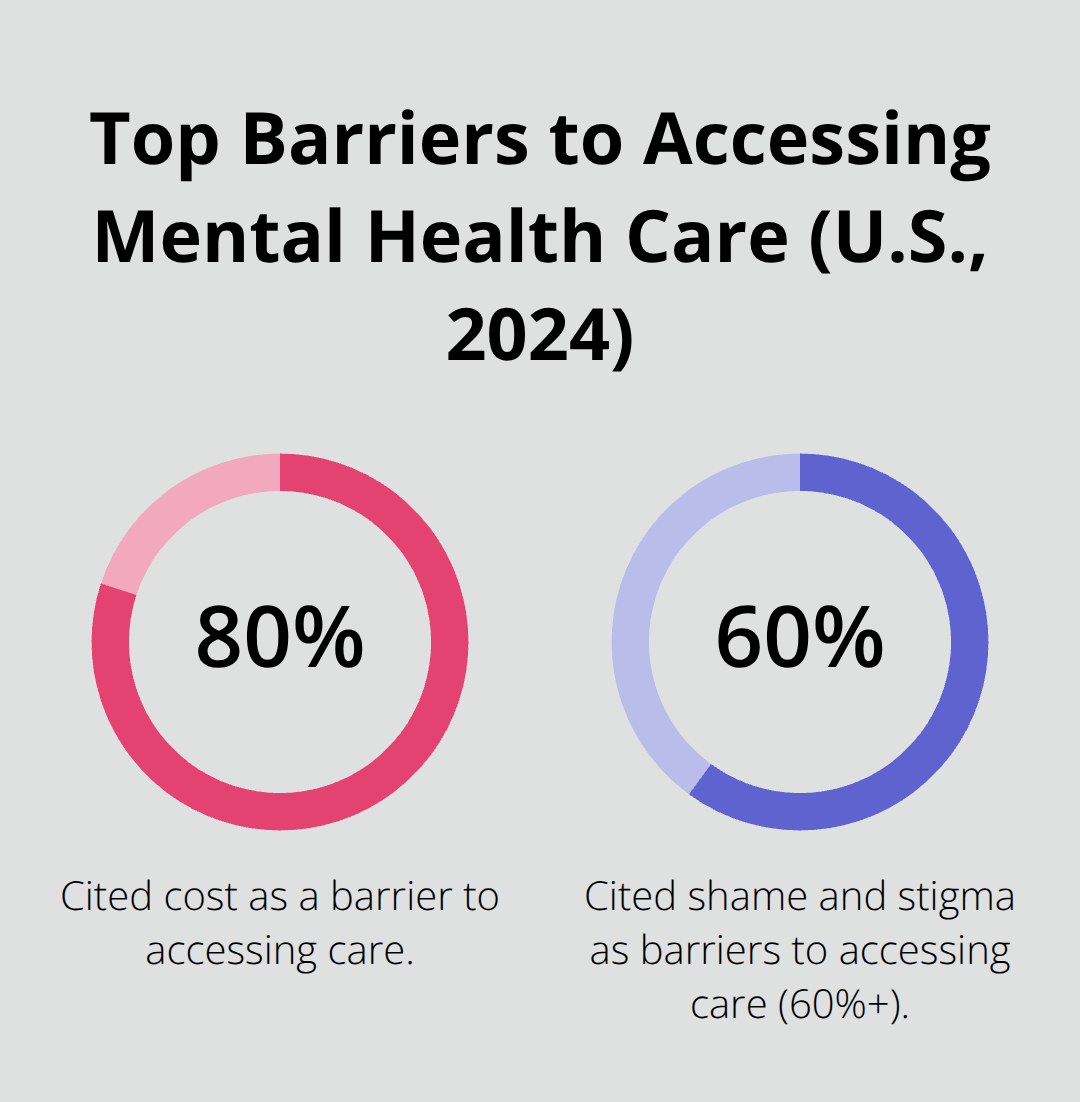
The American Psychological Association reported in 2024 that when asked about specific barriers to accessing care, 80% cited cost and more than 60% cited shame and stigma as the main obstacles. Traditional therapy hours between 9 a.m. and 5 p.m. collide directly with client calls, project deadlines, and visibility concerns that define professional careers. Evening and weekend therapy isn’t just convenience-it’s the clinical requirement that makes recovery possible without career sabotage. Research backs this up: professionals with evening appointment access showed higher session consistency, faster symptom reduction, and higher program completion rates compared to those forced into daytime slots.
Treatment adherence improves when recovery fits your life
Substance use treatment requires consistency. Missing sessions breaks momentum, weakens accountability, and increases relapse risk.
When treatment happens at 6 p.m. instead of 2 p.m., you actually show up. A 2024 Stanford Graduate School of Business study linked dedicated personal time for wellbeing with lower stress and better work performance-the inverse is also true. Forcing professionals to choose between a critical client meeting and a therapy session guarantees missed appointments. Evening intensive outpatient programs eliminate that conflict entirely. You finish work, transition to treatment, and maintain both your career trajectory and your recovery. That consistency compounds: research on intensive outpatient programs shows that treatment completion rates rise significantly when scheduling removes the structural barriers that cause people to deprioritize mental health care.
High-stress professions need specialized substance use support
Certain industries normalize substance use as a coping mechanism. Finance, law, healthcare, and tech professionals face relentless performance pressure, irregular hours, and cultures where stimulants and alcohol serve as unofficial productivity tools. These populations need more than standard therapy-they need clinicians who understand the specific stressors, the career implications of disclosure, and the performance metrics that drive their decisions. Evening programs serve this population directly because they operate on professional schedules. A clinician who understands why a partner at a law firm self-medicates with alcohol during deal cycles, or why a surgeon relies on stimulants to manage 16-hour shifts, can deliver targeted treatment that addresses root causes rather than just symptoms.
Comprehensive treatment requires multiple clinical components
Effective substance use recovery combines individual therapy, group support, and accountability measures into one integrated program. Evening intensive outpatient programs deliver all three components after work hours, so professionals receive comprehensive care without announcing their recovery to colleagues or missing critical career moments. Group therapy sessions connect you with others facing similar pressures, individual clinician sessions address your specific circumstances, and remote drug testing creates the accountability structure that supports long-term recovery. This combination works because it addresses substance use from multiple angles simultaneously-the psychological drivers, the social support network, and the behavioral accountability that prevents relapse.
Clinical Effectiveness of Intensive Outpatient Programs
Individual therapy, group sessions, and drug testing create measurable recovery outcomes
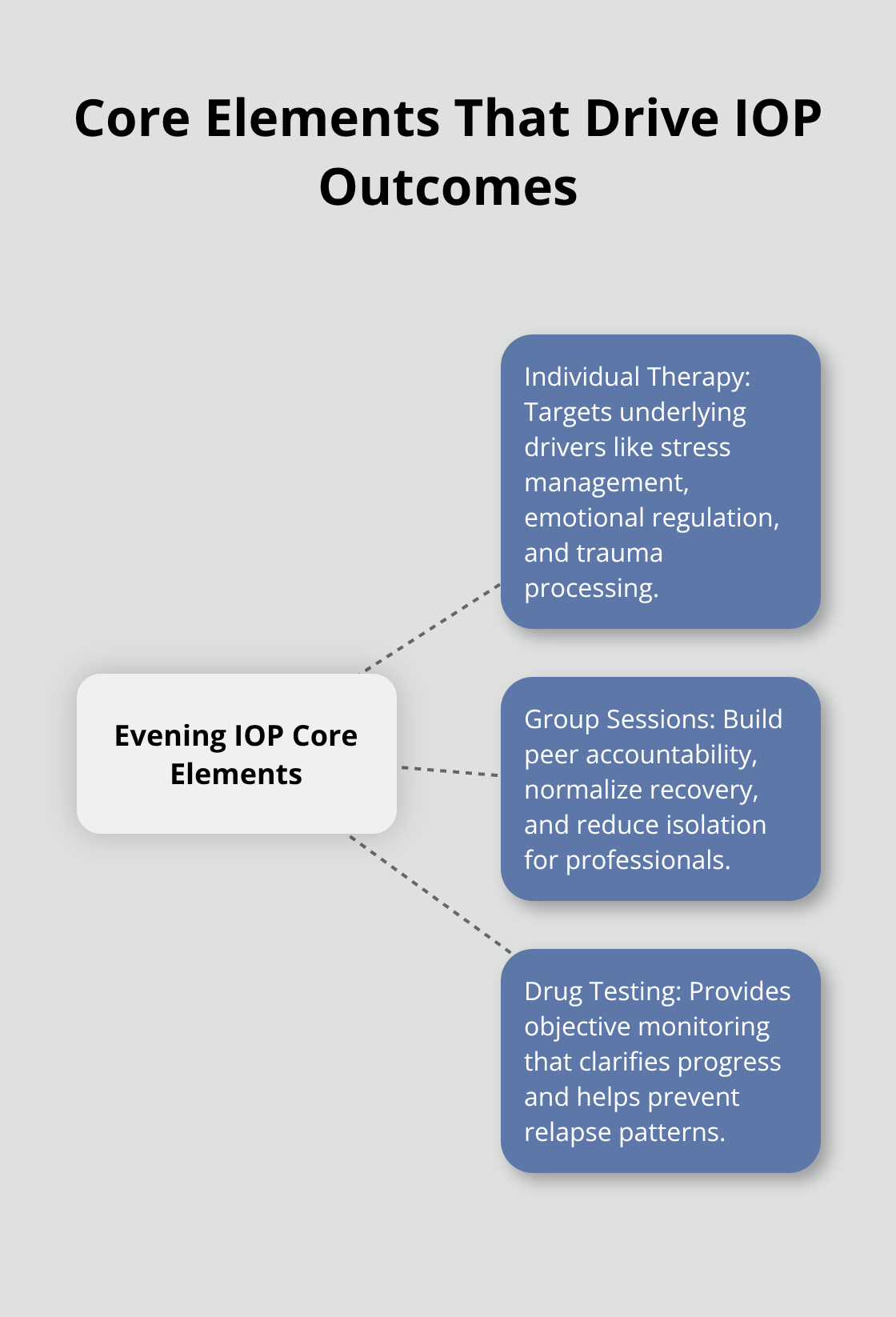
Evidence-based therapy combined with structured accountability produces measurable results for substance use disorders. Research on intensive outpatient programs demonstrates that outcomes rival inpatient treatment when the program includes three core elements: individual therapy tailored to the client’s specific situation, group sessions that build peer accountability and normalize recovery, and objective monitoring through drug testing. The combination matters because each component addresses a different recovery mechanism. Individual therapy targets the underlying drivers of substance use-stress management, emotional regulation, trauma processing-while group sessions create social reinforcement and reduce isolation. Drug testing removes ambiguity from recovery progress and prevents relapse patterns from developing undetected.
Evening format preserves treatment intensity without career disruption
When these three elements operate together in an evening format, professionals maintain career stability while receiving clinical intensity equivalent to residential programs. The key advantage of evening intensive outpatient programs is that they preserve the treatment structure without forcing professionals to announce their recovery to employers or sacrifice income during treatment. Live telehealth sessions allow licensed clinicians to conduct individual work and facilitate group therapy after standard business hours, with remote drug testing that fits seamlessly into evening routines.
Session consistency drives faster symptom reduction
Substance use treatment fails when scheduling forces professionals to choose between recovery and career visibility. Clients with evening appointment access showed higher session consistency and faster symptom reduction compared to those in daytime slots. That consistency compounds over weeks. Missing even two group sessions in a six-week program disrupts the peer relationships that make group therapy effective, and gaps in individual sessions allow relapse patterns to develop without clinical intervention.
Remote drug testing removes logistics barriers
Remote drug testing eliminates the logistics barrier entirely-no need to travel to a clinic during work hours or take time away from the office. Testing happens at home, results are reviewed during your scheduled evening sessions, and accountability remains intact without workplace exposure. Treatment works best when it fits into real life rather than requiring life to be suspended for recovery. This is precisely why evening intensive outpatient programs have become the standard for busy professionals who refuse to choose between their careers and their health. The next section explains what professionals actually experience during an evening program and how the daily structure supports both recovery and work performance.
What Happens During an Evening IOP
Sessions fit your work schedule, not the other way around
An evening intensive outpatient program operates on a predictable schedule that professionals can work around. Sessions typically run from 5 p.m. to 8 p.m., three to five evenings per week, which gives you time to finish work and transition mentally before treatment starts. Each evening combines individual therapy with your assigned clinician, group sessions where you connect with others in recovery, and skills-based instruction on stress management and relapse prevention. The structure removes decision fatigue-you know exactly when treatment happens, what to expect, and how to plan your work calendar around it.
Live telehealth eliminates commute time and workplace visibility concerns
Telehealth sessions allow you to attend from home or a private space, which eliminates commute time and workplace visibility concerns entirely. Licensed clinicians conduct individual sessions first, typically 30 to 50 minutes, and address your specific triggers, work-related stress, and recovery goals with clinical precision.
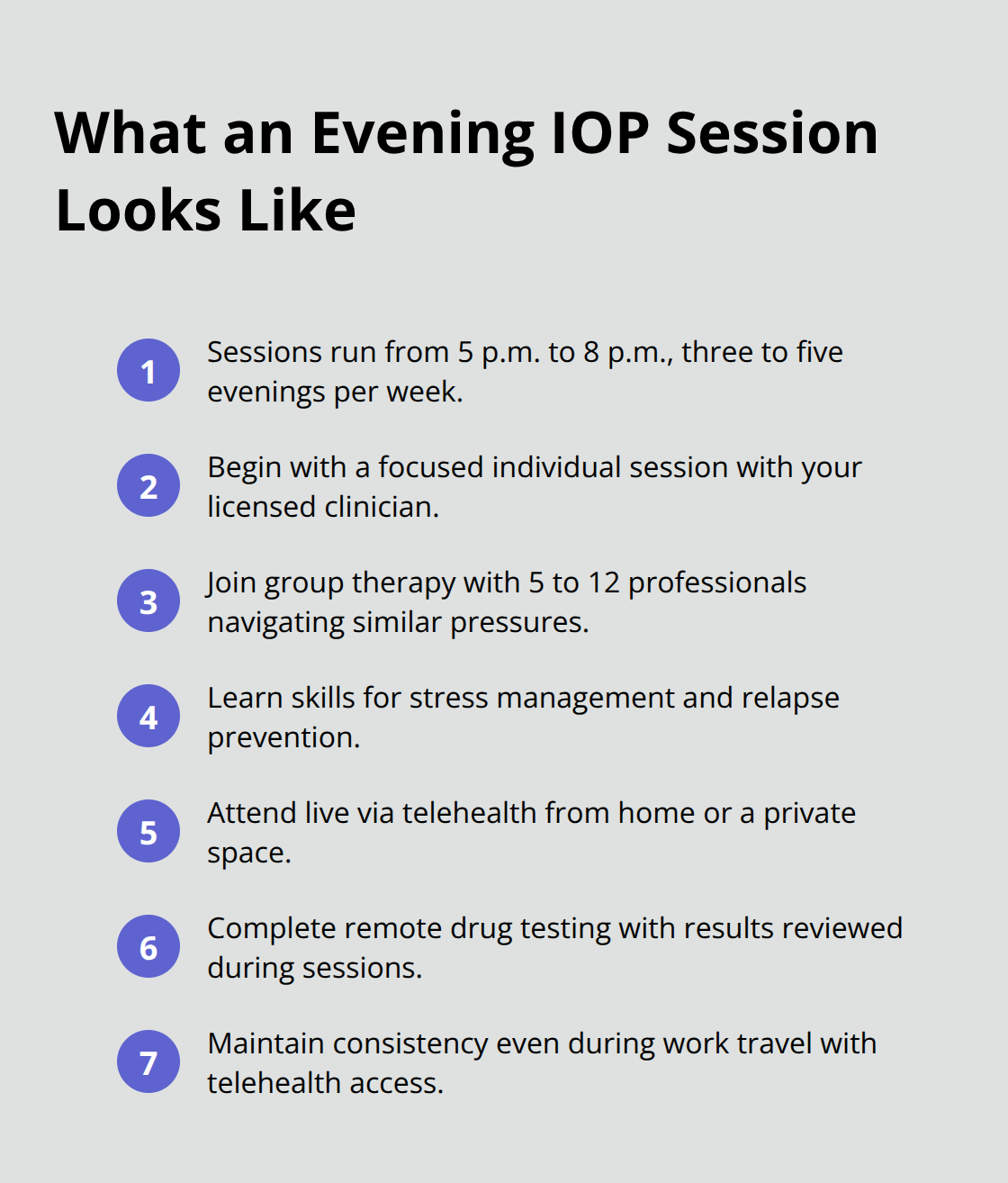
Group therapy follows, where five to twelve professionals in similar situations share experiences and hold each other accountable. This structured accountability works because people actively managing demanding careers understand your specific pressures in ways that generic peer support cannot match.
Remote drug testing tracks progress objectively
Remote drug testing integrates seamlessly into your evening routine, with results reviewed during your next individual session. This objective monitoring prevents relapse patterns from developing undetected and removes ambiguity from recovery progress. The combination of individual therapy targeting root causes, group sessions building peer accountability, and objective monitoring through testing creates the three-part foundation that makes evening intensive outpatient programs clinically equivalent to residential treatment while preserving your career stability and income.
Treatment duration and personalization adapt to your recovery
The program typically runs six to twelve weeks, with progress monitored continuously to adjust intensity and clinical focus as your recovery stabilizes. Licensed clinicians tailor treatment to your specific circumstances rather than applying a generic protocol, which matters because professionals’ substance use patterns often connect directly to performance pressure, irregular schedules, or industry-specific cultures. If you travel for work, telehealth attendance continues from wherever you are, which maintains treatment consistency without interruption.
Final Thoughts
Substance use recovery doesn’t require you to sacrifice your career. Evening therapy for professionals works because it removes the false choice between treatment and work stability. When intensive outpatient care happens at 6 p.m. instead of 2 p.m., you show up consistently, engage fully, and maintain the career momentum that matters to you. Research demonstrates that intensive outpatient programs deliver clinical outcomes equivalent to residential treatment when they combine individual therapy, group accountability, and objective monitoring.
Evening programs preserve clinical intensity while you keep your job, your income, and your professional reputation intact. Licensed clinicians tailor treatment to your specific circumstances, whether that means addressing performance pressure in finance, irregular schedules in healthcare, or the particular stressors of your industry. Remote drug testing removes logistics barriers entirely, and telehealth attendance means treatment continues even when you travel for work.
The scheduling reality for busy professionals creates a genuine access problem-traditional therapy hours force you to choose between a critical client meeting and your recovery. That choice guarantees missed sessions, broken momentum, and relapse risk. Evening intensive outpatient programs eliminate that conflict by operating on your schedule, not the other way around. Start your evening intensive outpatient program today and reclaim both your health and your career.