


Addiction treatment doesn’t have to mean stepping away from your career and responsibilities. At EveningIOP, we’ve designed a licensed evening IOP program specifically for professionals who need recovery without sacrificing their work or family commitments.
This guide walks you through how evening intensive outpatient programs actually work, what makes them different from traditional daytime treatment, and why thousands of working adults choose this path every year.
What Licensed Evening IOP Actually Guarantees
State Licensing Protects Your Treatment
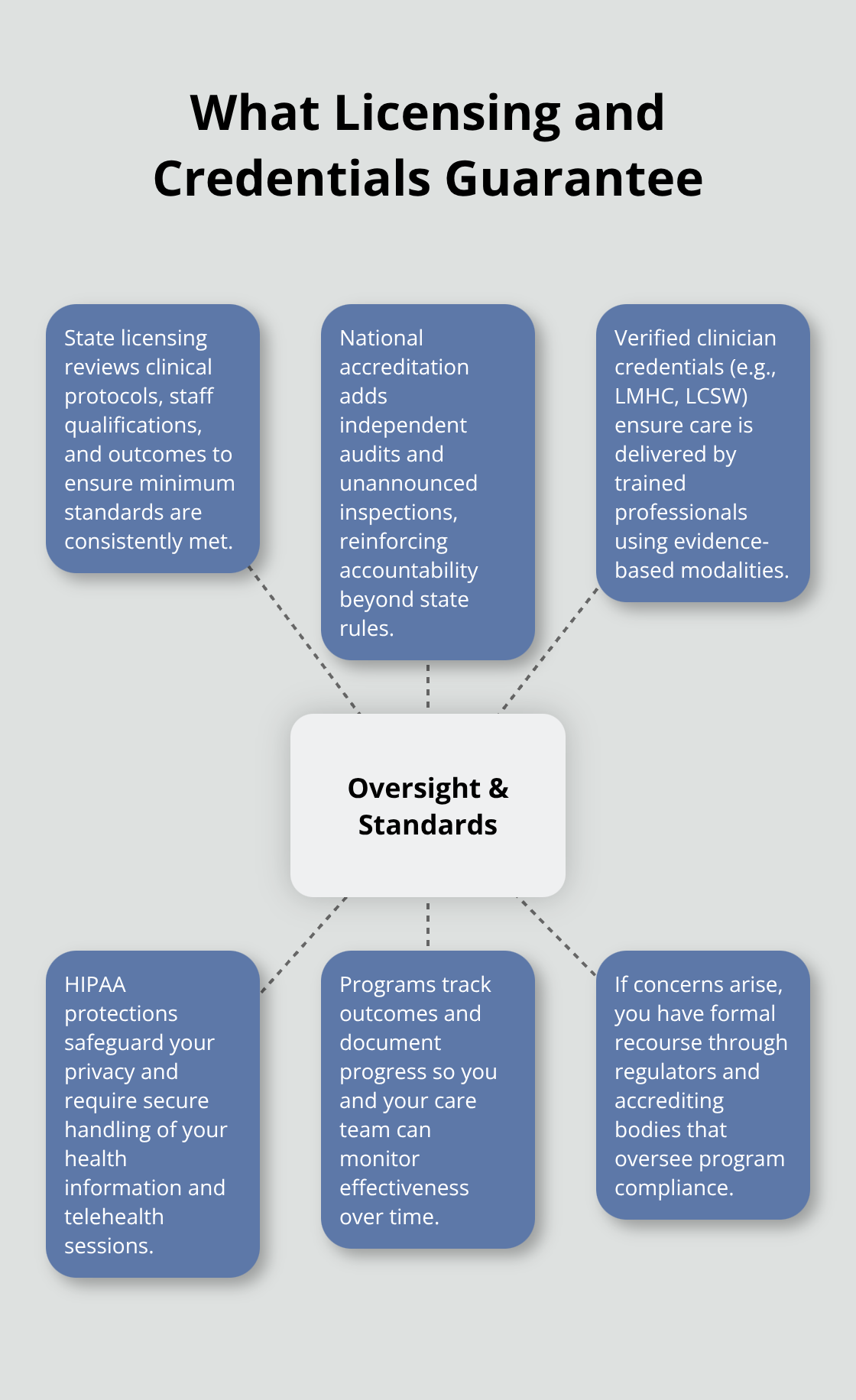
A licensed evening IOP program operates under state regulatory oversight that most people don’t realize exists. When a program holds a license from the Department of Health Care Services, that’s not just paperwork-it means a state health department has reviewed clinical protocols, staff qualifications, and treatment outcomes. California’s Department of Health Care Services certifies and monitors all outpatient alcohol or other drug programs. This regulatory requirement is why you should always verify a program’s license status before enrolling. You can check California’s licensing database or ask the program directly for their license number and expiration date.
Programs that can’t produce this information within seconds are operating in a gray area, and that’s a red flag worth taking seriously.
Accreditation and Certification Add Accountability
Accreditation adds another layer of accountability beyond state licensing. The Joint Commission sets standards for clinical care, staff training, and client outcomes across hospitals and behavioral health centers nationwide. Accredited programs track their own success rates and submit to unannounced inspections. LegitScript certification specifically verifies that telehealth operations handle prescribing and testing responsibly-essential for evening programs that deliver remote care. These credentials signal that a program meets national benchmarks and maintains transparent documentation of how it delivers treatment.
Clinician Credentials Matter More Than You Think
Licensed therapists, counselors, and clinical supervisors must hold state credentials like LMHC, LCSW, or similar designations, meaning they’ve completed education requirements and passed exams. When you work with a licensed clinician in an evening IOP, you can verify their credentials through your state’s licensing board. This differs sharply from unlicensed wellness coaches or peer specialists, who play supporting roles but cannot diagnose or prescribe. Clinicians undergo ongoing training in evidence-based modalities like CBT and DBT. Ask any program about their clinician credentials upfront-not after you’ve enrolled. Programs that hesitate or provide vague answers are signaling that quality may not be their priority.
How These Standards Protect You
The combination of state licensing, accreditation, and verified clinician credentials creates a system where your treatment is documented, reviewed, and held to measurable standards. This structure protects your privacy under HIPAA, tracks your clinical progress, and gives you recourse if something goes wrong. Understanding these safeguards helps you distinguish between programs that cut corners and those that maintain professional standards. With this foundation in place, you’re ready to explore how evening IOP programs actually fit into your weekly schedule without derailing your career.
How Evening IOP Fits Into Your Work Week
Evening Sessions Work Around Your Job
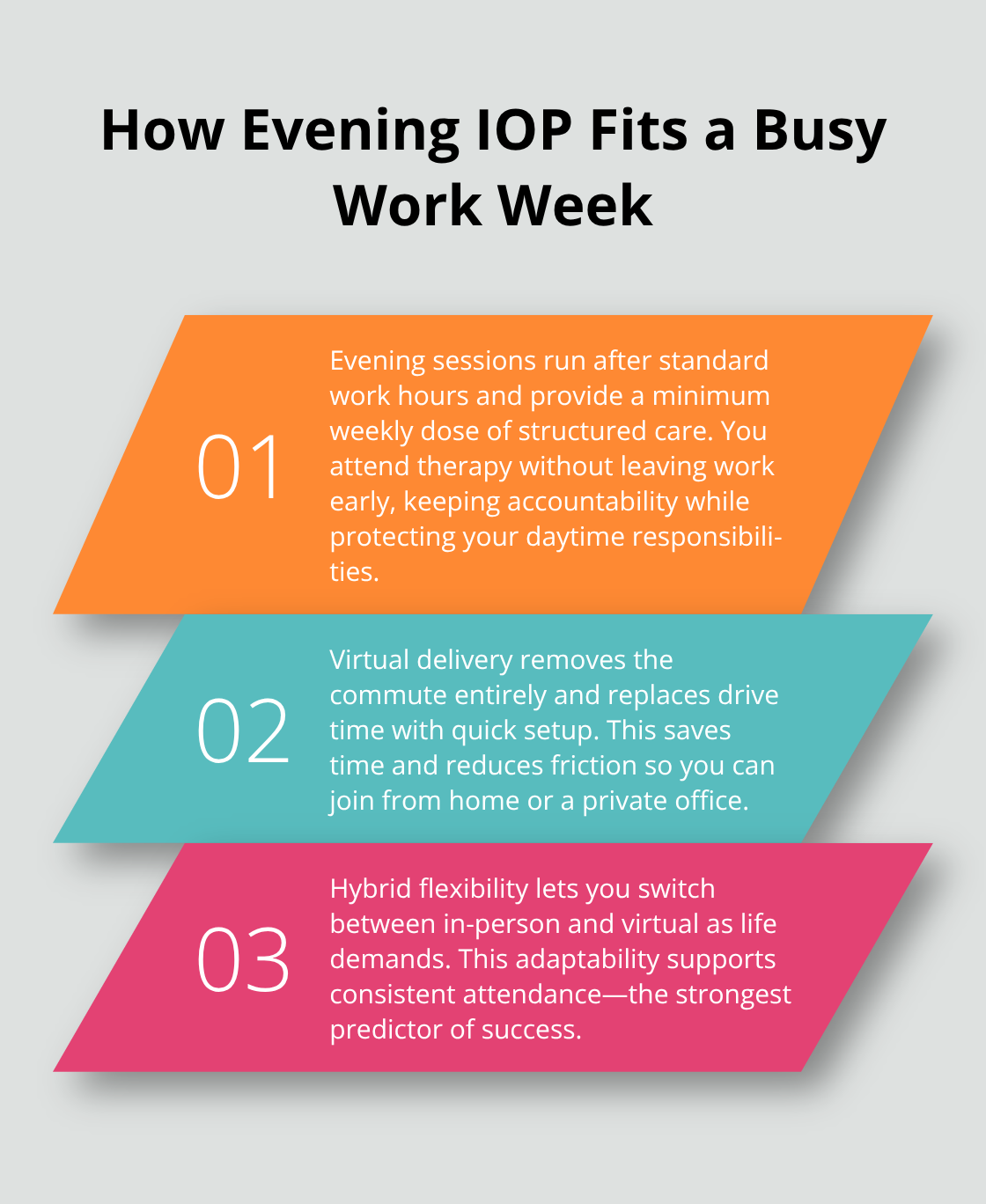
Evening IOP programs operate between 6 PM and 9 PM, typically three to four nights per week, offering a minimum of 9 hours of service per week in structured sessions. You attend therapy after work ends, not during it. A typical session includes group therapy, individual counseling, and skills training delivered by licensed clinicians. The structure maintains accountability while accommodating different work schedules. Some programs offer weekend or early afternoon blocks for night-shift workers, recognizing that a 9-to-5 schedule doesn’t apply to everyone. When you commit to a specific evening slot, you reduce the mental load of deciding when to go-you simply show up at the same time on the same days. This consistency matters because IOP services with comparable outcomes to inpatient care demonstrate that treatment fitting your actual schedule increases engagement and success rates.
Virtual Evening IOP Eliminates the Commute
Remote telehealth delivery removes the commute entirely, which is why many professionals now choose virtual evening IOP over in-person sessions. Live, interactive group therapy and one-on-one sessions with licensed clinicians happen through secure, HIPAA-compliant platforms, eliminating travel time and allowing you to attend from home or a private office space. You log in five minutes before your session starts instead of leaving work early to drive across town. This matters practically: a forty-five-minute commute becomes fifteen minutes of setup time. For professionals managing tight deadlines or caregiving responsibilities, virtual attendance means you participate in treatment without disrupting your evening routine with your family or adding another obligation to your calendar.
The trade-off is that you need a private, quiet space and reliable internet, but most working professionals already have both.
Flexibility Across In-Person and Virtual Options
When balancing work, family, and recovery simultaneously, the question isn’t whether you have time for treatment-it’s whether your treatment adapts to the time you actually have. Evening programs that offer both in-person and virtual options give you control over which format supports your life best on any given week. Some weeks you attend in person; other weeks you join remotely. This flexibility prevents treatment from becoming another rigid obligation that competes with your responsibilities. The ability to switch between formats (based on work travel, family needs, or personal preference) removes a common barrier that stops professionals from starting care in the first place. With scheduling and delivery options that actually match how you live, you’re positioned to maintain consistent attendance-the single strongest predictor of treatment success. This foundation of accessibility sets the stage for understanding why professionals specifically choose evening IOP over daytime alternatives.
Why Professionals Choose Evening IOP
Work doesn’t pause for recovery, and evening IOP programs acknowledge that reality. When you earn a salary, manage a team, or build a career, stepping into full-time daytime treatment feels impossible. Evening IOP eliminates that false choice between recovery and employment. You clock out at five, attend treatment at six, and return to your job the next morning without missing a single paycheck or performance review. Research on employment outcomes shows that professionals maintain continuous abstinence while staying with the same employer after treatment. That statistic reflects programs designed around how working adults actually live.
Income and Financial Stability Stay Intact
The financial stability of keeping your job matters deeply. Missing weeks of income during treatment creates stress that sabotages recovery before it starts. Evening programs preserve your income, your benefits, and your position, which removes one of the largest obstacles professionals face when considering treatment at all. You avoid the extended unpaid leave that drains savings and creates gaps in your employment record that employers notice. A three-month absence for residential treatment raises questions during future job searches, while an evening program running eight to twelve weeks fits into your existing schedule without the documentation of prolonged absence.
Family Relationships Remain Your Priority
Family relationships deteriorate under the weight of untreated addiction, but lengthy treatment absence creates a different kind of damage. When you’re gone for weeks in residential care, your partner manages childcare alone, your kids wonder where you are, and household routines collapse. Evening IOP keeps you home every night. You attend therapy after dinner and return to help with homework, bedtime routines, or simply being present in your family’s evening.
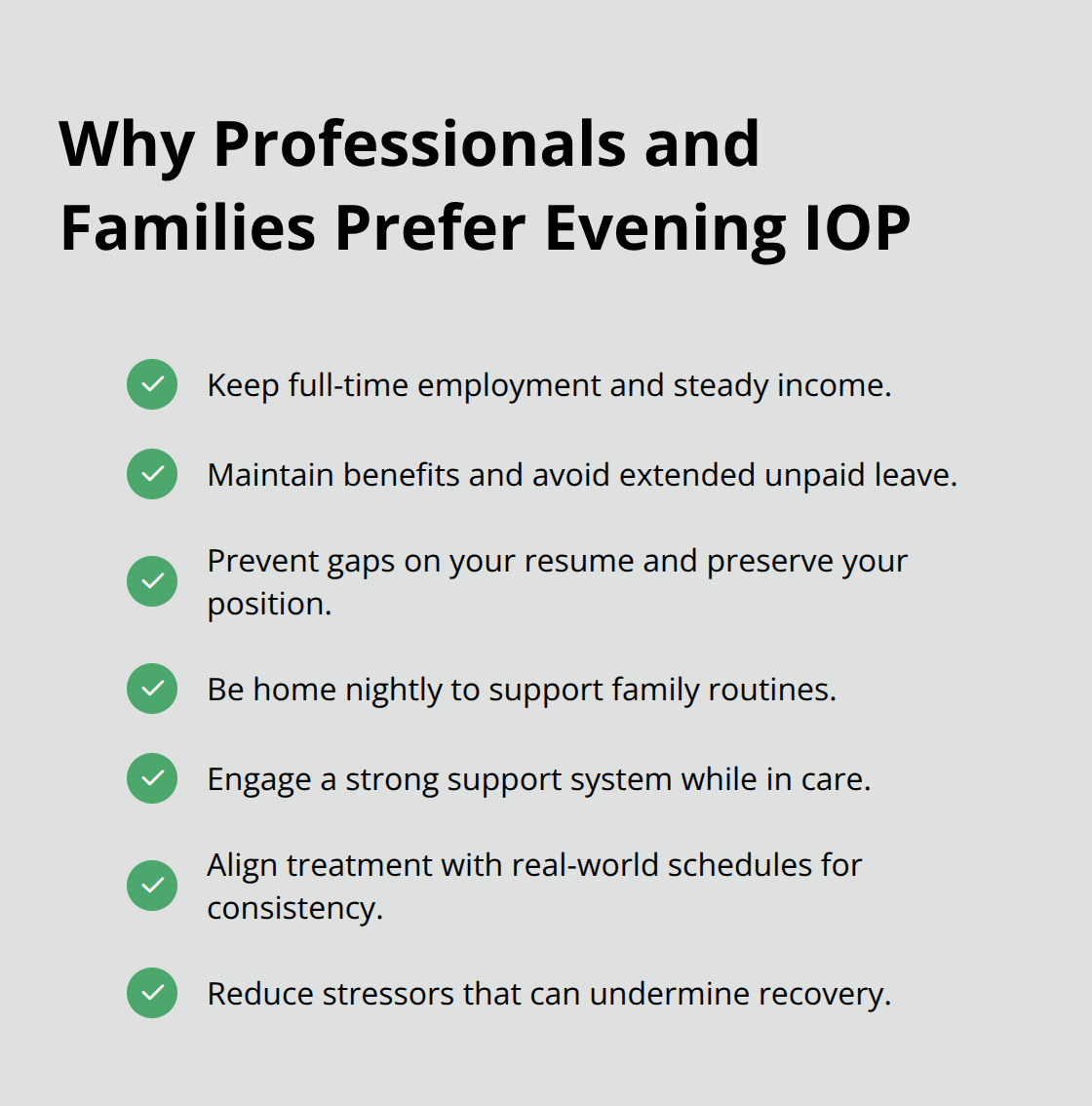
Strong support systems bolster accountability and motivation during treatment. Evening programs don’t require you to choose between recovery and your family-you pursue both simultaneously.
Structure Without Stepping Away
The practical reality of staying employed, staying home, and staying accountable to the people who depend on you explains why thousands of working professionals choose evening IOP over traditional daytime alternatives. These programs demand that you step away from nothing that gives your life structure and meaning.
Final Thoughts
A licensed evening IOP program removes the barrier that stops most working professionals from seeking treatment: the belief that recovery requires stepping away from everything that matters. You maintain your income and employment benefits while receiving structured clinical care from licensed clinicians, and your family stays intact because you remain home every evening. The regulatory oversight-state licensing, accreditation, and verified clinician credentials-means your treatment meets measurable standards and your progress receives documentation and review.
Virtual delivery through secure telehealth platforms eliminates the commute entirely, letting you attend sessions from home or a private office space. Flexible scheduling accommodates night-shift workers, travel demands, and unpredictable work schedules. The combination of accountability and accessibility creates conditions where professionals actually stay engaged in treatment, which research shows as the strongest predictor of sustained recovery.
Starting treatment begins with a straightforward step: reaching out to a program that understands your constraints. We at EveningIOP offer live telehealth evening programs specifically designed for busy professionals and families, and we hold DHCS licensing, Joint Commission accreditation, and LegitScript certification, meaning your care meets national standards while fitting into your actual life. Schedule a confidential consultation to learn how evening intensive outpatient treatment works for your situation.