


Addiction treatment works best when you feel safe sharing your struggles without fear. At EveningIOP, we know that confidential telehealth addiction care removes barriers that keep people from seeking help.
Privacy isn’t just a feature-it’s what allows real recovery to happen. This guide shows you exactly how your information stays protected.
What Laws Actually Protect Your Data in Addiction Telehealth
Federal Protections That Go Beyond Standard Healthcare
Federal law treats addiction treatment records differently than other medical information, which means your privacy receives stronger protections than you might expect. HIPAA sets the baseline for all healthcare data, but 42 CFR Part 2 adds a second layer specifically for substance use disorder programs. This federal regulation prohibits disclosure of addiction treatment records without explicit written consent, even to other healthcare providers or family members, and it applies to any program that receives federal funding or a federal tax exemption. Most licensed addiction treatment centers fall under Part 2, creating a legal wall around your therapy sessions, medication records, and counselor notes.
The Gap Between Legal Requirements and Platform Practices
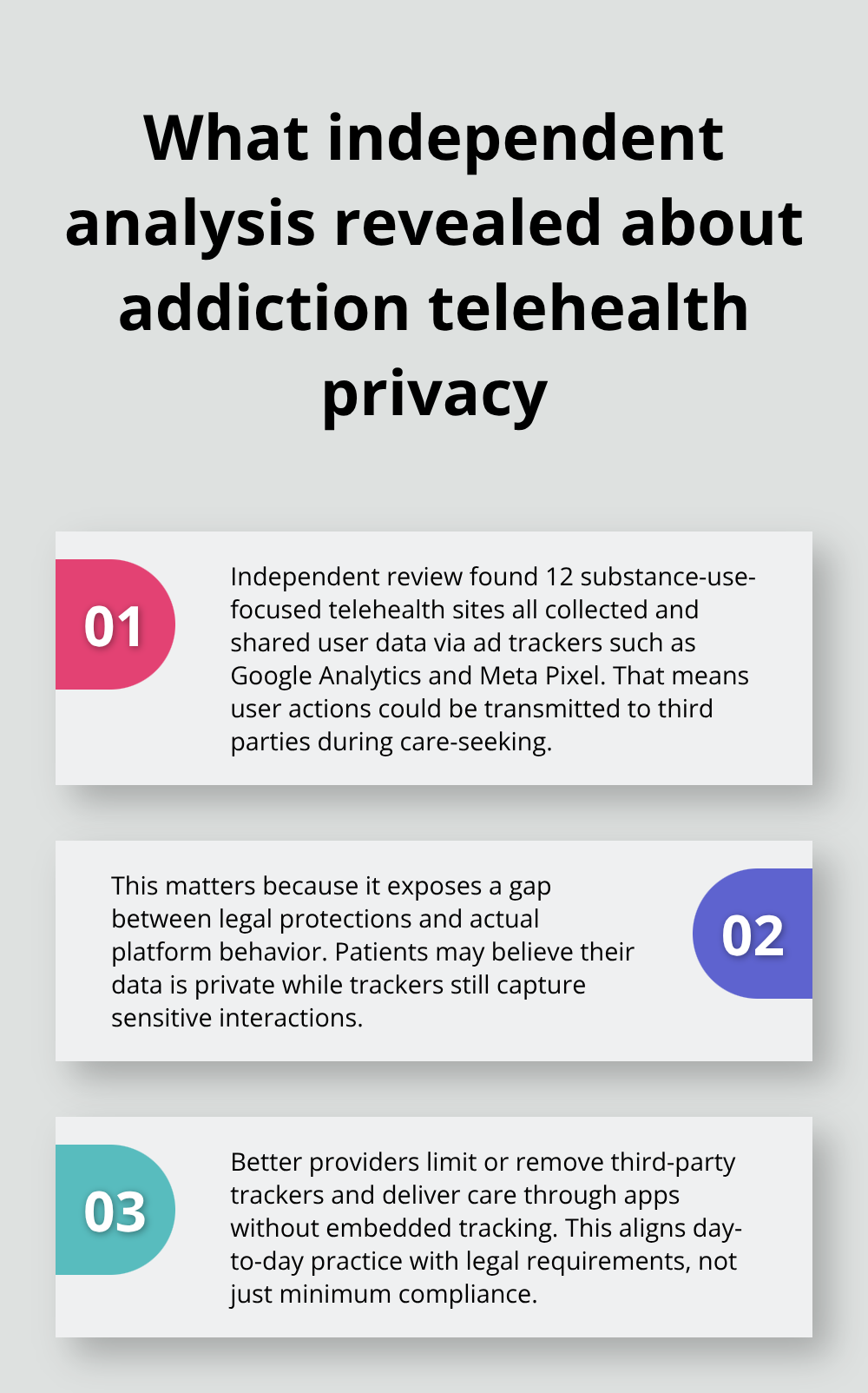
The Opioid Policy Institute and Legal Action Center analyzed 12 substance-use-focused telehealth websites over 16 months and found that all of them collected and shared user data with third parties through ad trackers like Google Analytics and Meta Pixel. This discovery matters because it reveals the gap between what the law requires and what many platforms actually do. Some providers limit third-party trackers and deliver care through apps that do not use tracking software themselves, aligning practice with legal requirements rather than just meeting minimum standards.
State-Level Frameworks and Licensing Requirements
State regulations add another layer on top of federal law, though they vary widely. Telehealth IOPs at scale require clear state-level frameworks, as demonstrated by programs across the country. Some states like Florida offer Certified E-Therapist credentials for distance care, while most states require in-person licensure and tie video care to the patient’s state location.
Technical Standards That Protect Your Information
Encryption standards matter more than many patients realize because Part 2 requires secure transmission of addiction records, and AES-256 encryption is now the industry standard for compliant platforms. The strongest platforms maintain comprehensive audit logs tracking every login and data access, use role-based access controls to limit who sees your records, and can demonstrate compliance through certifications like HITRUST or SOC 2 Type II.
What to Verify Before Choosing a Provider
When selecting a telehealth provider, verify they have a signed Business Associate Agreement that covers HIPAA and Part 2 compliance, ask specifically about their data minimization practices, and request clarity on which third parties receive your information. Privacy experts including Georgetown Law’s Regina LaBelle note that company privacy definitions often fall short of what comprehensive protection actually requires, so do not accept vague assurances about privacy without technical details. Understanding these protections helps you move forward with confidence as you evaluate which platform supports your recovery needs.
How Your Data Stays Protected During Treatment
Encryption and Access Controls That Secure Your Sessions
The technical infrastructure behind a telehealth addiction platform determines whether your information remains confidential or leaks to advertisers. End-to-end encryption for video sessions is non-negotiable, and platforms must use AES-256 encryption as the standard, which scrambles your conversations so only you and your clinician can access them. However, encryption alone does not guarantee security. The platform must also implement role-based access controls that limit which staff members can view your records, maintain audit logs tracking every login and data access, and conduct regular third-party security audits to identify vulnerabilities before they become breaches.
Verifying Security Through Independent Certification
When you choose a provider, ask for their most recent security audit report and their response timeline for addressing findings. Platforms offering HITRUST or SOC 2 Type II certification have undergone rigorous independent assessment, which matters far more than vague privacy promises. These certifications signal that external auditors have tested the platform’s security controls and found them sound.
Data Storage and Incident Response Plans
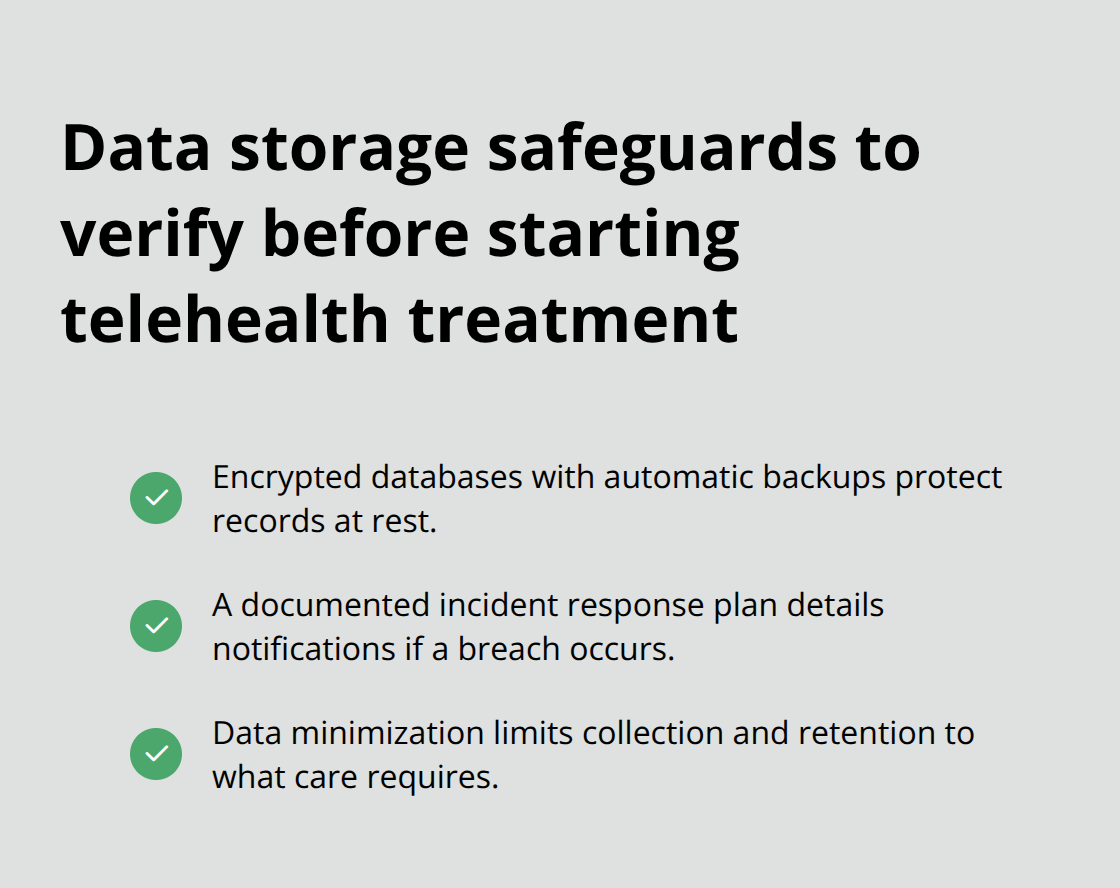
Storage of your data requires the same rigor as transmission. Your therapy notes, medication records, and test results should reside in encrypted databases with automatic backups, and the provider must have a documented incident response plan that specifies how they notify you if a breach occurs. Most importantly, verify that your provider uses data minimization practices, meaning they collect only the information necessary for treatment and do not retain it longer than clinically required.
Eliminating Third-Party Trackers and Ad Networks
The Opioid Policy Institute found that all 12 substance-use-focused telehealth sites analyzed shared user data with third parties through trackers like Google Analytics and Meta Pixel, revealing that many platforms prioritize analytics over patient privacy. This is unacceptable for addiction care. Your provider should either eliminate these trackers entirely or use them only for internal reporting with strict limitations on third-party sharing. Request a written commitment that no addiction treatment data feeds into advertising networks, and verify it through their Business Associate Agreement before starting care.
What to Ask Your Provider Before Treatment Begins
Demand transparency about data practices before you commit to a platform. Ask which third parties receive your information, request documentation of their data minimization policies, and verify that their Business Associate Agreement explicitly prohibits sharing addiction treatment records with ad networks or data brokers. These questions reveal whether a provider takes confidentiality seriously or simply meets minimum legal standards. Once you understand how a platform protects your data, you can evaluate whether its clinical capabilities align with your treatment needs.
Why Confidentiality Protects Your Recovery
Confidentiality in addiction treatment is not theoretical protection-it directly determines whether people seek help at all. Research shows that fear of exposure remains one of the top reasons people avoid treatment entirely. When you know your therapy sessions and medication records stay completely separate from your employer, family members, and social networks, you can focus on recovery instead of managing exposure risk. This matters because the moment someone believes their treatment could affect their job or relationships, they stop showing up to appointments.
How Fear of Exposure Blocks Treatment Access
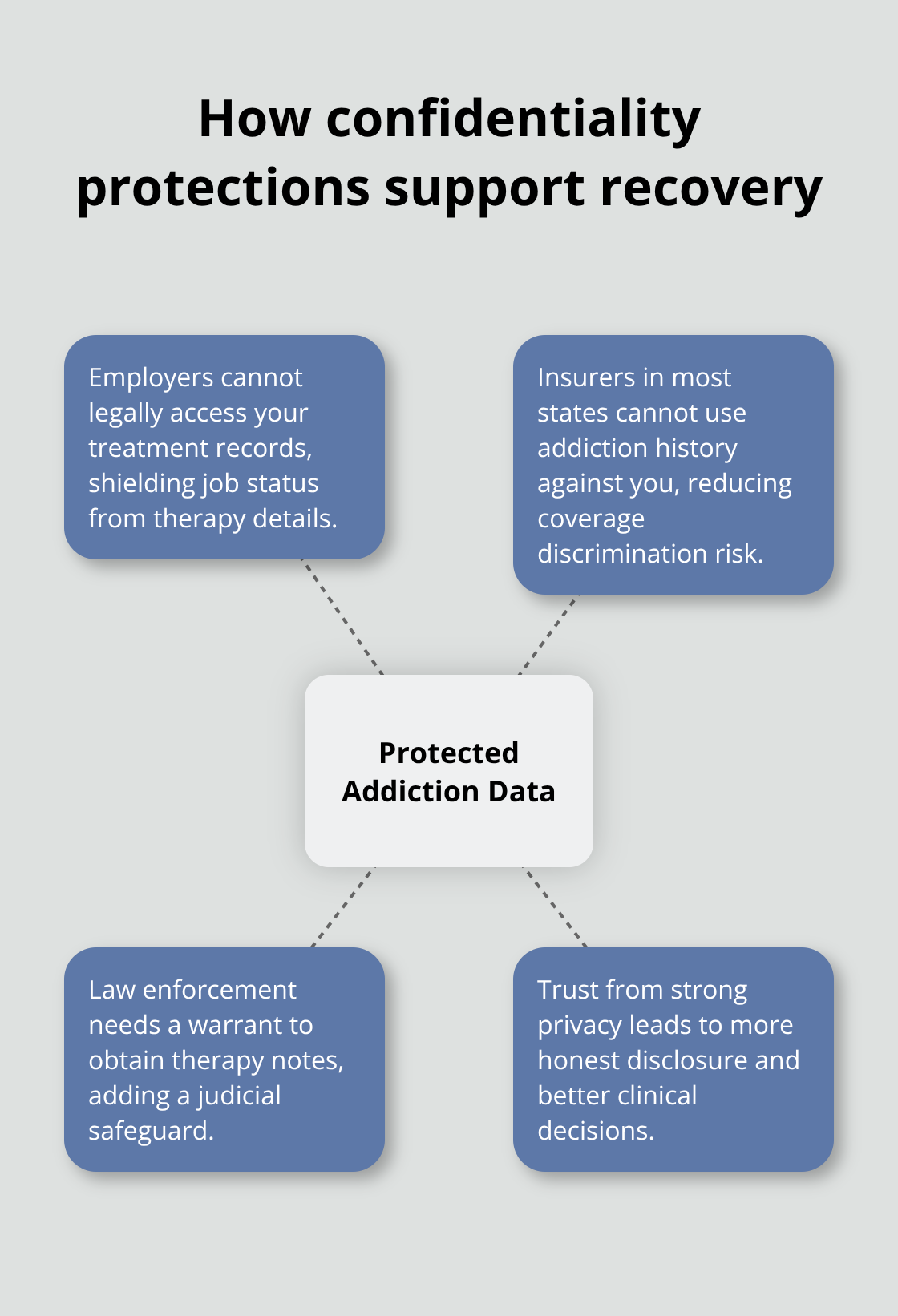
The legal framework protecting addiction records exists precisely because policymakers recognized that treatment only works when patients trust the system completely. Addiction carries unique stigma and discrimination risks that standard healthcare does not face. Your employer cannot legally access your treatment records, your insurance company cannot use addiction history against you in most states, and law enforcement cannot obtain your therapy notes without a warrant. These protections exist because confidentiality directly supports recovery outcomes-patients who feel safe disclose more honestly, clinicians make better treatment decisions, and relapse prevention actually works.
Engagement and Retention Rise With Strong Privacy
The practical impact shows up in enrollment numbers and treatment completion rates. When telehealth platforms eliminate third-party data sharing and implement strict access controls, patients report higher engagement and longer treatment retention. You can attend evening group therapy sessions from home, share openly with your clinician about cravings or medication side effects, and know that information does not feed into marketing databases or appear in your digital footprint. Patients who feel safe disclose more honestly, which means clinicians make better treatment decisions based on accurate information about your struggles and progress.
Why Addiction Treatment Requires Stronger Protections
The confidentiality protections in addiction treatment go further than standard healthcare because the law recognizes the unique risks involved. A therapy note from addiction treatment could affect employment, housing, custody decisions, or social relationships in ways that other medical records typically do not. This reality shaped federal law-42 CFR Part 2 prohibits disclosure of addiction treatment records without explicit written consent. The legal wall around your information exists because policymakers understood that without it, people simply will not seek help, and recovery becomes impossible.
Final Thoughts
The protections surrounding confidential telehealth addiction care exist because recovery depends on trust. Federal law, state regulations, encryption standards, and platform security practices work together to create a legal and technical framework that keeps your information separate from employers, insurers, and advertisers. This layered protection matters because the moment you doubt your privacy, you stop being honest with your clinician, and treatment stops working.
When you choose a provider that eliminates third-party data sharing, maintains audit logs, and implements strong access controls, you remove one major barrier to recovery. You can attend sessions from home without worrying about who sees you entering a treatment facility, and you can discuss medication side effects, cravings, or relapse triggers without fear that this information feeds into marketing databases or affects your employment. Patients who feel genuinely safe disclose more honestly, clinicians make better treatment decisions, and recovery outcomes improve.
At EveningIOP, we offer live telehealth evening Intensive Outpatient Programs combining interactive group therapy, one-on-one sessions with licensed clinicians, and remote drug and alcohol testing. Your information receives the strongest legal and technical protections available, so you can pursue recovery without disrupting work or home responsibilities while knowing your privacy stays genuinely protected.