

You’re managing a demanding career while struggling with substance use. The two feel incompatible, but they don’t have to be.
Evening IOP for professionals offers a path forward that doesn’t require choosing between your job and your recovery. We at EveningIOP have designed treatment schedules that work around your work hours, letting you stay productive at the office while getting the clinical support you need.
How Evening IOP Works Around Your Work Schedule
Treatment Hours That Fit Your Workday
Evening IOP runs 9–12 hours per week across multiple sessions, typically starting after 5 PM so you complete a full workday before treatment begins. This timing addresses a real gap in addiction care: SAMHSA data shows that many individuals with substance use disorders are employed, yet traditional daytime programs force an impossible choice between recovery and a paycheck. The structure includes group therapy, individual counseling with licensed clinicians, and remote drug and alcohol testing conducted through secure, HIPAA-compliant platforms. Remote testing removes a major barrier for working professionals because results arrive objectively without requiring time away from the office-you complete tests from home or a private location. One-on-one sessions with your primary therapist offer flexible scheduling to address issues outside group time, so rigid appointments never conflict with client meetings or project deadlines.
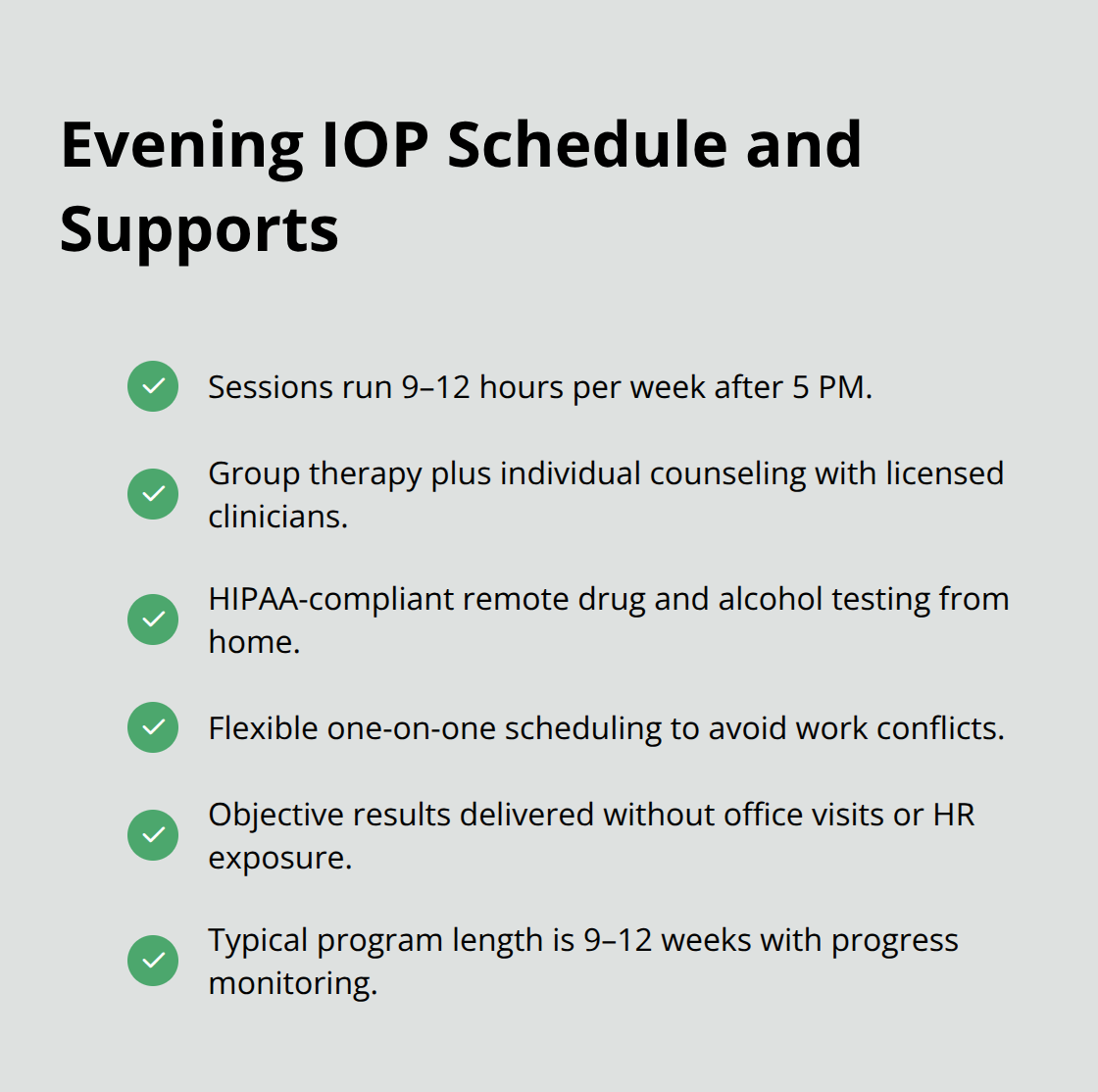
Most programs run 9–12 weeks, with your clinician monitoring progress to determine readiness for aftercare, giving you a realistic timeline rather than open-ended treatment that keeps your recovery status uncertain at work.
Practicing Skills in Real Time
Evening sessions occur in your actual environment, meaning you practice coping skills immediately in the face of workplace stress and family dynamics rather than in a clinical vacuum. Workplace triggers-like deadlines, meetings, or after-work social events-become material for relapse-prevention planning developed directly in therapy and applicable the same week you identify them. This real-world skill application accelerates your ability to handle pressure without returning to old patterns.
Legal Protections for Your Job
FMLA provides up to 12 weeks of job-protected leave for serious health conditions, including substance abuse treatment, with intermittent leave options available, so you attend sessions without burning vacation time or raising red flags with HR. The Americans with Disabilities Act may require reasonable accommodations for recovery-related needs; recovering from addiction can be considered a disability without requiring full disclosure of your diagnosis. These protections exist specifically to prevent employers from penalizing you for seeking treatment.
Why Employment Strengthens Recovery
Maintaining employment during outpatient care strengthens commitment to recovery because you stay connected to your income, benefits, and professional identity rather than severing them for months. This model avoids income loss, insurance disruption, and employer disclosures that inpatient rehab demands, making it the practical choice for professionals who cannot afford to step away from their careers. The financial and psychological stability of continued work creates a foundation that supports lasting change.
Understanding how evening treatment schedules protect your career is one piece of the equation. What matters equally is whether the clinical work itself actually produces results-and that’s where the evidence becomes compelling.
Does Evening Treatment Actually Work?
Evidence That Matches Residential Outcomes
A systematic review in PubMed Central comparing Intensive Outpatient Programs to residential treatment found abstinence rates of 50–70% and symptom reduction of 70–90%, matching residential outcomes while preserving work and family connections. This matters because it proves you don’t sacrifice clinical results by staying employed. The therapies driving these outcomes are concrete: Cognitive-Behavioral Therapy (CBT) teaches you to identify workplace triggers and interrupt automatic responses before they escalate. Dialectical Behavior Therapy (DBT) builds emotional regulation skills directly applicable to high-stress professional environments.
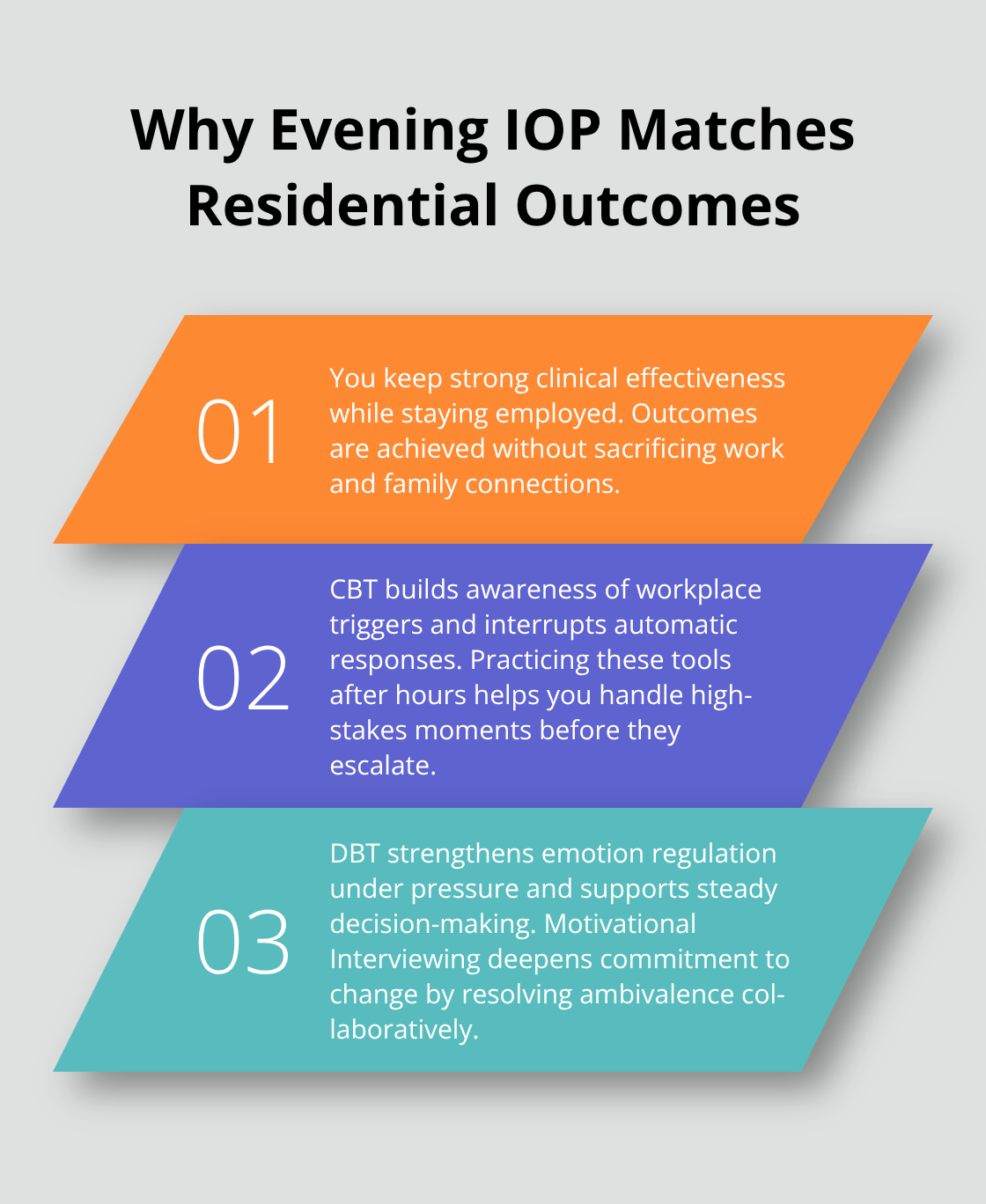
Motivational Interviewing strengthens your commitment to change by exploring ambivalence rather than lecturing you about what you already know you should do.
The Power of Peer Accountability in Evening Groups
Group sessions in evening IOP bring together accountants, nurses, teachers, and managers who share identical pressures-deadline anxiety, client demands, performance metrics-making peer feedback far more credible than generic advice from clinicians who’ve never managed a P&L or navigated office politics. Your primary therapist monitors which modalities work best for your specific profile and adjusts treatment accordingly, rather than applying a one-size-fits-all approach. This personalized matching accelerates progress because your clinician tailors interventions to your actual struggles, not a standardized protocol.
Remote Testing as Clinical Tool, Not Punishment
Remote drug and alcohol testing removes the accountability theater that fails in real recovery. Traditional testing requires office visits, creating scheduling friction and giving your employer a paper trail of treatment involvement. HIPAA-compliant remote testing platforms let you complete tests from home on your schedule, with results flowing directly to your clinician for clinical decision-making rather than HR surveillance. Positive results trigger immediate conversation with your therapist about what happened that week-workplace conflict, family tension, or craving intensity-so testing becomes diagnostic data, not punishment. This distinction matters enormously: when you know testing serves your recovery plan rather than your employer’s compliance file, you’re more honest about struggles and more willing to intensify treatment if needed.
Early Detection Prevents Crisis
Licensed clinicians supervising your case use test results alongside your self-report and group observations to catch relapse patterns early, before a single positive test becomes a cascade of use. The structure prevents the shame-and-silence cycle that derails so many professionals: you slip up, you hide it, the problem grows, and suddenly you’re in crisis. Evening IOP’s continuous monitoring and clinical response catch problems at week two instead of month six. This early intervention capability transforms how professionals experience accountability-not as punishment, but as protection.
What clinical effectiveness means in theory becomes real only when you see how professionals actually apply these skills in their daily work lives.
How Professionals Stay Employed While in Treatment
The Timing Advantage That Protects Your Career
Staying employed during evening IOP isn’t theoretical-it’s the daily reality for accountants managing tax season, nurses working hospital shifts, and managers juggling quarterly reviews. Your sessions start after 5 PM, which means you complete a full workday, attend client meetings, and handle email before walking into group therapy. A professional in consulting can finish a 4 PM client call, drive to an evening session, and be back to work emails by 8:30 PM without raising suspicion. This timing removes the need to explain unexplained absences to your boss or adjust your professional calendar around treatment hours. Maintaining employment during outpatient care strengthens commitment to recovery because you preserve income, health insurance, and professional identity rather than sacrificing them for months in residential treatment.
The 9–12 week duration also matters more than it initially appears. You know exactly when treatment ends, which lets you plan your professional calendar with confidence rather than wondering if you’ll be in outpatient care indefinitely.
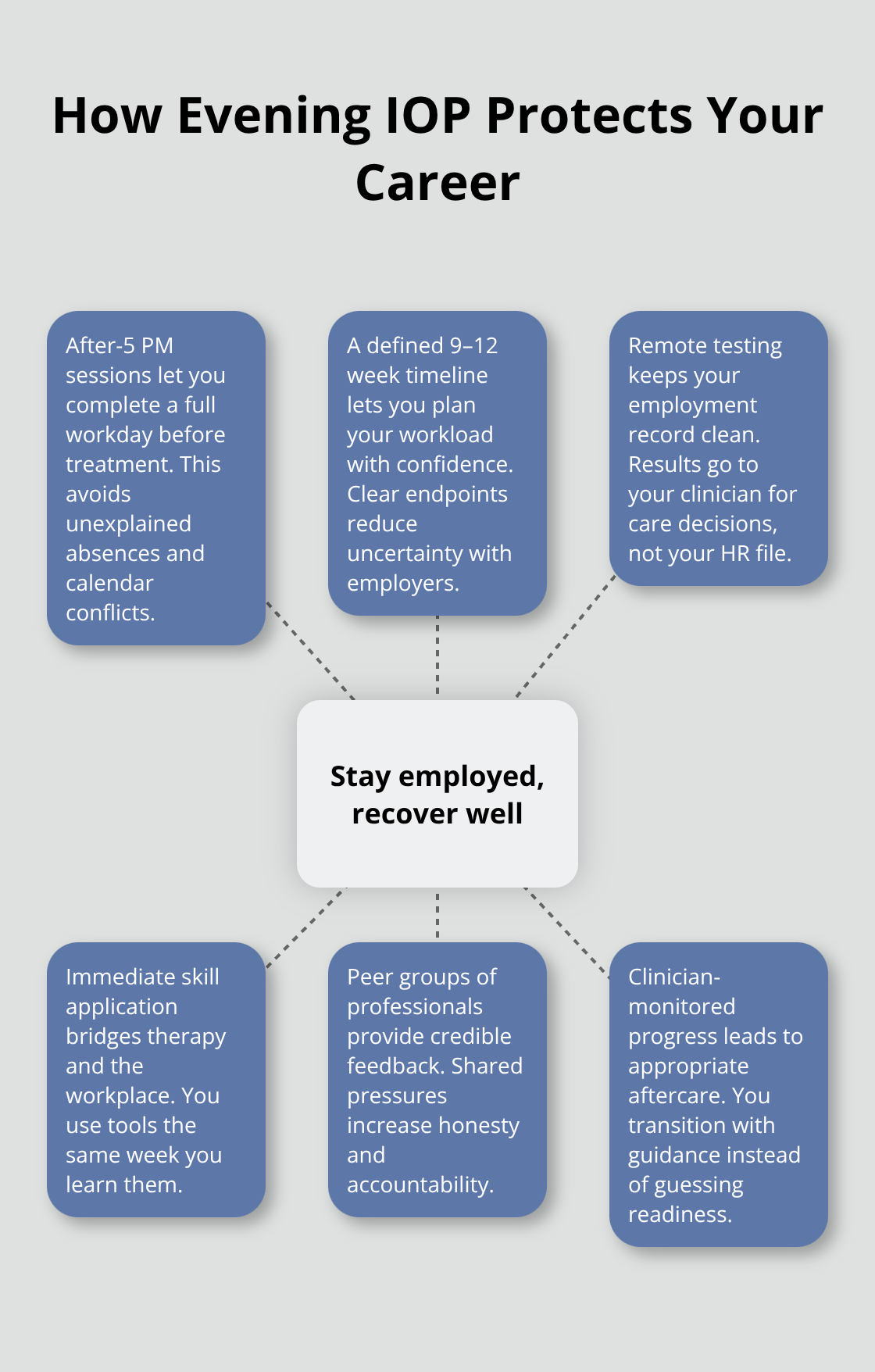
Your primary therapist monitors progress throughout and determines readiness for aftercare, so you move toward independence with clinical guidance rather than guessing when you’re ready to step back.
Immediate Application of Clinical Skills
The real advantage emerges when you apply what you learn in group therapy directly to workplace pressure that same week. A therapist might teach DBT emotion regulation skills on Tuesday evening, and by Thursday you use those exact techniques during a tense client negotiation. This immediate application prevents the gap between clinical learning and real-world execution that derails so many professionals in traditional rehab. Workplace triggers-like deadlines, meetings, or after-work social events-become material for relapse-prevention planning developed directly in therapy and applicable the same week you identify them. Your therapist helps you build relapse-prevention strategies tailored to your actual job demands rather than generic stress management.
Remote Testing Protects Your Employment Record
Remote drug and alcohol testing removes another employment barrier entirely. You complete tests from home through HIPAA-compliant platforms, with results flowing to your clinician for clinical decision-making rather than your HR file. This matters because you avoid the office visit that could trigger workplace questions or create a documentation trail your employer might discover. Your clinician uses test results alongside your self-report to catch relapse patterns early-at week two, not week six-before a crisis forces you to disclose treatment to your employer. Positive results trigger immediate conversation with your therapist about what happened that week (workplace conflict, family tension, or craving intensity), so testing becomes diagnostic data rather than punishment.
Peer Support From Professionals Who Understand
Peer support in evening groups amplifies your recovery because you sit with other working professionals who understand deadline pressure, performance metrics, and the specific shame of managing substance use while maintaining a professional reputation. An accountant in your group knows exactly what it means to hide a problem during busy season. A teacher understands the particular anxiety of being around students while struggling with cravings. A nurse recognizes the exhaustion of long shifts combined with early recovery. This peer credibility accelerates your willingness to be honest about workplace triggers, which means your therapist can help you build strategies tailored to your actual job demands rather than generic advice from clinicians who’ve never managed a P&L or navigated office politics.
Final Thoughts
Evening IOP for professionals works because it solves a problem that traditional rehab ignores: you cannot pause your career for recovery. The clinical evidence proves this model delivers results-abstinence rates of 50–70% and symptom reduction of 70–90% match residential outcomes while you maintain your job, income, and professional identity. Group therapy with peers who understand deadline pressure and performance metrics accelerates your honesty about workplace triggers, while one-on-one sessions with licensed clinicians help you build relapse-prevention strategies tailored to your actual job demands rather than generic stress management.
Remote drug and alcohol testing removes the employment risk of office-based accountability, allowing you to complete tests from home while your clinician uses results as diagnostic data to catch relapse patterns early. FMLA protections and ADA accommodations mean your employer cannot penalize you for seeking treatment, and you attend sessions without burning vacation time or raising red flags with HR. The path forward does not require choosing between your career and your recovery-it requires finding a program designed for professionals who refuse to sacrifice either one.
Starting your evening IOP for professionals journey begins with a single conversation. You do not need to have everything figured out before reaching out-your clinician will conduct an intake assessment, match you to a primary therapist based on your specific struggles, and create a treatment plan tailored to your life. We at EveningIOP offer live and telehealth evening Intensive Outpatient Programs combining interactive online group therapy, one-on-one sessions with licensed clinicians, and remote drug and alcohol testing, so start your assessment today and take the first step toward a career and recovery that coexist.