

Addiction treatment doesn’t have to mean stepping away from your job or leaving your family in the lurch. Remote IOP with monitoring delivers clinical-grade care from your home, letting you stay connected to what matters while getting the support you need.
At EveningIOP, we’ve built programs that work with your life, not against it. You get real therapy, real accountability, and real results-without the commute.
What Happens During Your Remote IOP Sessions
The Three-Part Structure That Creates Accountability
Remote IOP works through a structured weekly schedule that combines group accountability, individual progress tracking, and objective monitoring. Live group therapy sessions happen in the evenings so you can attend without taking time off work. These aren’t pre-recorded videos or self-paced modules-they’re real-time sessions where licensed clinicians facilitate conversations with other people in recovery, creating the same peer support and clinical oversight you’d find in a physical office. Research shows that measurement-based care and weekly progress tracking in remote IOP led to improved outcomes compared to standard treatment.
Your individual counselor meets with you separately each week to address your specific triggers, work through relapse prevention strategies, and adjust your treatment plan based on what’s actually happening in your life. The third component is remote drug and alcohol testing at home, which provides objective accountability without requiring you to travel to a clinic. These tests typically happen at home or at a local lab, with results reported directly to your clinical team. This combination of live group work, one-on-one therapy, and regular testing creates a 360-degree accountability system-you’re not just checking boxes, you’re actively engaging with clinicians who can see your real patterns and respond accordingly.
How Real-Time Feedback Changes Your Recovery
When a test comes back positive or shows concerning patterns, your clinician addresses it directly in your next individual session rather than waiting for a monthly review. This real-time feedback loop is what separates effective remote IOP from programs that feel disconnected from your actual recovery. Your clinical team responds to what’s actually happening in your life, not to data from weeks ago.
Setting Up Your Home Environment for Success
The practical setup matters more than people realize. When you start, plan 30 to 50 minutes for your initial orientation to understand how the platform works, what to expect from group sessions, and how testing will be conducted. Find a private, quiet space in your home where you can attend sessions without interruptions-this could be a bedroom, home office, or even a closet if necessary.
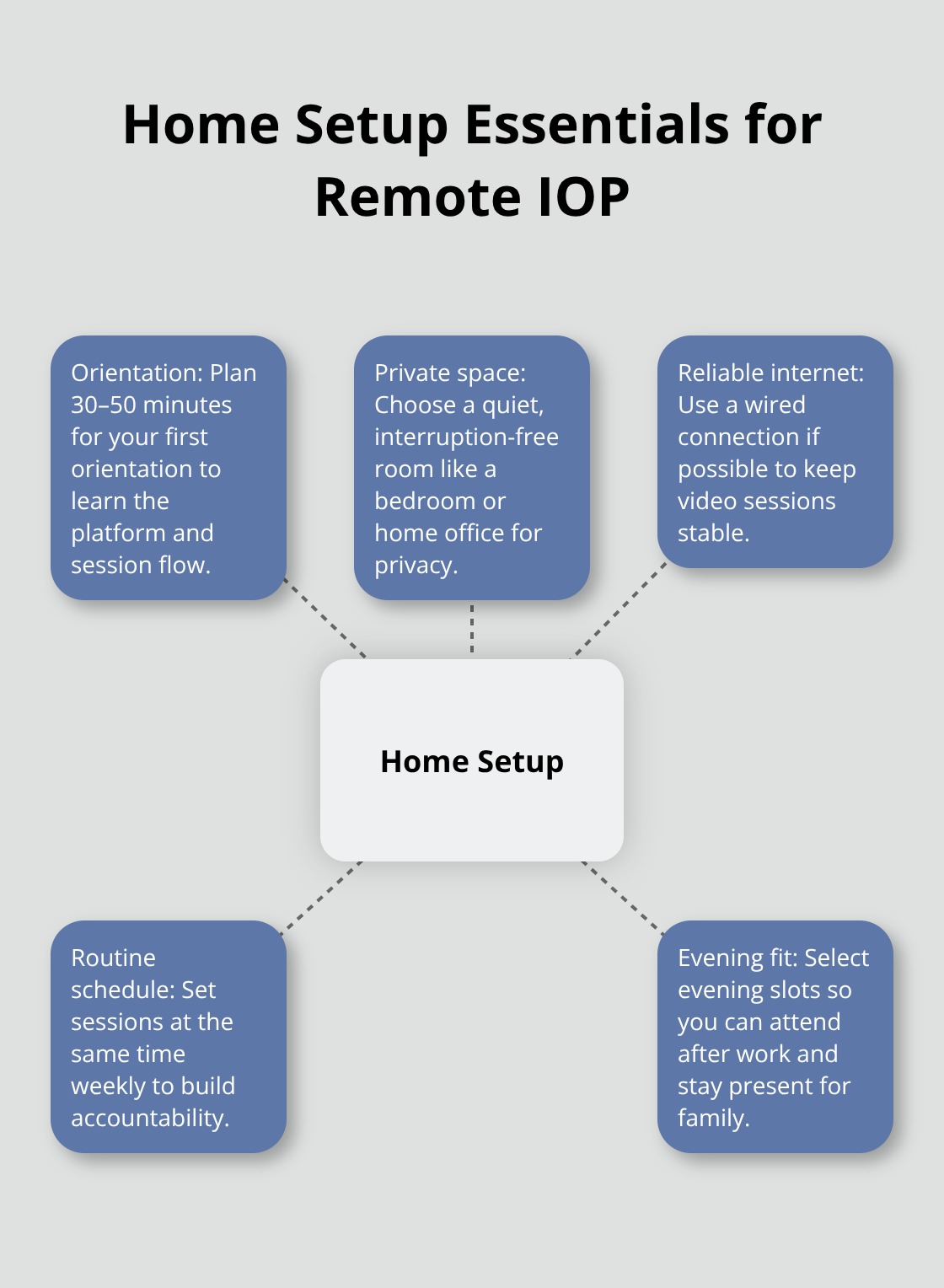
Make sure your internet connection is stable; a wired connection is better than WiFi if possible, since video sessions require consistent bandwidth. Schedule your sessions at the same time each week to build routine and accountability. Most people find that evening programs work because they can attend after work and still be present for family dinner or evening responsibilities.
Testing and Monitoring at Home
The testing component is straightforward: you’ll receive instructions on how and when to test, and results feed into your treatment plan. Your clinician addresses patterns in real time, which means your treatment plan shifts based on actual data rather than assumptions. This approach transforms how quickly your clinical team can identify what’s working and what needs adjustment.
Why Remote IOP Works for People With Jobs
Evening Schedules Protect Your Income
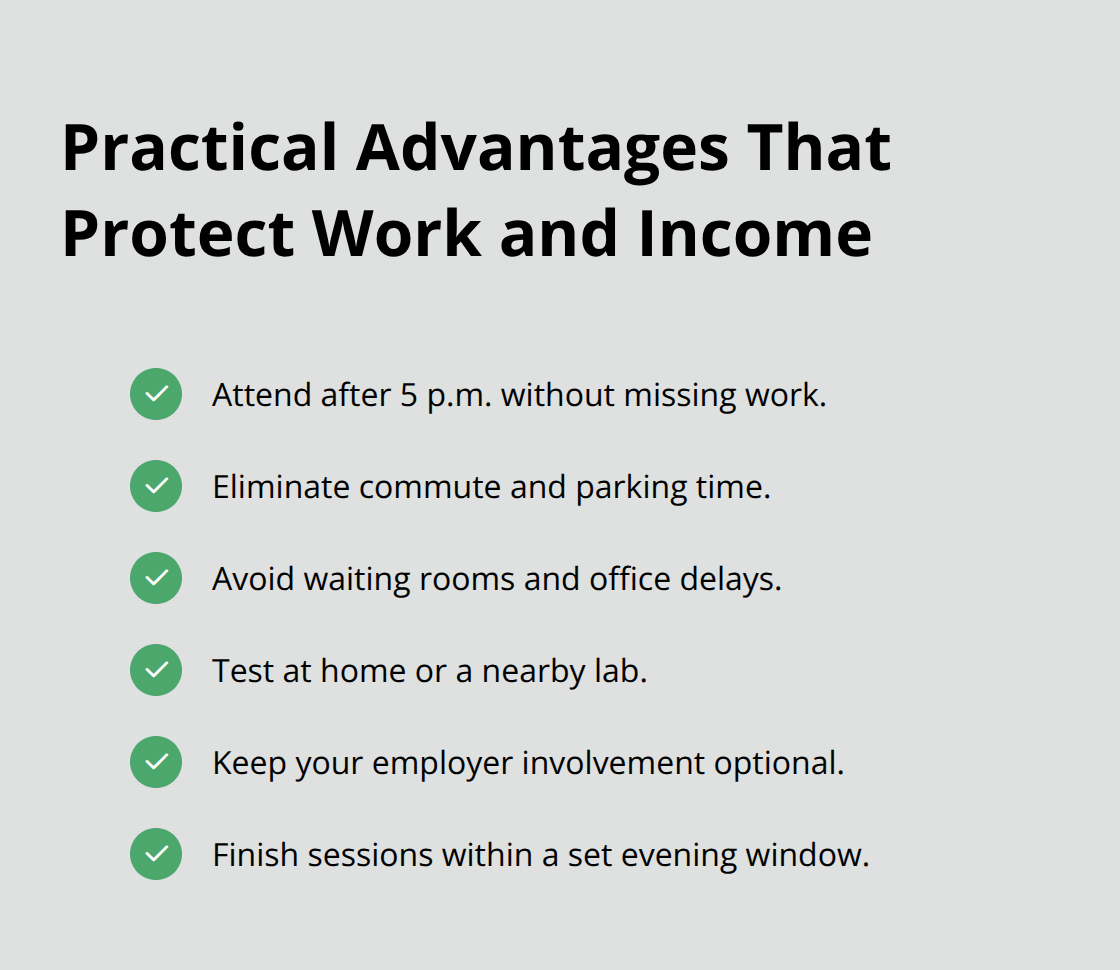
Work doesn’t stop when you need treatment, and that’s exactly why remote IOP exists. Most people cannot afford to take three months off their jobs. The reality is straightforward: if you have to choose between paying your mortgage and getting treatment, you’ll skip treatment. Remote IOP eliminates that choice by delivering care after 5 p.m., which means you attend group sessions, individual therapy, and complete testing without requesting time off. Your employer doesn’t need to know you’re in recovery unless you decide to tell them.
Research on measurement-based care in remote IOP settings shows that programs delivering structured evening care lead to higher routine discharge rates. That matters because it means the structure actually works for people managing full-time jobs.
The Real Cost of Daytime Treatment
The income piece is critical and often overlooked in treatment discussions. Missing work for daily in-person appointments costs money through lost wages, and if you work hourly or in commission-based roles, that impact hits immediately and severely. Remote IOP removes transportation barriers entirely-no drive to a clinic, no waiting room time, no explaining where you’re going. You log in from home after work, attend your group session, and you’re done within the scheduled window.
Testing happens at home or at a local lab, so you don’t take a half-day to produce a sample. This combination of evening scheduling, home-based testing, and no commute creates genuine flexibility that daytime programs simply cannot match.
Family Responsibilities Stay on Track
Family responsibilities don’t get sacrificed either. Parents attend evening group sessions after kids finish homework or go to bed, then schedule individual sessions around school pickups or evening activities. The flexibility means you don’t choose between recovery and being present for your family. Your treatment plan adjusts based on real data-your actual work stress, your actual family dynamics, your actual patterns-because your clinician sees what’s happening in your real life, not in a controlled clinical environment during business hours.
This real-world visibility into your recovery is what separates evening remote IOP from programs that operate on a nine-to-five schedule. Your clinical team responds to the pressures and triggers you actually face, not the ones that appear in a daytime office setting. When you’re ready to evaluate which program fits your life, the next step involves understanding what to look for in a remote IOP provider that can deliver this level of flexibility and clinical oversight.
Finding a Program That Actually Fits Your Life
Verify Licensing and Clinical Standards
Choosing a remote IOP program requires looking past marketing language to understand what you’re actually getting. The program you select must be licensed, equipped to handle your specific substance use disorder, and structured around evening availability. Start by verifying that any program you consider holds DHCS licensing and Joint Commission accreditation, which means it meets clinical standards for safety, staffing, and treatment quality. LegitScript certification adds another layer of verification that the program operates legitimately. You can confirm these credentials directly on the program’s website or by calling their admissions team. Programs without these certifications may cut corners on clinical oversight, which directly impacts your treatment outcome.
Match the Program to Your Substance
Beyond credentials, confirm that the program specifically treats your substance. Some remote IOPs focus primarily on alcohol, while others address opioids, benzodiazepines, stimulants, or polysubstance use. When you call for intake, ask directly which substances the program has treated successfully and what modalities they use. If a program says they treat everything equally, that’s a red flag. Effective treatment differs substantially between methamphetamine addiction and alcohol dependence, and your clinicians should have specific expertise with your substance.
Evaluate Evening Scheduling and Flexibility
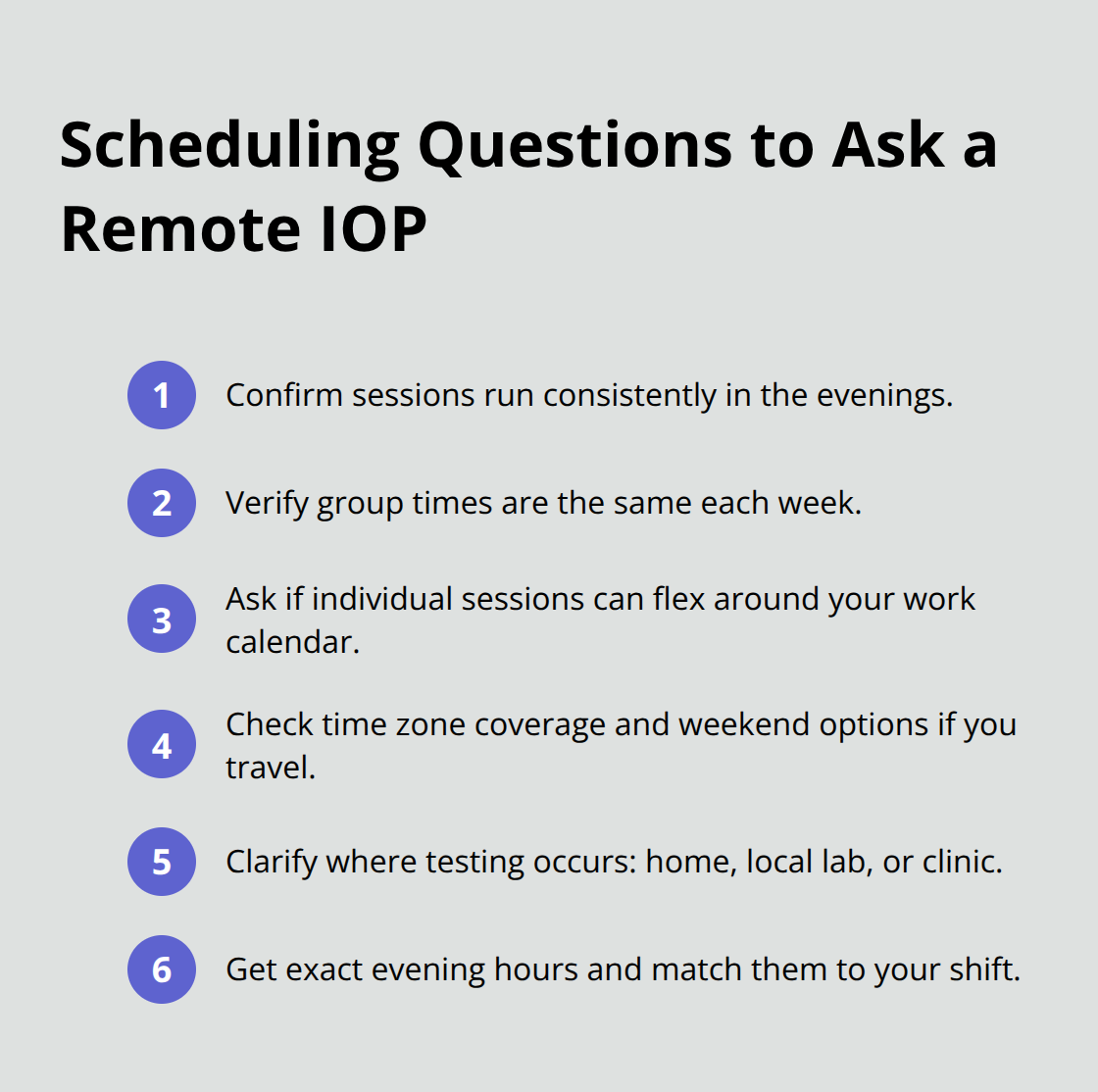
Schedule flexibility matters more than most people realize, but not all flexibility is equal. The program needs to offer evening sessions consistently, not just occasionally. Ask whether group sessions run at the same time each week, whether individual sessions can be scheduled around your work calendar, and what happens if you need to reschedule. Some programs offer sessions across multiple time zones and include weekend options, which matters if you work irregular hours or travel for work.
Testing logistics also factor into flexibility: confirm whether testing happens at home, at a local lab, or requires travel to a clinic location. A program that requires you to drive to a testing facility defeats the purpose of remote treatment. Request the specific evening hours the program operates and verify they align with your work schedule. If you work until 6 p.m., a program starting at 5:30 p.m. won’t work.
Assess Treatment Duration and Progress Tracking
Ask how many weeks the program typically runs and whether they adjust duration based on progress rather than forcing everyone into a fixed timeframe. Programs that measure progress weekly through objective data can discharge clients faster when they’re genuinely stable, rather than keeping people in treatment because they paid for nine weeks upfront. This approach (measuring outcomes and adjusting accordingly) separates programs that adapt to your actual recovery from those that operate on a rigid schedule.
Final Thoughts
Remote IOP with monitoring works because it meets you where you actually are-no choice between keeping your job, staying present for your family, and getting effective addiction treatment. Structured evening care with real-time progress tracking and objective monitoring produces measurable outcomes, and your clinician sees your actual patterns, responds to real data, and adjusts your treatment plan based on what happens in your life. The programs that deliver this level of care operate in the evenings, offer flexible scheduling across time zones, conduct testing at home or nearby, and employ licensed clinicians who specialize in your specific substance.
When you’re ready to start, verify licensing and accreditation, confirm the program treats your substance, and ask direct questions about scheduling and testing logistics. EveningIOP combines live group therapy, individual counseling with licensed clinicians, and remote drug and alcohol testing in an evening format designed for working professionals and families. The first step is calling to discuss your situation and confirming that remote IOP with monitoring aligns with your recovery goals.