

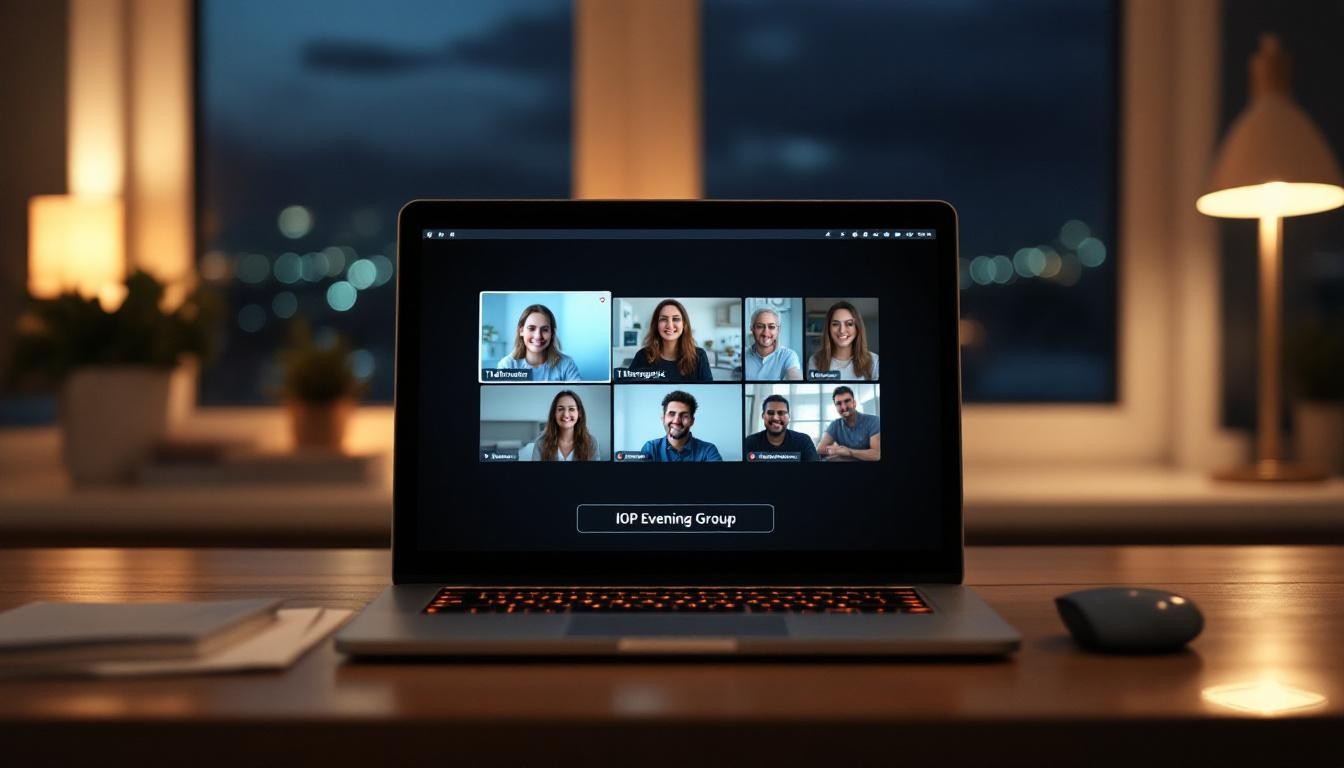
Addiction treatment shouldn’t force you to choose between recovery and your job. At EveningIOP, we’ve built teletherapy IOP programs specifically for evenings so working professionals can access group therapy without sacrificing their careers.
Virtual group therapy works because it combines real peer support with evidence-based treatment, all delivered through a platform that fits your schedule. This blog post shows you exactly how evening telehealth IOP removes the barriers that keep people from getting help.
Evening IOP Fits Around Your Work Schedule
The Professional’s Recovery Dilemma
Working professionals face a brutal choice with traditional addiction treatment: take weeks or months off work, or skip recovery entirely. Most programs operate during business hours, forcing you to choose between your paycheck and your health. Evening IOP programs eliminate this false choice by running sessions after typical business hours, so you attend group therapy from home without burning through vacation days or raising questions at the office. You log in from your computer or phone at 6 PM or later, complete your session, and return to your regular evening. This isn’t theoretical flexibility-it’s the difference between treatment that actually happens and treatment you postpone indefinitely because the timing seems impossible.
Privacy That Protects Your Professional Life
The privacy advantage of virtual evening IOP extends far beyond scheduling convenience. You control your environment completely, and no one at work sees you driving to a clinic building or notices you left early on Fridays. No receptionist recognizes you walking through a waiting room. Remote drug testing happens on your timeline through secure platforms you access from home, eliminating the need to visit a testing facility during work hours or explain an appointment to your employer.
Research shows that removing logistical barriers significantly improves treatment completion rates. When people don’t have to choose between their paycheck and their recovery, they stay in programs longer and achieve better outcomes. The structure remains intensive-you still receive 9–12 hours per week of treatment delivered through video-but it happens when your work obligations end, not when they begin.
Peer Accountability That Actually Works
Evening IOP group sessions connect you with peers facing identical pressures, all of whom understand the professional responsibilities pulling at their time. This peer accountability works because everyone in your group actually shows up-they’ve made the same choice to prioritize recovery without sacrificing their careers. Licensed clinicians deliver evidence-based treatment during these evening sessions, with individual therapy appointments scheduled around your availability. You never need to explain absences to supervisors or negotiate time off.
The combination of flexible scheduling and structured treatment creates a powerful dynamic. Your peers hold you accountable not through judgment, but through shared experience. They know what it means to balance work demands with recovery, and they show up because the program respects their professional obligations. This transforms evening IOP from a convenience into a clinically effective model that works specifically for people whose lives don’t fit traditional 9-to-5 treatment schedules.
What makes virtual group therapy effective for substance use recovery goes beyond just fitting your schedule-it requires the right therapeutic approach and real peer connection.
Why Virtual Group Therapy Works for Substance Use Recovery
Peer Connection That Strengthens Accountability
Peer connection in virtual addiction treatment produces measurable outcomes because people struggling with substance use need to see themselves reflected in others who understand their specific pressures. When you join an evening IOP group session, you log into a secure video platform where six to twelve people show up consistently, week after week, because they made the same choice to recover without abandoning their professional lives. This consistency matters significantly. The research suggests that hybrid virtual groups have similar outcomes to in-person groups and better outcomes than other formats when group processes remain strong. The difference is that virtual peers often engage more openly from home, away from the stigma and anxiety of a clinical setting.
Virtual addiction treatment does not weaken the therapeutic relationship; it strengthens accountability because you show up from your actual life, not a separate treatment environment. Your peers hold you accountable not through judgment, but through shared experience. They understand what it means to balance work demands with recovery, and they show up because the program respects their professional obligations.
Evidence-Based Treatment Adapted for Online Delivery
Licensed therapists deliver evidence-based treatment adapted for online delivery-cognitive behavioral therapy, dialectical behavior therapy, and acceptance and commitment therapy-through screen-shared worksheets, guided practices, and structured skill-building that mirrors in-person effectiveness. These modalities work online because the core therapeutic mechanisms remain unchanged; only the delivery platform shifts. CBT worksheets appear on your screen instead of on paper. DBT skills practice happens through guided exercises you complete in real time with your group. ACT acceptance work translates directly to video-based sessions without losing clinical impact.
The adaptation matters because virtual treatment respects how people actually learn and change. You practice skills in your own environment, which means you apply them immediately to your real life rather than waiting until you leave a clinic building. Your therapist reviews your progress during individual sessions and connects it directly to what you worked on in group, creating continuity that strengthens outcomes.
Remote Testing That Reinforces Commitment
Remote drug testing transforms accountability from something that feels punitive into something that reinforces commitment. You complete testing from home on a schedule that fits your work obligations, not the clinic’s hours, which eliminates the excuse that testing appointments conflict with employment. The data gets reported securely to your treatment team, and your therapist reviews results during individual sessions, connecting testing outcomes directly to your recovery goals and the skills you learn in group.
This integration works because it is practical-you do not manage recovery in isolation and then report to treatment staff once weekly. Your testing results, your group participation, and your individual therapy all connect in real time. Structured accountability through remote testing also means your peers know everyone in the group participates in the same monitoring process, which builds trust. You do not wonder who remains honest about their recovery; the testing creates transparency that actually reduces group tension rather than increasing it.
How Structure Supports Real Recovery
Evening IOP programs that combine consistent peer groups, evidence-based therapeutic modalities delivered online, and integrated remote testing create the conditions for sustained recovery because they respect your reality-that you work, you have responsibilities, and you deserve treatment that fits your life rather than demanding you abandon it. The structure remains intensive (nine to twelve hours per week), but it happens when your work obligations end, not when they begin.
This practical alignment between treatment timing and your actual schedule removes a major barrier that keeps people from completing programs. When treatment fits your life instead of forcing you to choose between recovery and employment, you stay engaged longer and build stronger connections with your peers. The accountability that emerges from this consistency-both your own commitment and your peers’ presence-becomes the foundation for lasting change.
What separates evening virtual IOP from standard outpatient therapy is not just flexibility, but the intensity and structure that intensive programs provide while respecting your professional obligations.
Why Evening Telehealth IOP Reshapes Addiction Treatment
Professionals Reject Outdated Treatment Models
The addiction treatment landscape shifts because professionals and working families no longer accept models built around outdated schedules. Demand for evening and flexible recovery options has grown substantially as people recognize that traditional daytime programs create an impossible choice between employment and sobriety. This shift reflects a fundamental reality: most people in recovery work, manage households, and maintain obligations that don’t pause for treatment. Professionals need treatment that fits their actual lives rather than treatment that demands they restructure everything around clinic hours.
Evidence Supports Virtual Delivery
Research demonstrates that treatment completion rates improve significantly when programs eliminate scheduling conflicts with employment. People stay engaged longer when they access care from home rather than taking time off work. Virtual delivery in addiction treatment doesn’t compromise clinical effectiveness-studies comparing telehealth and in-person intensive outpatient programs found equivalent symptom reductions in depression, anxiety, and substance use outcomes, with some research indicating better retention in virtual formats. Technology now enables licensed clinicians to deliver evidence-based treatment through secure video platforms that meet all regulatory requirements, including HIPAA compliance and encrypted data handling.
Practical Integration of Testing and Accountability
Remote drug testing integrates seamlessly into virtual care, removing the logistical burden of traveling to testing facilities during work hours. A working professional can log into a group session at 6 PM from home, participate in structured skill-building with peers facing identical pressures, complete individual therapy, and manage accountability testing without ever leaving their residence or explaining treatment to their employer. This practical alignment transforms how people experience recovery-they no longer compartmentalize treatment as something separate from their actual lives.
Access Barriers Disappear
Lower barriers to treatment access represent the most significant advantage evening IOP telehealth provides. Geographic location no longer determines whether someone receives intensive care (someone in a rural area with no local IOP programs can access the same clinical intensity as someone in a major city). Time zones become irrelevant when programs offer flexible scheduling across evening and weekend hours.
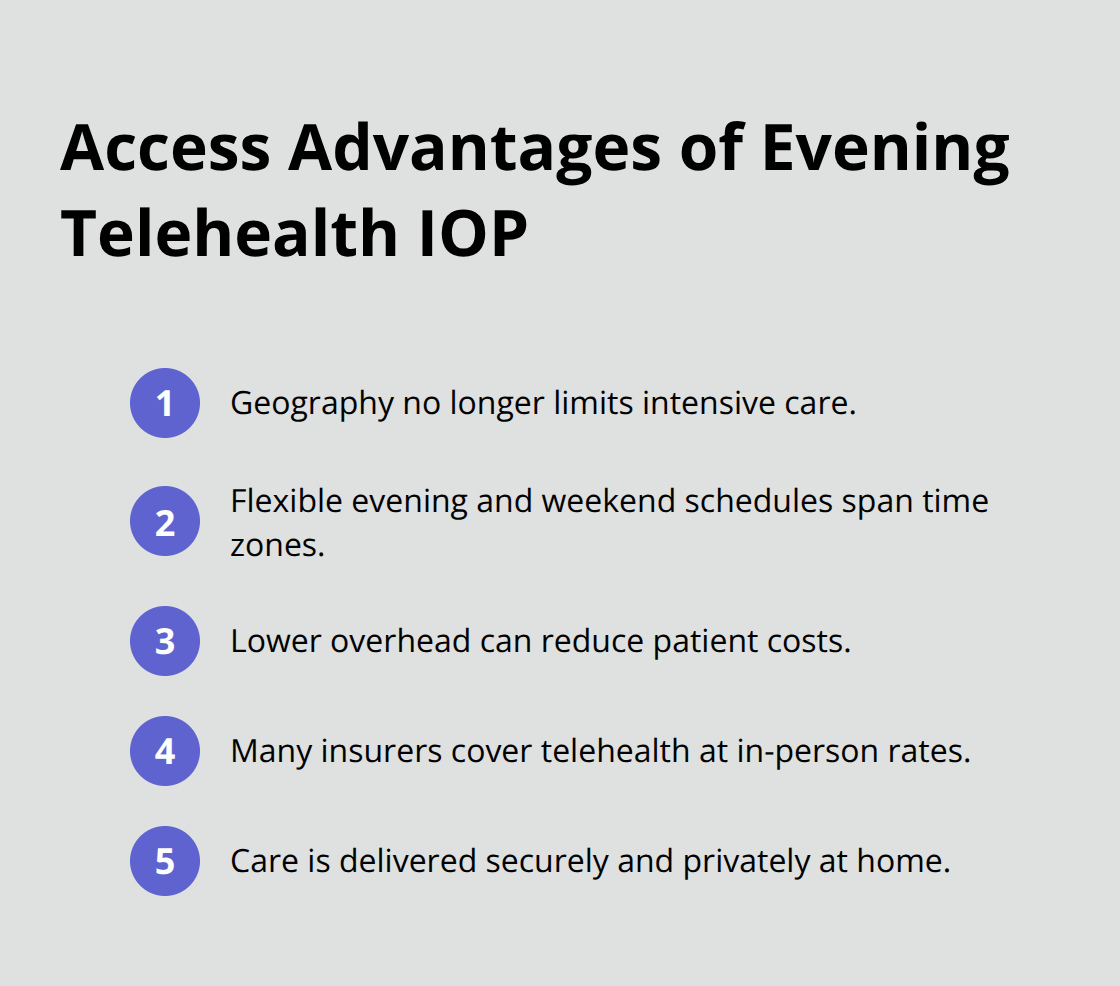
Cost barriers decrease because virtual delivery eliminates overhead associated with physical clinic space, and many insurance providers cover telehealth at equivalent rates to in-person care.
Real Solutions for Real Obstacles
More than one in five U.S. adults live with a mental illness, yet access barriers prevent millions from seeking treatment. Evening virtual IOP directly addresses these barriers by meeting people where they are-literally at home, at times that fit their actual schedules. Someone struggling with substance use no longer needs to choose between recovery and their mortgage payment. They don’t need to relocate, take extended leave, or navigate the anxiety of walking into a clinical building. Instead, they access intensive treatment that respects their professional obligations and delivers measurable outcomes.
Final Thoughts
Evening virtual IOP removes the primary obstacles that prevent working professionals from accessing addiction treatment. Traditional daytime programs force an impossible choice between employment and recovery, but teletherapy IOP evenings online eliminates that conflict entirely. You attend group sessions after work hours from home, complete individual therapy on your schedule, and manage accountability testing without disrupting your career or explaining treatment to your employer.
Virtual group therapy delivers measurable effectiveness because it combines real peer accountability with evidence-based clinical treatment. Your peers understand the specific pressures you face as a working professional because they live them too, and they show up consistently because the program respects their obligations. Licensed clinicians deliver cognitive behavioral therapy, dialectical behavior therapy, and other evidence-based approaches through secure video platforms, adapted for online delivery without compromising clinical impact.
Accessibility represents the final advantage that makes evening virtual IOP fundamentally different from traditional treatment models. Geographic location no longer determines whether you receive intensive care, time zones become irrelevant, and cost barriers decrease because virtual delivery reduces overhead while most insurance providers cover telehealth at equivalent rates to in-person care. EveningIOP offers live, telehealth evening Intensive Outpatient Programs that combine interactive online group therapy, one-on-one sessions with licensed clinicians, and remote drug testing-contact them today to start treatment that actually fits your life.