

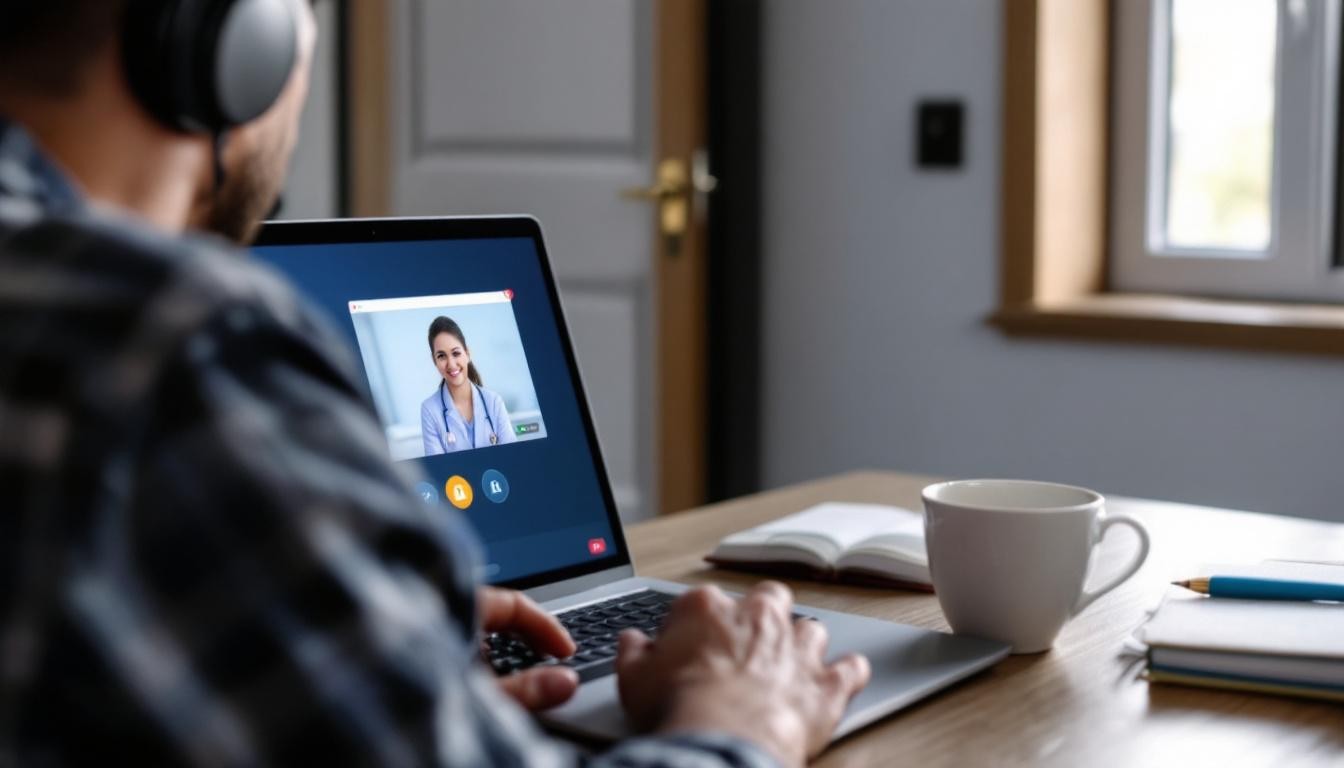
Addiction treatment works best when you feel safe enough to be honest. Many people avoid seeking help because they fear judgment, job loss, or damaged relationships.
At EveningIOP, we’ve seen how private remote addiction treatment removes these barriers. When your recovery happens behind closed doors with encrypted sessions and confidential records, you can focus entirely on healing.
Why Privacy Matters in Your Recovery Decision
The fear of being discovered stops people from seeking help. Stigma remains one of the top reasons individuals delay or avoid addiction treatment entirely. When you worry about who might find out, you focus on survival instead of recovery. This mental load drains energy you need for healing. Research from SAMHSA indicates that perceived stigma and fear of social consequences keep millions of Americans from accessing care they desperately need. Your job, your relationships, and your reputation feel like they’re on the line, and that feeling is legitimate, not paranoid.
Employment and Professional Risks
Employment consequences are concrete and terrifying. Even though HIPAA protects addiction treatment records and your employer cannot legally discriminate based on treatment alone, many people fear their boss or colleagues will find out through office gossip, missed time, or visible signs of treatment. Remote treatment eliminates this exposure entirely. Nobody at your workplace knows you attend sessions at 6 PM from your home office. The Family and Medical Leave Act provides up to 12 weeks of protected leave for addiction treatment with medical documentation, meaning you have legal cover-but remote care means you may not need to use it. You can attend evening sessions around your schedule, keeping recovery completely separate from your professional life.
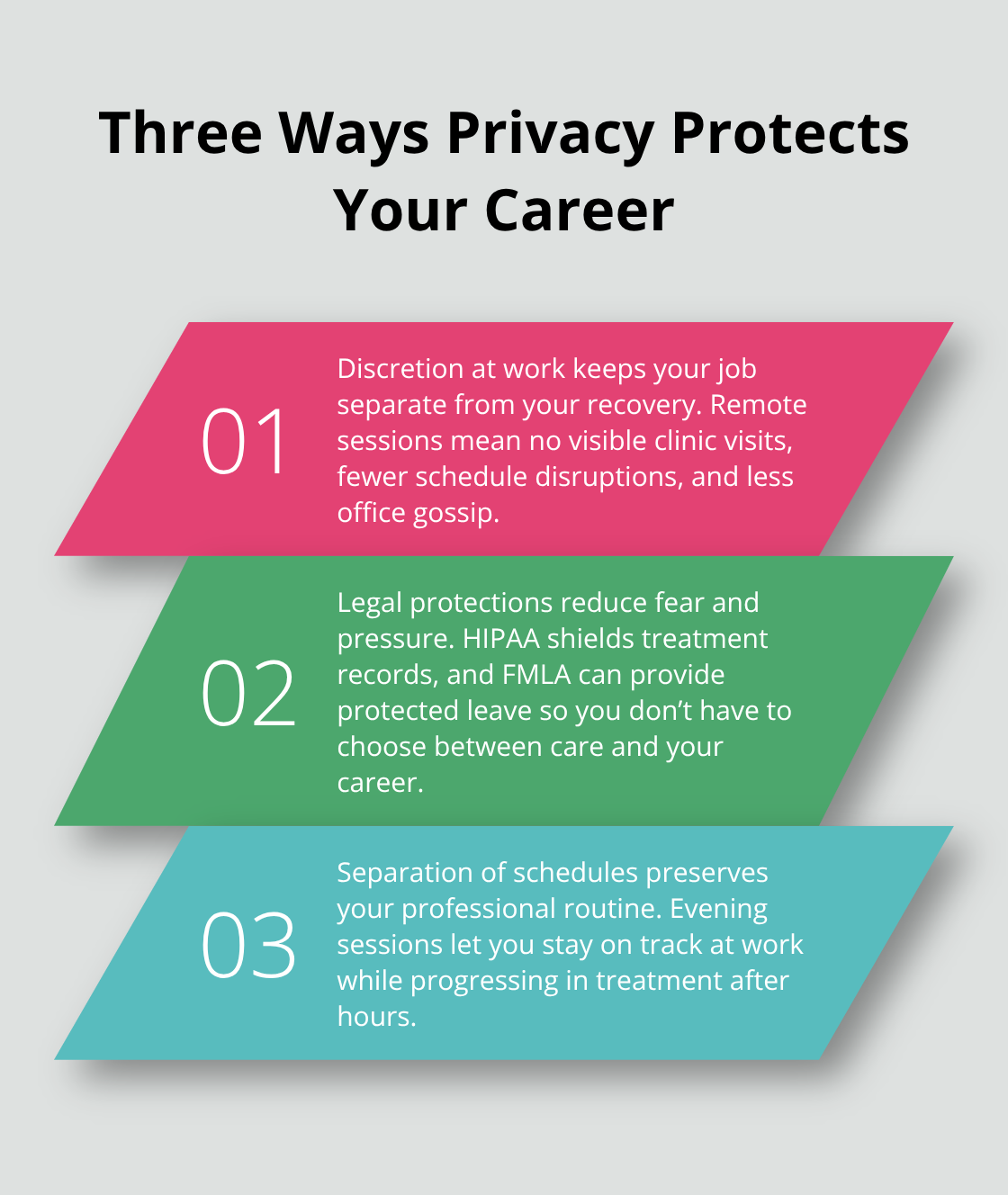
This separation transforms treatment from a career risk into a manageable health decision.
Relationship and Family Dynamics
Family complications run deep. Some people fear their partner will use treatment against them in custody disputes. Others worry about disappointing parents or breaking trust with spouses. These concerns shape real decisions about whether to seek help. Private remote treatment gives you control over disclosure. You decide who needs to know and when. A simple explanation (health appointments, a wellness retreat, private time) satisfies most people without requiring full transparency about addiction treatment. This autonomy matters because recovery requires you to feel safe, not constantly defending your choices to skeptical family members. Evening and flexible scheduling allow you to attend sessions without announcing your whereabouts or disrupting family routines, keeping your recovery private while remaining fully present for the people who matter.
How Treatment Stays Confidential
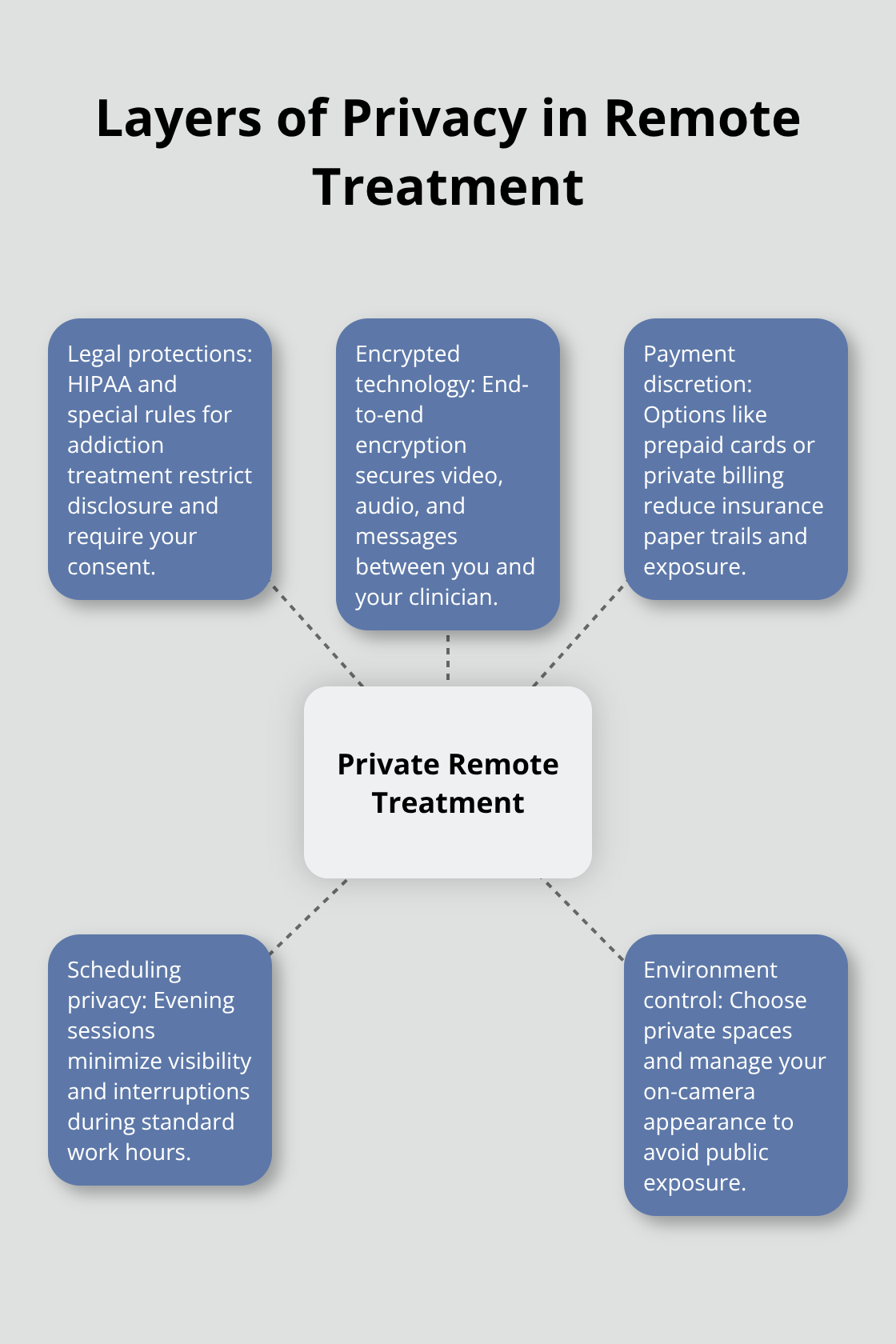
HIPAA protections form the legal foundation for your privacy. Treatment records cannot be disclosed without your written consent or a court order. This legal shield exists specifically to protect people in your situation. Beyond legal requirements, remote treatment adds practical privacy layers that in-person care cannot match. You control your environment, your appearance, and who sees you entering a building. No one observes you in a waiting room or parking lot. Your sessions happen in spaces you choose and control, whether that’s your home office, a quiet corner, or anywhere with a secure internet connection. This combination of legal protection and practical anonymity creates the conditions where honest recovery becomes possible. When you’re ready to explore what private remote treatment actually looks like and how to evaluate providers, the details matter significantly.
How Remote Treatment Keeps Your Information Secure
Encryption Protects Your Conversations
Technology protects your privacy at every step when you choose remote addiction treatment. The platforms reputable providers use employ military-grade encryption for video sessions, meaning conversations between you and your clinician cannot be intercepted or accessed by unauthorized parties. This encryption standard matches the technology banks use to protect financial transactions. When you log into a secure telehealth platform, your video feed, audio, and messages become scrambled in transit and only decode on your device and your clinician’s device. This technical layer eliminates the risk that someone monitoring your home network could see what you discuss.
Legal Protections Beyond Technology
HIPAA compliance forms the legal backbone of your protection. Treatment records cannot be shared with employers, family members, or insurers without your explicit written consent, and addiction treatment records receive even stricter protections than general medical records under federal law. Your clinician maintains these records on secure servers with access controls, meaning only people directly involved in your care can view your file. You have the right to request what information is stored about you and to see exactly what your provider has documented. This transparency matters because you control your narrative and your data.
Payment Methods That Preserve Anonymity
Payment structures in remote treatment offer genuine anonymity that traditional rehab facilities cannot match. Many providers accept payment methods that don’t require linking to your primary bank account or insurance. You can pay with prepaid cards, cryptocurrency, or cash transfers through secure payment portals, meaning no itemized insurance explanation of benefits arrives at your home with treatment details printed on it. If you do use insurance, request that billing statements go to an email address only you access rather than a shared household address. Some providers handle billing discretely on your behalf, keeping sensitive documentation out of your home entirely.
Scheduling as a Privacy Strategy
Evening scheduling itself becomes a privacy tool because sessions occur outside standard business hours when family members are less likely to interrupt or notice your whereabouts. You attend sessions from your own space at times that fit your actual life, not according to a rehab facility’s rigid calendar. This flexibility means you avoid requesting unusual time off work, explaining mysterious absences, or traveling to visible locations. The combination of encrypted technology, legal confidentiality protections, and practical payment discretion creates a treatment experience where your recovery remains genuinely private.
When you understand how these protections work, the next critical step involves evaluating which providers actually deliver on these promises and which ones cut corners on security or transparency. Remote drug and alcohol testing removes the guesswork from recovery by giving you concrete proof of progress when results come back clean.
Evaluating Remote Treatment Providers for Real Privacy
Verify Credentials Through Independent Sources
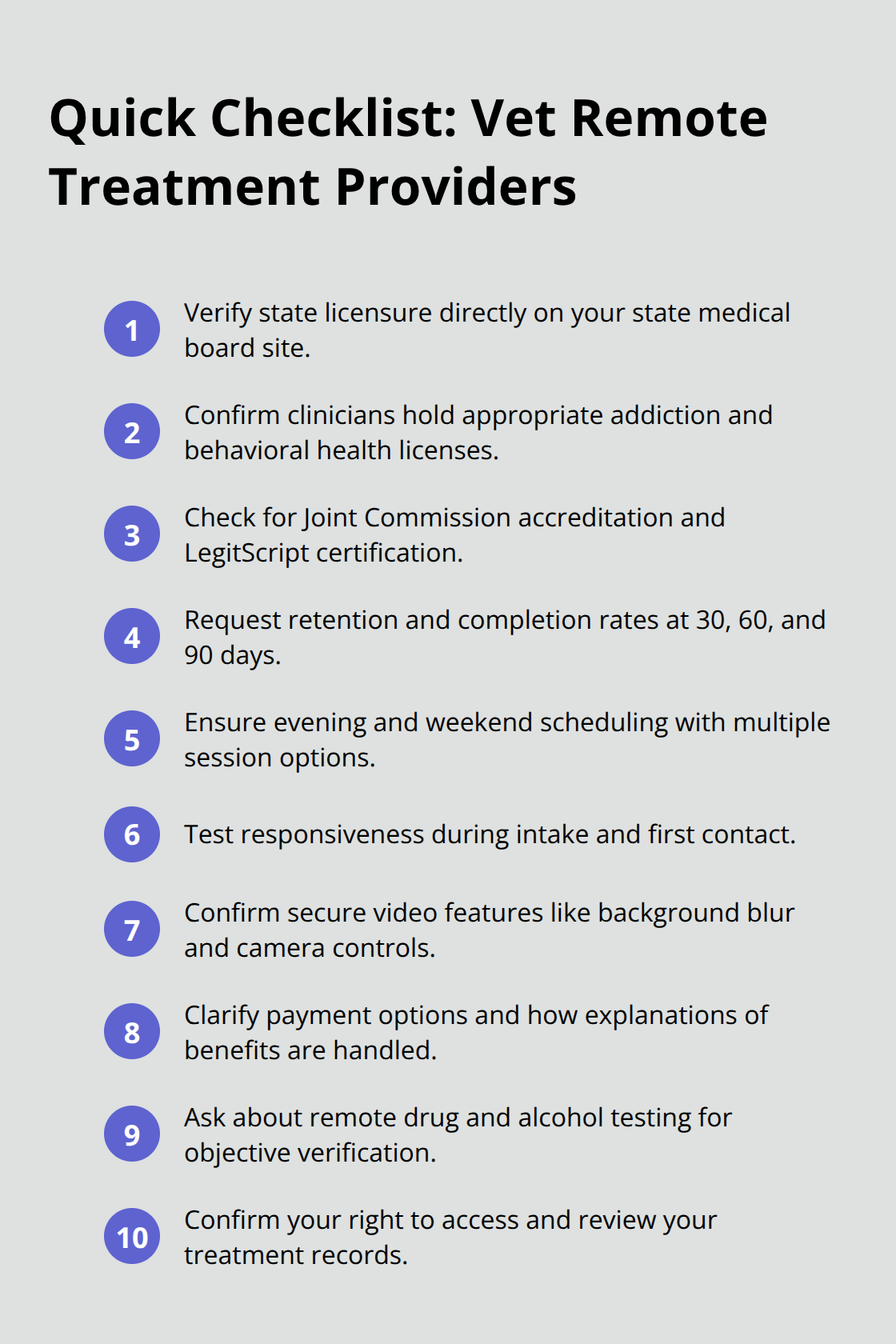
Credentials matter more than marketing claims, and you need to verify them independently rather than trusting what a website promises. Check whether a provider holds current state licensure by visiting your state’s medical board website directly-do not rely on their self-reported credentials. For telehealth addiction treatment specifically, verify that the clinical staff includes licensed addiction counselors, licensed clinical social workers, or addiction medicine physicians with active licenses in your state. Joint Commission accreditation confirms that a program meets rigorous standards, and LegitScript certification confirms that a provider operates legally and maintains proper controls. These verifications take 10 minutes but eliminate providers that cut corners on compliance, which often correlates with weaker privacy protections.
Assess Treatment Outcomes With Concrete Data
Research the provider’s actual outcomes by requesting their treatment completion rates and asking specifically about retention at 30, 60, and 90 days. Research from NCBI shows that teletherapy programs report higher attendance and completion rates than traditional in-person therapy. If a provider cannot articulate their retention data or seems evasive about outcomes, that signals they may not prioritize genuine results. Ask whether they conduct remote drug and alcohol testing as part of their program because this objective verification prevents relapse from escalating silently.
Confirm Scheduling Matches Your Real Life
Evening and weekend sessions should be the default, not rare exceptions, because your treatment should fit your actual life rather than forcing you to fabricate excuses at work. Confirm that a provider offers multiple session times weekly and allows you to adjust appointments without extensive notice requirements or penalties. Ask whether they provide continuing care groups and individual counseling on the same evening schedule, not scattered across unpredictable times that require constant rescheduling. Test their responsiveness by noting how quickly they answer initial inquiries and return calls-slow communication during intake predicts sluggish support during active treatment.
EveningIOP specifically structures evening programs for professionals and families, recognizing that privacy depends partly on maintaining your normal routines without arousing suspicion.
Evaluate Platform Security and Payment Discretion
Confirm their platform uses secure video conferencing with features you control, such as the ability to blur your background or join without your camera initially to test the connection privately. Ask directly whether they accept payment methods that bypass insurance billing if that matters to you, and clarify their policy on billing statements and insurance explanations of benefits. Providers genuinely committed to privacy answer these questions transparently and without defensiveness. Some providers allow you to adjust how billing statements appear in your home, keeping sensitive documentation out of sight entirely.
Final Thoughts
Privacy forms the foundation of effective recovery because honesty requires safety. When you fear exposure, you withhold the truth that clinicians need to help you. When you worry about judgment, you minimize problems instead of addressing them directly. Private remote addiction treatment removes these barriers by letting you pursue healing on your terms, in spaces you control, with protections that actually work.
Selecting the right provider determines whether those protections remain theoretical or become real. Independent verification of credentials through your state medical board takes minutes but separates legitimate programs from those cutting corners. Concrete outcome data-retention rates at 30, 60, and 90 days-tells you whether a provider delivers results or just promises them. Scheduling that accommodates evening and weekend sessions signals whether they understand that your recovery must fit your actual life, not force you to fabricate excuses at work or home.
Taking the first step means reaching out to a provider you’ve actually evaluated rather than one you found through a search engine. Ask the questions outlined here, request their outcome data, and verify their credentials independently. EveningIOP offers evening intensive outpatient programs that combine live telehealth group therapy, one-on-one sessions with licensed clinicians, and remote drug testing-all scheduled during hours when you can participate without disrupting work or family responsibilities.