

Addiction doesn’t follow a 9-to-5 schedule, and neither should your recovery. Many people struggle to access treatment during standard business hours because of work, family responsibilities, or other commitments that can’t be paused.
After hours drug rehab programs exist specifically for this reason. At EveningIOP, we’ve designed our services around your life, not the other way around.
Why Evening and Night Hours Match Real Life
Work schedules, childcare responsibilities, and financial obligations don’t pause for treatment. According to SAMHSA data, 31.7 million adults aged 18 or older perceived that they ever had a problem with their use of alcohol or drugs, yet many never access care because daytime programs conflict with their employment. A person working a standard job cannot simply leave at 2 p.m. for a therapy session without risking their paycheck or their job. Parents managing school pickups, evening routines, and household needs face impossible choices between treatment and family stability. Evening programs eliminate this false choice entirely.
Treatment Fits Your Schedule, Not the Other Way Around
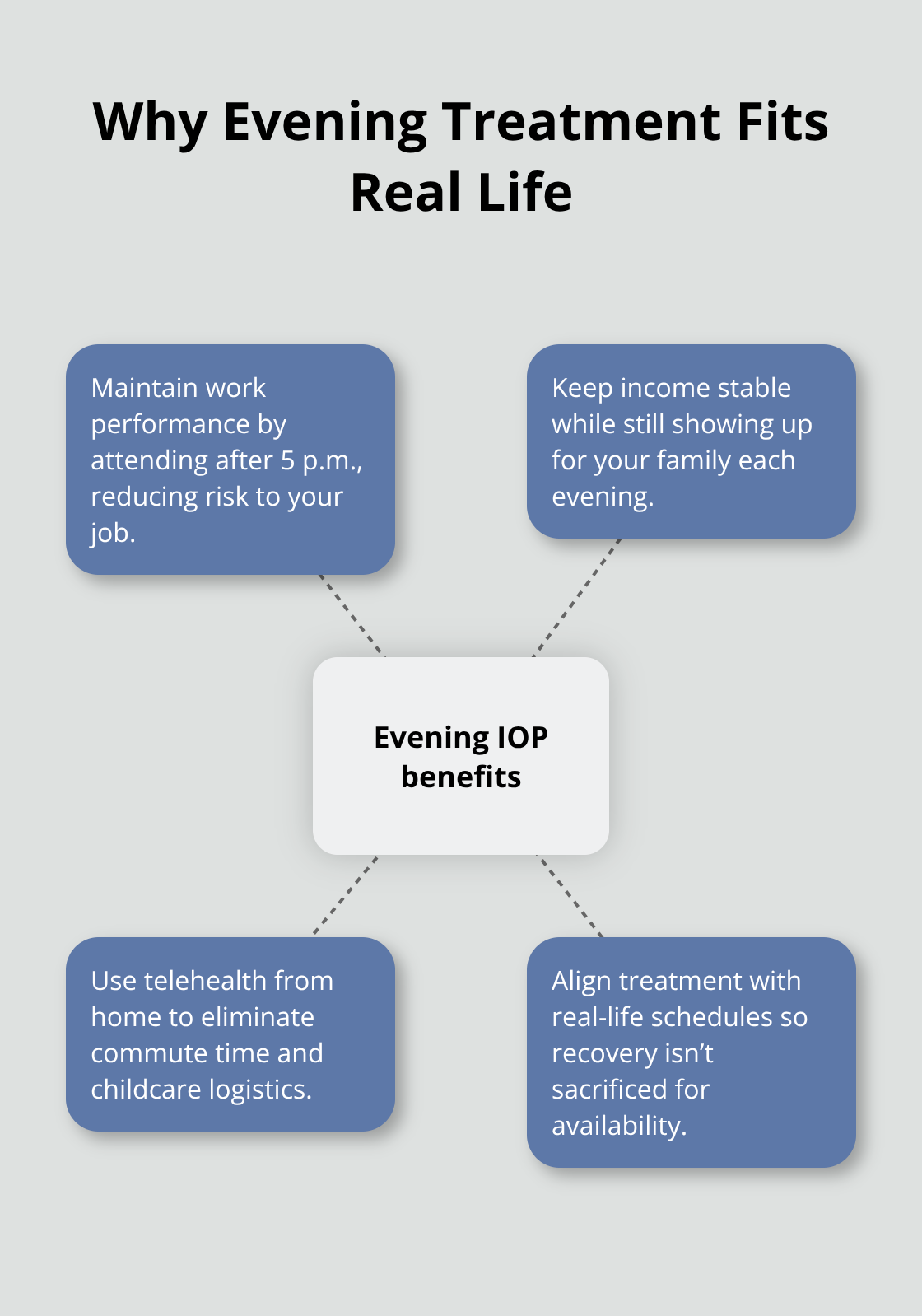
When treatment happens after 5 p.m., you maintain your work performance, keep your income stable, and show up for your family without sacrificing recovery. This flexibility is not a luxury-it’s a practical necessity for most people seeking help. You attend sessions from home via telehealth on your own schedule, eliminating commute time and childcare logistics.
The evening format respects your reality instead of ignoring it.
Attendance Rates Rise When Programs Adapt to Real Life
Treatment only works if people actually attend. Research on recovery trajectories shows that most people who resolve addiction problems need sustained engagement with structured support, yet traditional daytime programs create dropout barriers before treatment even begins. An evening Intensive Outpatient Program removes the scheduling conflict that causes people to skip sessions or abandon treatment entirely. When people fit treatment into their actual lives rather than reorganizing their lives around treatment hours, completion rates rise and relapse prevention improves.
Sessions run Mondays, Tuesdays, and Thursdays from 5:30 to 8:20 p.m., designed specifically so working adults can participate without accommodation requests or missed paychecks. This structure allows you to maintain stability at work and home while engaging in the clinical care you need. The evening format transforms treatment from an obstacle into something you can actually sustain.
What Happens During an Evening Treatment Session
The Structure of Your Evening
A typical Monday, Tuesday, or Thursday evening runs from 5:30 to 8:20 p.m. and includes three distinct components designed to address different aspects of recovery. The first hour focuses on check-in and assessment, where clinical staff discuss your current status, any urges or triggers from the past day, and adjustments needed to your treatment plan. This isn’t a passive intake process-it’s an active conversation that shapes what happens next.
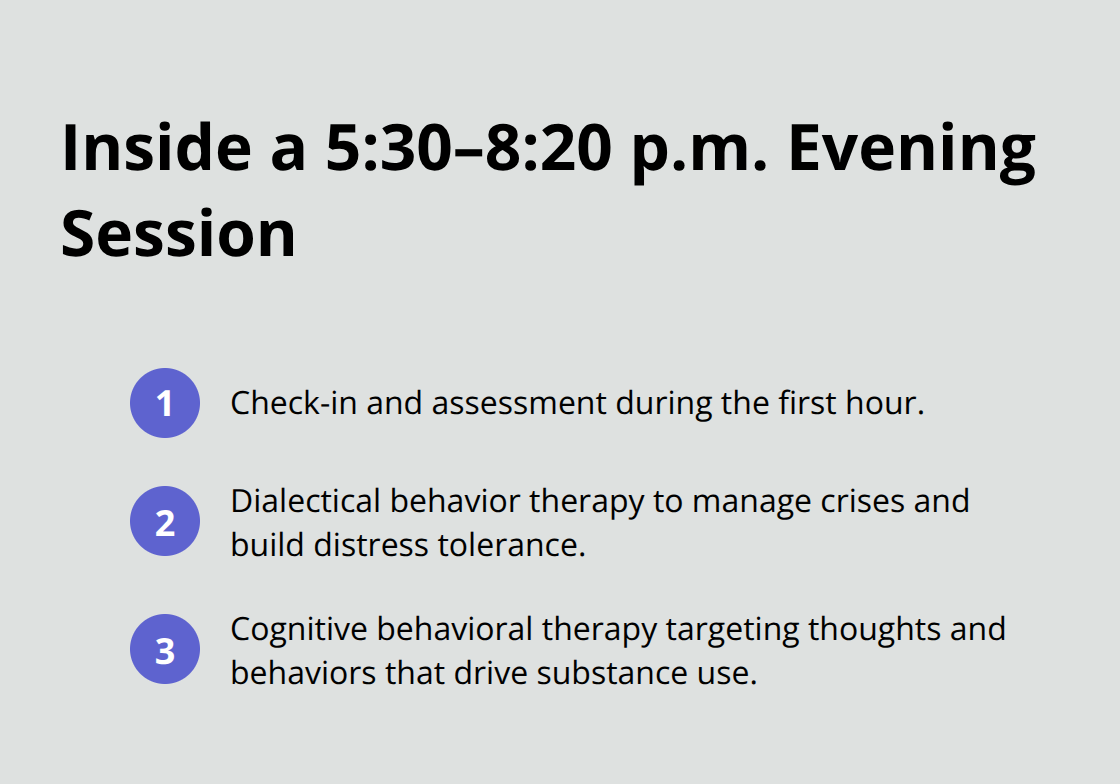
The second hour centers on dialectical behavior therapy, a structured approach proven effective for managing emotional crises and building distress tolerance. The final 50 minutes covers cognitive behavioral therapy, which directly targets the thoughts and behaviors that drive substance use. This sequencing moves from emotional regulation into practical skill-building, giving you tools you can use immediately when cravings or stress hit.
Group Sessions and Peer Connection
Group sessions connect you with peers facing similar struggles, which research shows significantly improves treatment adherence and reduces isolation. You participate in live, interactive sessions where others share their experiences and strategies for staying sober. This peer support creates accountability without judgment-people understand your challenges because they face them too. The group format normalizes recovery and reminds you that addiction affects people across all professions and backgrounds, not just those with obvious risk factors.
Individual Clinical Care
One-on-one counseling with licensed clinicians happens separately and allows you to address personal trauma, family dynamics, or co-occurring mental health issues that group settings cannot adequately cover. These sessions provide personalized treatment tailored to your specific circumstances rather than a one-size-fits-all approach. Your clinician adjusts your care plan based on what you report and what testing reveals about your progress.
Accountability Through Testing
Drug and alcohol testing occurs during your evening sessions, providing accountability and objective confirmation of your progress. Testing removes guesswork from recovery and gives you concrete evidence of your commitment. This combination-group support, individual clinical care, and testing-creates a comprehensive structure that prevents relapse through multiple reinforcement pathways.
Access and Flexibility
You maintain full privacy and receive care from home via telehealth, eliminating commute barriers and allowing you to attend without broadcasting your treatment to coworkers or neighbors. The evening format means you work your full day, attend sessions after 5:30 p.m., and still have time for family responsibilities, making sustained recovery compatible with actual adult life. This flexibility removes the forced choice between work and healing that stops many people from seeking help in the first place. With this foundation in place, the next step involves identifying which evening program actually meets your clinical needs and fits your insurance coverage.
How to Choose the Right Evening Treatment Program
Verify Credentials That Signal Real Quality Standards
Choosing an evening treatment program requires more than finding one that fits your calendar. You need to verify that the facility actually holds the credentials to deliver what it promises and that the clinical team can address your specific substance use patterns and any co-occurring mental health conditions. Start by confirming Joint Commission accreditation, which signals adherence to rigorous quality standards for mental health care delivery. DHCS licensing in your state indicates regulatory oversight and compliance with state addiction treatment requirements.
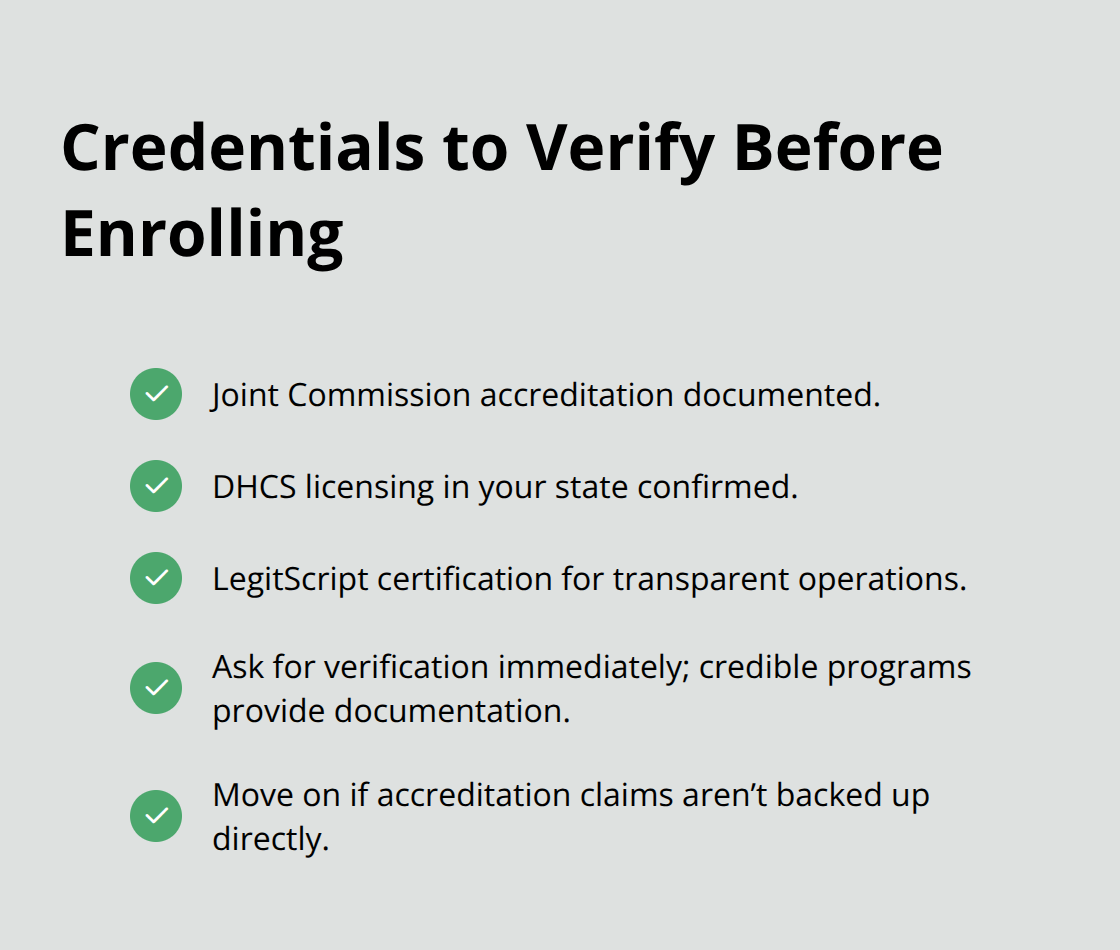
LegitScript certification demonstrates that the program operates transparently and meets industry verification standards. These three credentials together mean the program has passed external scrutiny beyond self-reporting. When you call to discuss admission, ask directly whether the program holds all three. If it avoids the question or claims accreditation without documentation, move on. Programs that have earned these certifications will provide verification immediately.
Assess Your Clinical Team’s Qualifications
Clinical staff qualifications matter as much as facility credentials. Ask whether your primary clinician holds a master’s degree in social work, counseling, or psychology, not just a certification. Master’s-level clinicians have completed supervised clinical training and understand complex cases involving trauma, co-occurring disorders, and relapse prevention in depth that bachelor’s-level staff cannot match. Verify that the program employs a dedicated case manager who coordinates your care across group sessions, individual therapy, and testing. This person becomes your advocate within the system and helps adjust your treatment plan when progress stalls. Request information about the therapist-to-patient ratio during group sessions. Groups larger than twelve participants dilute the therapeutic benefit and reduce the likelihood that staff notice when someone is struggling.
Confirm Treatment for Co-Occurring Mental Health Conditions
Ask about the program’s approach to co-occurring mental health conditions. If you have anxiety, depression, bipolar disorder, or PTSD alongside substance use, the program must integrate treatment for both simultaneously rather than treating addiction in isolation. Programs that refer you elsewhere for mental health care create gaps that increase relapse risk. The treatment modalities should emphasize evidence-based approaches like cognitive behavioral therapy and dialectical behavior therapy, which research shows reduce relapse and improve long-term outcomes. If a program cannot clearly explain which evidence-based therapies it uses and why, that’s a red flag indicating less rigorous clinical practice.
Evaluate Group Size and Therapeutic Structure
Try smaller group sizes that allow adequate clinical attention during evening sessions. Larger groups reduce the likelihood that staff notice when someone struggles or needs intervention. Ask how the program structures its evening hours and whether sessions move from emotional regulation into practical skill-building. This sequencing matters because it gives you tools you can use immediately when cravings or stress hit. Request specifics about what happens during each session component and how the program adjusts your treatment plan based on your progress and test results.
Final Thoughts
The conflict between work and recovery is real, but it doesn’t have to stop you from seeking help. After hours drug rehab programs exist because addiction treatment shouldn’t force you to choose between your paycheck and your health. When evening sessions run from 5:30 to 8:20 p.m., you keep your job, maintain your income, and show up for your family while still receiving rigorous clinical care.
Quality addiction treatment doesn’t require daytime availability. The clinical standards that matter-Joint Commission accreditation, DHCS licensing, evidence-based therapies like cognitive behavioral therapy and dialectical behavior therapy-work just as effectively in the evening as they do during business hours. Master’s-level clinicians, dedicated case managers, and structured group sessions deliver the same therapeutic power whether they happen at 2 p.m. or 7 p.m. Research on treatment completion and relapse prevention shows that people engage more consistently when programs fit their actual schedules rather than forcing them to reorganize their lives around treatment hours.
We at EveningIOP provide DHCS-licensed, Joint Commission-accredited evening Intensive Outpatient Programs that combine live group therapy, one-on-one sessions with licensed clinicians, and remote drug and alcohol testing. Call to discuss your situation, verify insurance coverage, and start treatment when you’re ready-not when a daytime schedule permits it.