


Substance use treatment works best when it fits your life, not the other way around. At EveningIOP, we’ve seen countless busy adults skip recovery because traditional programs demand daytime availability they simply don’t have.
Evidence-based teletherapy evenings change that equation. Clinical research confirms that remote group therapy and personalized sessions deliver real results, and our flexible scheduling means you can access professional care without sacrificing your career or family time.
How Evening Teletherapy Fits Your Schedule
Evening teletherapy eliminates the primary barrier that stops busy adults from seeking treatment: time. A typical in-person program demands 9 AM to 3 PM availability, which means taking unpaid leave, losing income, or lying to your employer about where you are. Evening programs work specifically because the standard daytime model fails working professionals, parents juggling school pickups, and anyone whose life doesn’t pause for recovery. The math is straightforward.
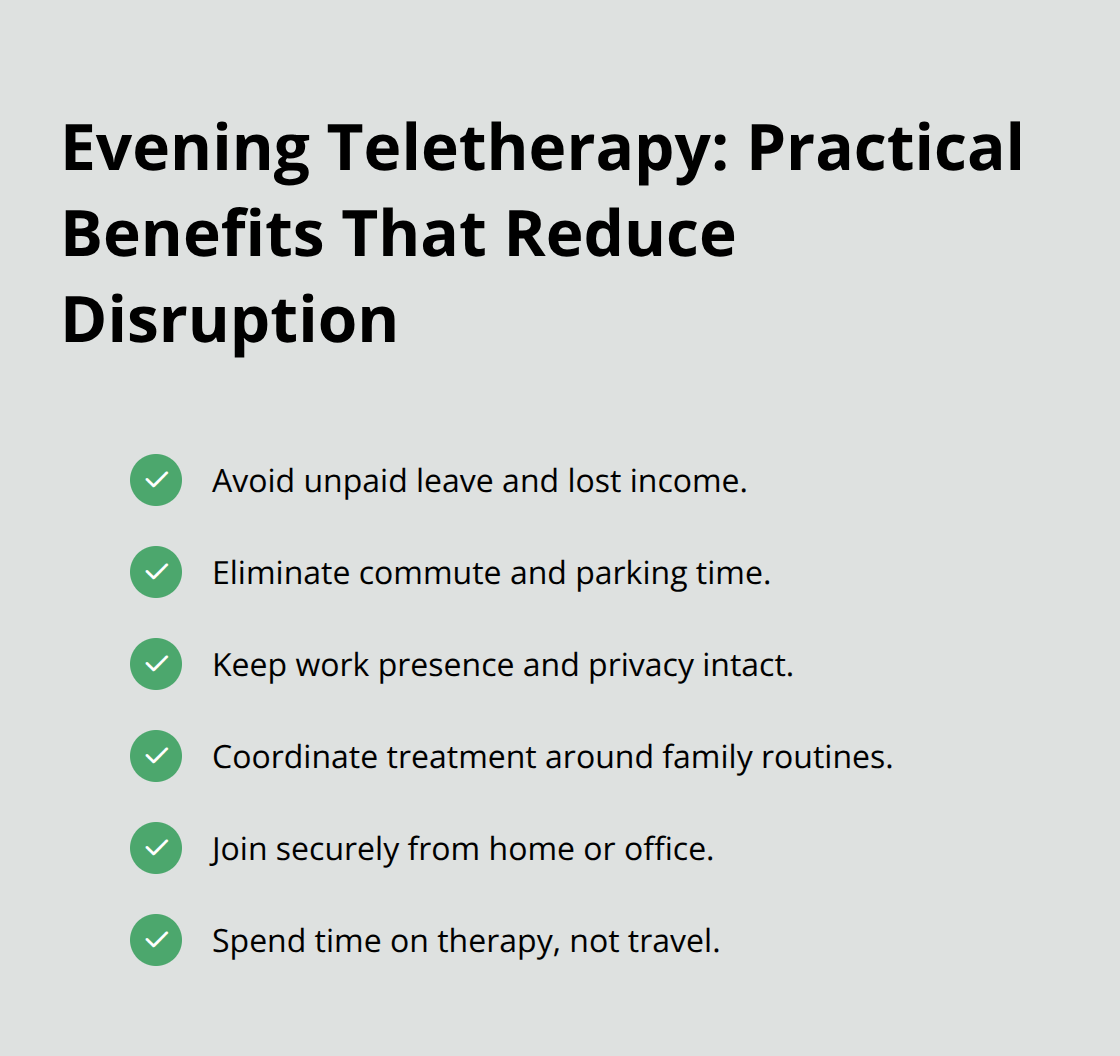
If you commute 30 minutes each way to a treatment facility, you already spend an hour on travel alone. Add the program hours, and a daytime intensive outpatient program consumes 6 to 8 hours of your day. Evening teletherapy cuts that to the actual session time. That’s a genuine reduction in disruption, not theoretical convenience.
Attending Sessions From Home or Your Office
The flexibility to join sessions from home, your office, or anywhere with an internet connection removes the forced choice between recovery and your responsibilities. You finish work, log in from home, and participate in group therapy without the psychological weight of announcing you’re leaving for treatment. This matters psychologically. Research on telemental health shows that receiving care in a comfortable, private space increases willingness to engage openly, which directly improves treatment outcomes. For parents, evening sessions mean you can handle dinner, homework, or bedtime routines without hiring additional childcare or explaining absences to your family. For professionals, you maintain your work presence and income stream while accessing clinical care.
Personalized Treatment Without Logistical Friction
One-on-one sessions with licensed clinicians happen on your schedule within evening windows, and remote drug and alcohol testing removes another logistical burden. You don’t travel to a lab; testing happens at home as part of your program structure. This integration of accountability into your existing routine is what makes evening teletherapy sustainable for people with actual obligations. The combination of interactive group sessions and personalized clinical support (delivered entirely through your screen) creates a treatment model that works with your life rather than against it. What separates effective evening programs from ineffective ones is whether they actually reduce friction or simply shift it to a different time of day.
Does Evening Teletherapy Actually Work for Substance Use Treatment?
Clinical evidence confirms what busy adults need to hear: evening teletherapy delivers measurable outcomes for substance use disorders. A large-scale study comparing telehealth to in-person intensive treatment tracked 2,384 adults across private behavioral health services nationwide. Participants in both delivery modes showed significant symptom reduction and quality-of-life improvements from admission to discharge, with no meaningful differences between remote and in-person groups. The study measured outcomes using standardized clinical tools-the Quick Inventory of Depressive Symptomatology and the Quality of Life Enjoyment and Satisfaction Questionnaire-and found that virtual programs are highly effective across both partial hospitalization and intensive outpatient levels of care. This proves the modality itself does not compromise effectiveness; what matters is the clinical content and your engagement with it.
Group Therapy Cuts Through Isolation
Group sessions in evening teletherapy programs work specifically because substance use recovery requires connection, not just individual counseling. Research on remote group therapy shows participants experience real community and mutual accountability when licensed clinicians structure and facilitate sessions. Interactive group therapy happens live during evening hours, meaning you participate in real-time conversation with peers facing similar challenges rather than watching recordings or completing worksheets alone. This matters for relapse prevention. Studies show that group therapy for substance use recovery maintains longer periods of sustained recovery than those in individual-only treatment. Evening scheduling removes the excuse of daytime work conflicts, so you actually show up, and consistency compounds the benefit. The group becomes a standing commitment that fits your real schedule, not an ideal you abandon when work gets demanding.
One-on-One Sessions Address Your Specific Situation
Individual sessions with licensed clinicians happen within evening windows and focus on your particular triggers, history, and recovery goals rather than generic treatment plans. Remote delivery expands your options beyond local providers who may have long waitlists or poor fit. Your clinician adjusts treatment based on your actual life-your job stress, family dynamics, housing situation-not assumptions about what a typical patient needs. Remote drug and alcohol testing integrated into your evening program removes the logistical friction of traveling to labs; testing happens at home as part of your program structure. This accountability mechanism works because it remains frictionless (you are already logged in for your session, and testing happens in the same space). No separate trip, no excuse about traffic or scheduling conflicts. The combination of clinical personalization and integrated testing creates a treatment model where accountability becomes part of your routine rather than an obstacle you overcome.
How Accountability Structures Support Long-Term Recovery
Testing integrated into evening sessions maintains accountability without adding logistical burden. When you log in for your group or individual session, drug and alcohol testing happens in the same environment, eliminating the friction that causes people to skip accountability measures. This matters clinically because consistency in monitoring correlates with sustained abstinence. The structure works because it removes choice-testing is not something you schedule separately or travel to complete; it is part of your evening commitment. Busy professionals and parents often abandon treatment when accountability requires additional time or planning. Evening teletherapy programs that integrate testing into existing sessions eliminate that barrier entirely. You show up for your clinical care, and accountability happens as part of that same commitment.
What Separates Effective Evening Programs From Ineffective Ones
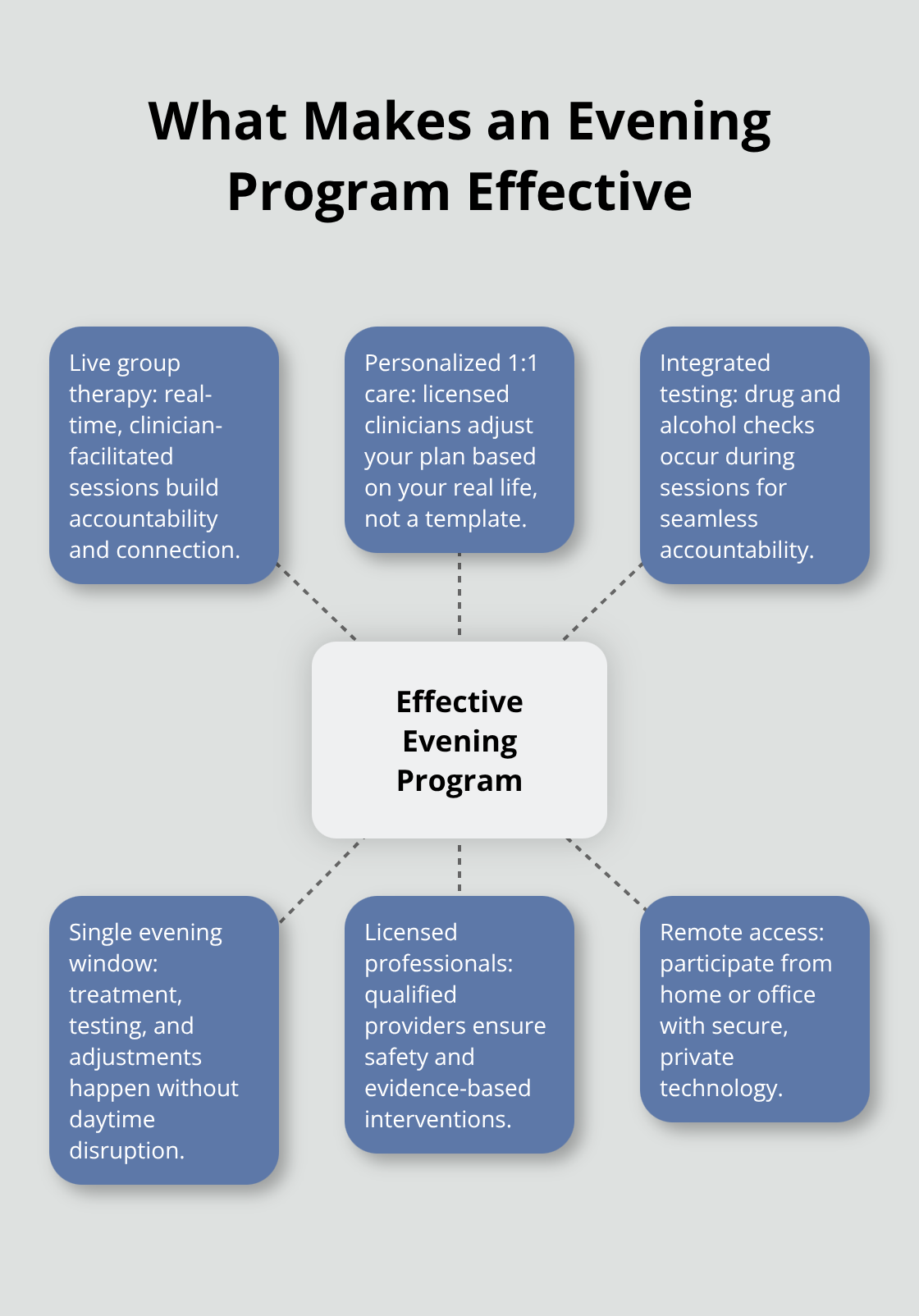
The difference between evening teletherapy programs that work and those that fail comes down to whether they actually reduce friction or simply shift it to a different time of day. A program that moves daytime sessions to evening but still requires travel, still demands rigid scheduling, or still separates testing from clinical care has not solved the core problem. Effective evening programs combine live group therapy, personalized clinical sessions, and integrated accountability into a single evening window. Licensed clinicians deliver evidence-based treatment, and the structure accommodates your actual life rather than forcing you to accommodate the program. This integration is what makes evening teletherapy sustainable for people with real obligations. The next step in your recovery journey involves understanding how to actually implement these evidence-based approaches into your specific evening routine.
What Separates Effective Evening Programs
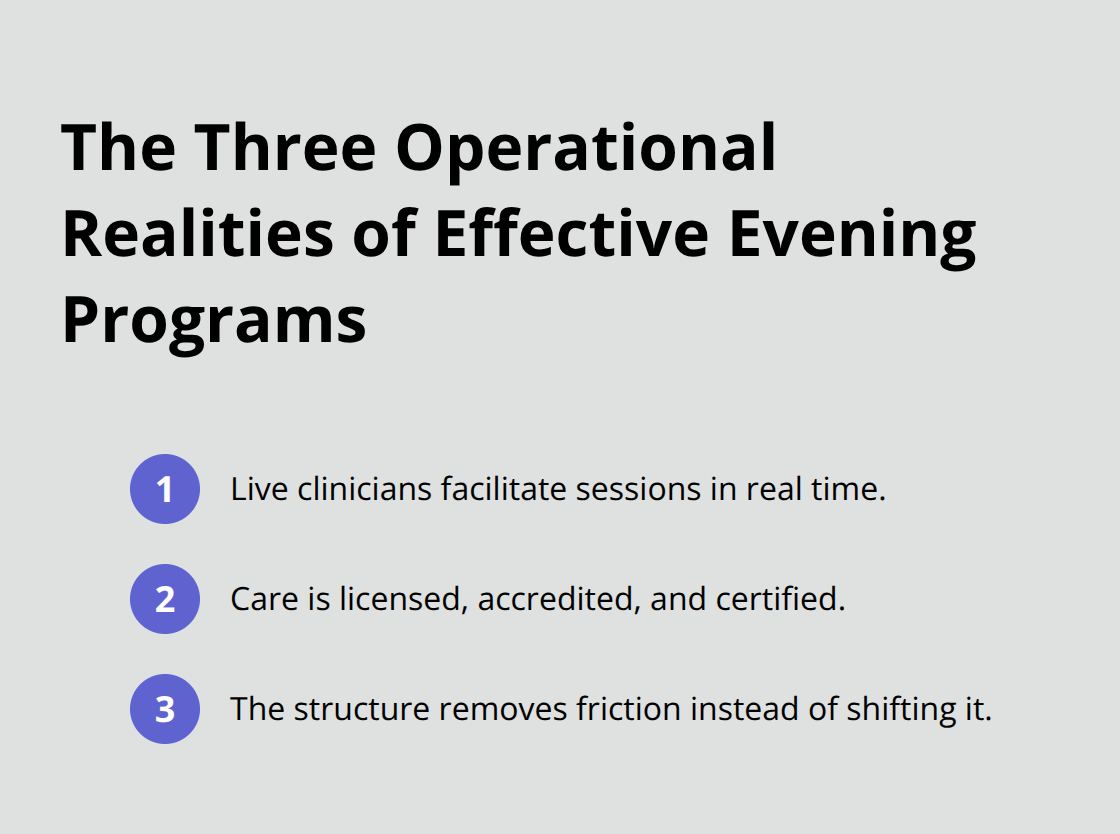
The difference between evening teletherapy programs that actually work and those that fail hinges on three operational realities: whether live clinicians facilitate sessions in real time, whether those clinicians hold legitimate credentials and operate under recognized oversight, and whether the program structure removes friction rather than shifting it. Effective evening programs deliver licensed, accredited, and certified care, which means every session involves licensed clinicians facilitating live group therapy and individual treatment. This matters concretely because research on remote group therapy for substance use shows that real-time interaction with peers and clinicians produces measurable accountability and relapse prevention that asynchronous programs simply do not achieve.
Live Clinicians Make the Difference
A program staffed by unlicensed facilitators or relying on recorded sessions fails at the core clinical requirement: interactive group therapy requires a licensed clinician present to intervene when group dynamics become counterproductive, to redirect conversations toward evidence-based treatment, and to ensure safety protocols are followed. Licensed clinicians deliver personalized care adjustments based on real clinical assessment, not templated responses. When you discuss a relapse trigger during group or individual therapy, your clinician modifies your treatment plan that same evening rather than scheduling a follow-up consultation weeks later.
Accreditation and Certification Verify Quality
Joint Commission accreditation means the program undergoes rigorous external review of clinical protocols, staff qualifications, and treatment outcomes. LegitScript certification verifies that the platform itself meets security and privacy standards required for handling sensitive health information and testing data. Without these certifications, your personal health information and test results sit on unvetted systems, and your clinician may lack the credentials to adjust your treatment when circumstances change.
Integrated Testing Creates Real Accountability
Remote drug and alcohol testing integrated into your evening sessions creates accountability without logistical burden, but only if the program connects test results to immediate clinical response. An effective evening program links testing data to your one-on-one sessions, allowing your clinician to address positive results or concerning patterns directly with you rather than sending an automated alert. The combination of live interactive group therapy, licensed individual clinicians, and integrated testing under recognized accreditation creates a treatment model where quality is verifiable and outcomes are measurable. Programs lacking these three elements may offer evening scheduling, but they do not deliver the clinical rigor that substance use treatment requires.
Final Thoughts
Evening teletherapy removes the primary barrier that stops busy adults from pursuing recovery: the false choice between treatment and your responsibilities. Evidence-based teletherapy evenings work because they eliminate travel time, accommodate your work schedule, and let you participate in clinical care from home without announcing your absence to colleagues or disrupting family routines. The research confirms this reality-a large-scale study of 2,384 adults showed that remote intensive outpatient programs deliver the same measurable outcomes as in-person treatment, with participants experiencing significant symptom reduction and quality-of-life improvements regardless of delivery mode.
Busy professionals and parents often abandon treatment because traditional daytime programs demand availability they do not have. Evening programs solve this by delivering clinical care during hours that work for people with jobs, families, and real obligations (interactive group therapy with peers, personalized treatment adjustments from licensed clinicians, and integrated drug and alcohol testing all happen without travel or workplace disruption). The combination of flexibility and clinical rigor creates sustainable recovery outcomes because you actually show up and stay engaged.
Professional support combined with evening scheduling removes the logistical friction that causes relapse. EveningIOP delivers evidence-based teletherapy evenings through DHCS-licensed, Joint Commission-accredited, and LegitScript-certified programs where live group therapy, one-on-one sessions with licensed clinicians, and remote drug and alcohol testing happen within evening windows designed for working professionals and families.