

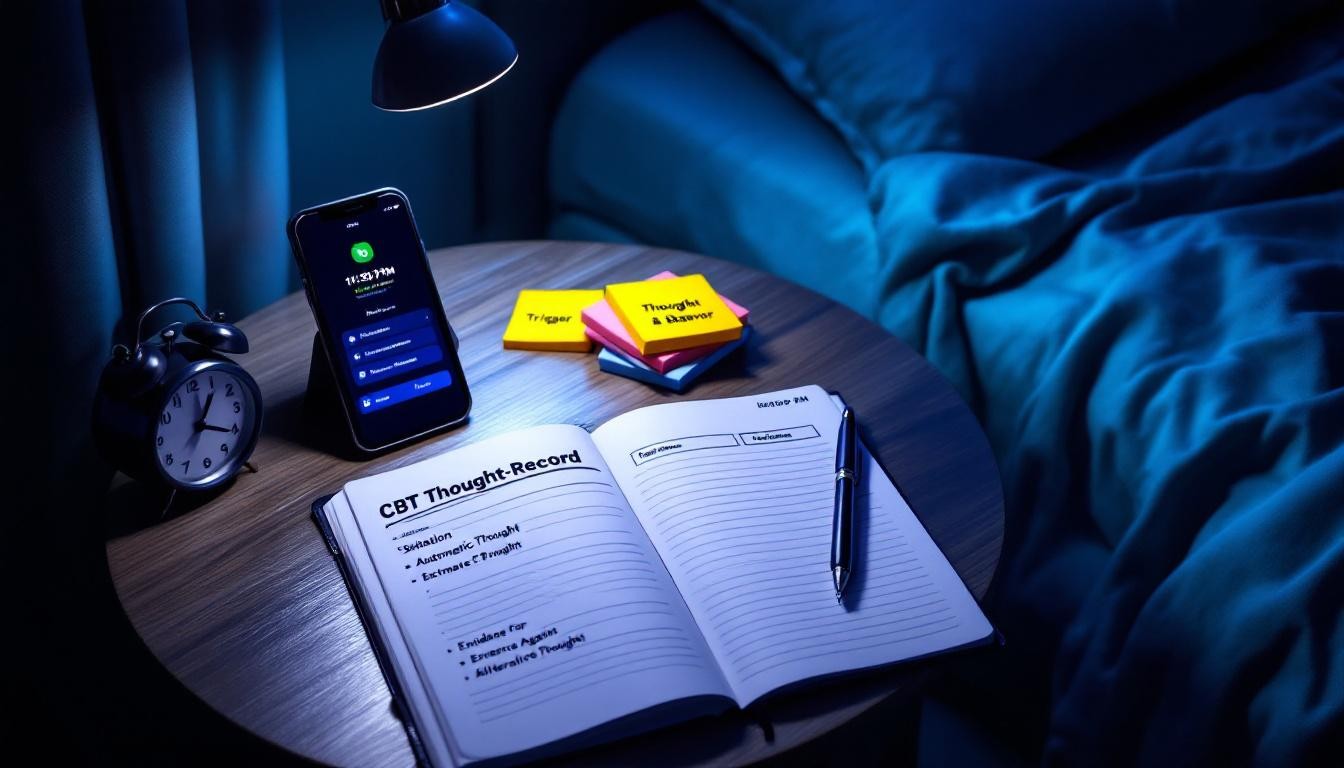
Traditional therapy schedules don’t work for everyone. If you’re juggling work, family, and recovery, finding time during business hours feels impossible.
At EveningIOP, we’ve built our programs around a simple truth: nighttime cognitive behavioral therapy works because it meets people where they actually are. Evening sessions let you address substance use patterns, process daily stress, and develop coping skills without sacrificing your daytime responsibilities.
Why Evening Sessions Change How CBT Works
Evening cognitive behavioral therapy operates differently than daytime treatment because your brain, your schedule, and your substance use patterns follow rhythms that daytime programs ignore. When you attend therapy in the evening, you process the actual stressors and triggers you faced that day while they remain fresh. You do not recount yesterday’s challenges from memory; you address today’s reality. This immediacy makes cognitive restructuring more powerful. Instead of learning theoretical techniques, you practice them against the real situations that just happened, which research on skill consolidation shows improves retention and real-world application.
The Scheduling Advantage for Working Adults
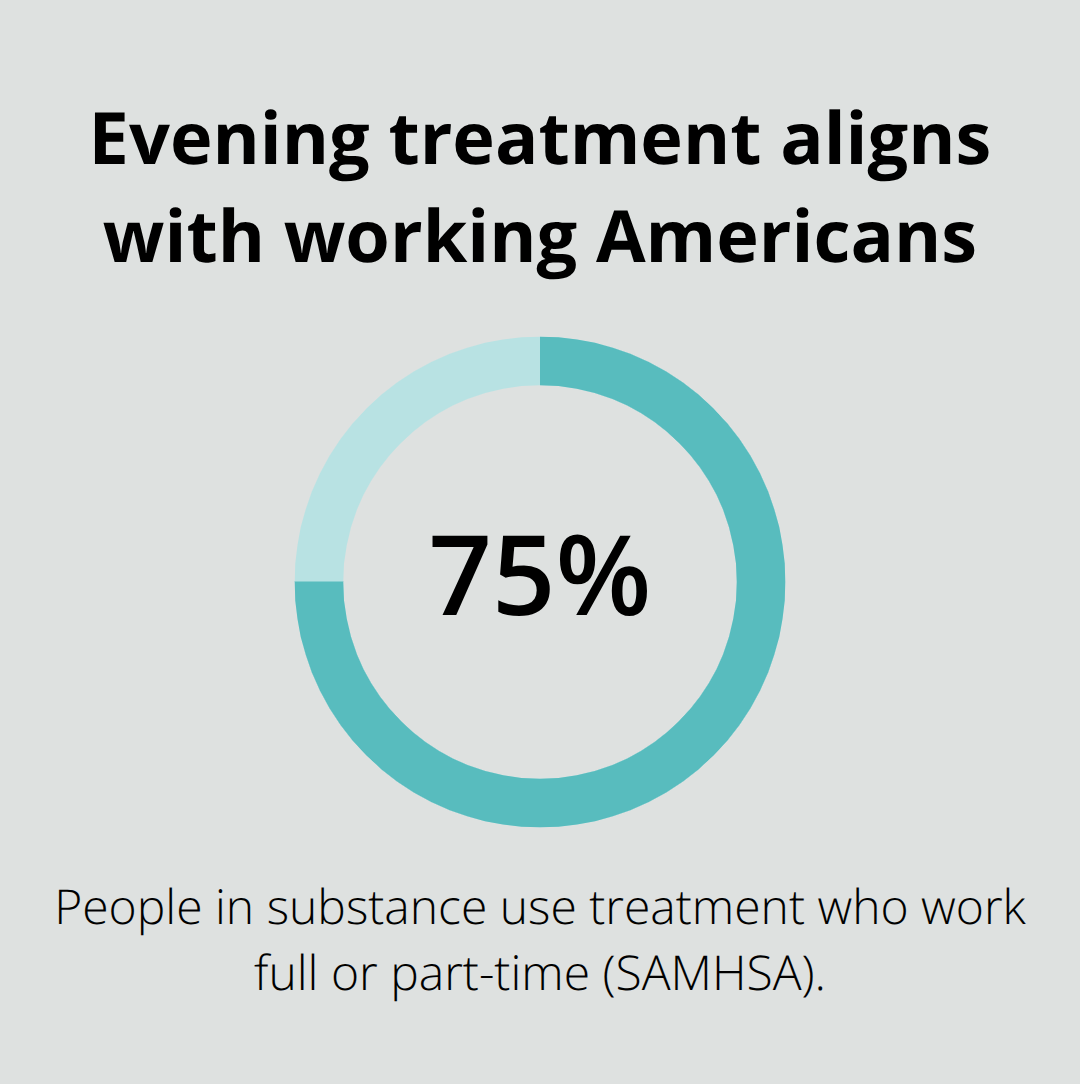
The practical advantage extends beyond timing. Evening sessions eliminate the false choice between recovery and employment. About 75 percent of people in substance use treatment work full or part-time, according to SAMHSA data, yet traditional nine-to-five therapy schedules force you to choose between attending sessions and keeping your job. Evening programs run after work hours, meaning you address your substance use patterns without requesting time off or explaining treatment to employers.
You track daily triggers, cravings, and stress responses when they remain relevant, not days later in a therapist’s office. Your thought records become accurate because you document what actually happened, not what you remember happening.
How Your Brain Processes Emotional Material at Night
Evening CBT leverages how your mind handles emotional material differently after hours. After a full day, your rational mind tires, but your emotional processing remains active. This shift makes cognitive restructuring-the core CBT technique for changing unhelpful thoughts about substance use-more accessible because you do not fight mental fatigue from work. You examine the thought that triggered a craving without the cognitive load of a busy workday. Progressive muscle relaxation and breathing techniques work better when delivered in the evening because your nervous system already enters a wind-down phase. Your body cooperates with the relaxation training rather than resisting it.
Timing Treatment to Peak Vulnerability
Evening hours concentrate most substance use triggers. Work stress peaks before you leave the office, social pressure intensifies after hours, and emotional regulation drops when you tire. Evening CBT sessions happen when your vulnerability reaches its highest point, allowing you to develop coping skills in real time rather than in theory. Behavioral activation strategies work better too because you plan your evening activities during the session, then implement them immediately. If evening is when you typically experience cravings or use substances, evening therapy addresses that pattern directly. You do not wait until tomorrow’s session to discuss yesterday’s struggle; you build skills right when you need them most.
This timing advantage means your next step involves understanding which specific CBT techniques work best in evening settings and how to apply them to your actual daily challenges.
What CBT Techniques Actually Work in Evening Sessions
Thought Records That Capture Real Triggers
Thought records transform evening therapy because you document triggers and thoughts when they remain accurate, not hours later when memory distorts them. Clients write down the exact moment they felt a craving after work stress, then immediately identify the unhelpful thought behind it-such as “I can’t handle this without using”-right there in the session. This immediacy makes cognitive restructuring stick because you challenge the thought while your emotional response still burns fresh. Research on memory consolidation shows that processing emotional events close to when they occur improves recall and makes new thought patterns stronger than reviewing old situations from notes.
When you work with thought records in group settings during evening hours, other participants recognize their own patterns in your struggles. Group members become your reality check; they push back on your catastrophic thinking because they’ve already tried those same unhelpful thoughts and know where they lead. This peer accountability reduces the shame that typically keeps people isolated and increases the likelihood you’ll actually apply what you learn.
Behavioral Activation for Your Actual Schedule
Behavioral activation in evening sessions means you plan concrete actions for the hours when you actually face temptation. Night-shift workers benefit most because evening therapy allows you to build specific coping strategies for your actual schedule rather than adapting daytime recommendations that don’t fit your rhythm. If you work nights, your evening session becomes the place to plan sleep hygiene, manage fatigue-related cravings, and structure downtime when others sleep.
For people in traditional schedules, evening hours concentrate your highest-risk period-the transition from work stress to home, the social pressure of evening gatherings, the emotional weight that hits after a long day. You don’t theorize about how to handle these moments; you plan them during the session and implement them that same night. This real-time practice makes the skills stick far better than discussing hypothetical scenarios.
Matching Coping Skills to Specific Evening Triggers
Coping skills for evening triggers require specificity rather than generic approaches. Instead of general stress management, you identify whether your evening craving stems from boredom, loneliness, physical discomfort, or the specific people and places you encounter after work. Then you build competing responses tailored to each trigger (if you typically reach for substances when you get home and feel alone, your competing response might be calling a group member, exercising, or preparing a specific meal that engages your senses).
The effectiveness comes from matching the coping skill to the exact trigger, not using generic techniques that fail when real temptation arrives. Evening sessions let you test these skills immediately, adjust what doesn’t work, and refine your approach before you face the same trigger again tomorrow night. This cycle of practice, feedback, and adjustment accelerates your progress far faster than waiting days between sessions to report what happened.
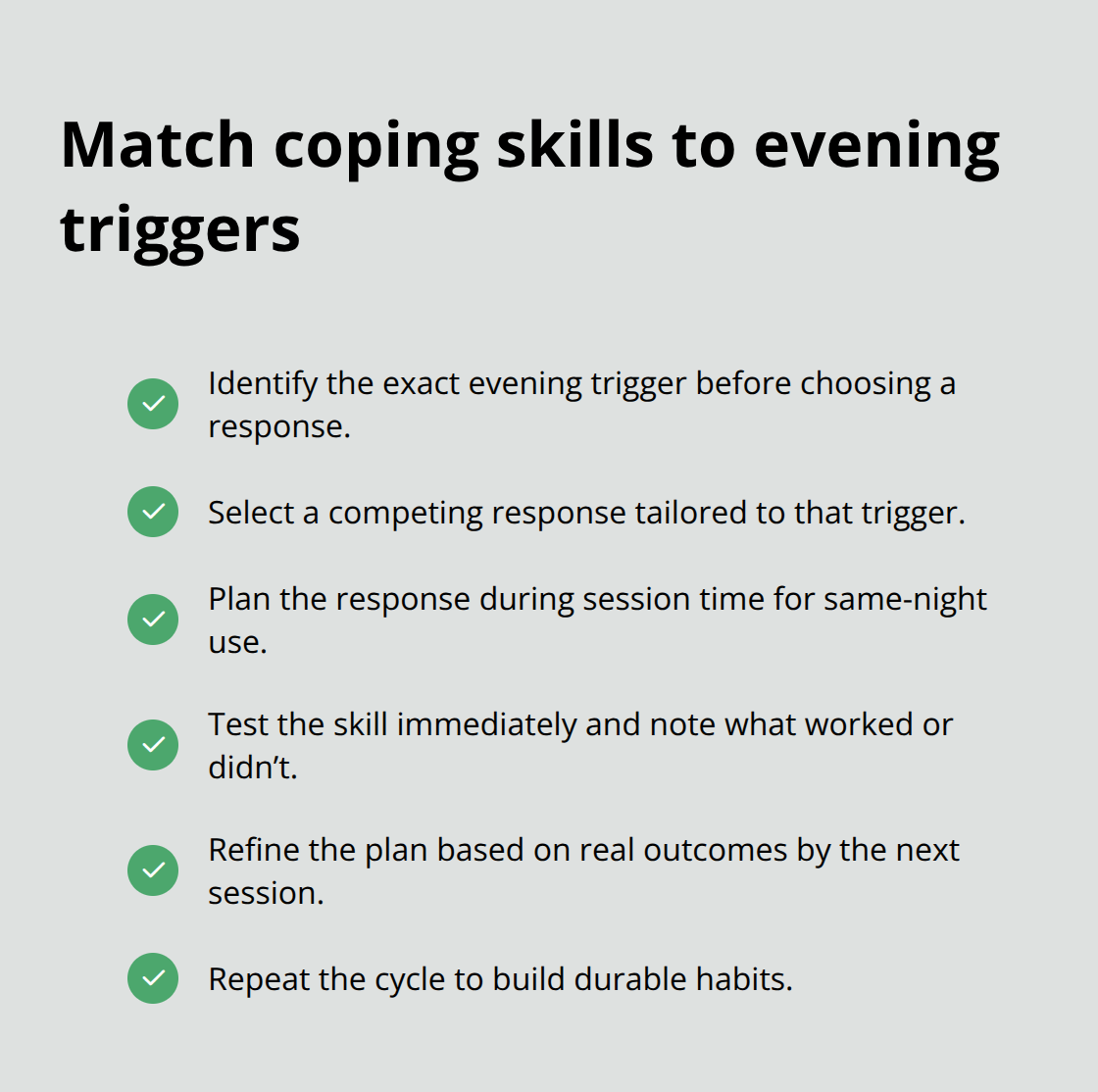
This specificity and immediacy set the stage for understanding how evening group therapy amplifies accountability and transforms your recovery in ways individual daytime sessions cannot match.
How Evening Group Therapy Holds You Accountable
Peer Witnesses Transform Your Commitment
The isolation of substance use recovery breaks when other people witness your commitment. Evening group therapy sessions create accountability structures that individual daytime sessions cannot match because your peers see you show up, hear your struggles, and watch you apply the techniques you learn. When you attend an evening session after a difficult day, group members notice. They ask what happened. They push back when you minimize a relapse or rationalize a risky choice. Peer accountability works because the group component transforms recovery from an isolated struggle into a shared experience. A coworker in your evening group understands the exact stress you felt at 5 p.m. when your boss criticized your work because they experienced the same moment. They know whether you actually called a sponsor or just told yourself you would.
Real-Time Feedback on Your Actions
The evening timing transforms how accountability actually functions in recovery. When you process a work-related trigger during your evening session, other group members immediately recognize whether your coping response worked because you describe implementing it hours earlier, not days later. If you planned to handle evening boredom with exercise instead of substances, the group hears whether you actually went to the gym or whether you made excuses. This real-time feedback matters because you cannot rewrite your story; the truth of what you did that evening remains fresh. Your group becomes the reality checkpoint that catches distorted thinking before it leads to relapse.
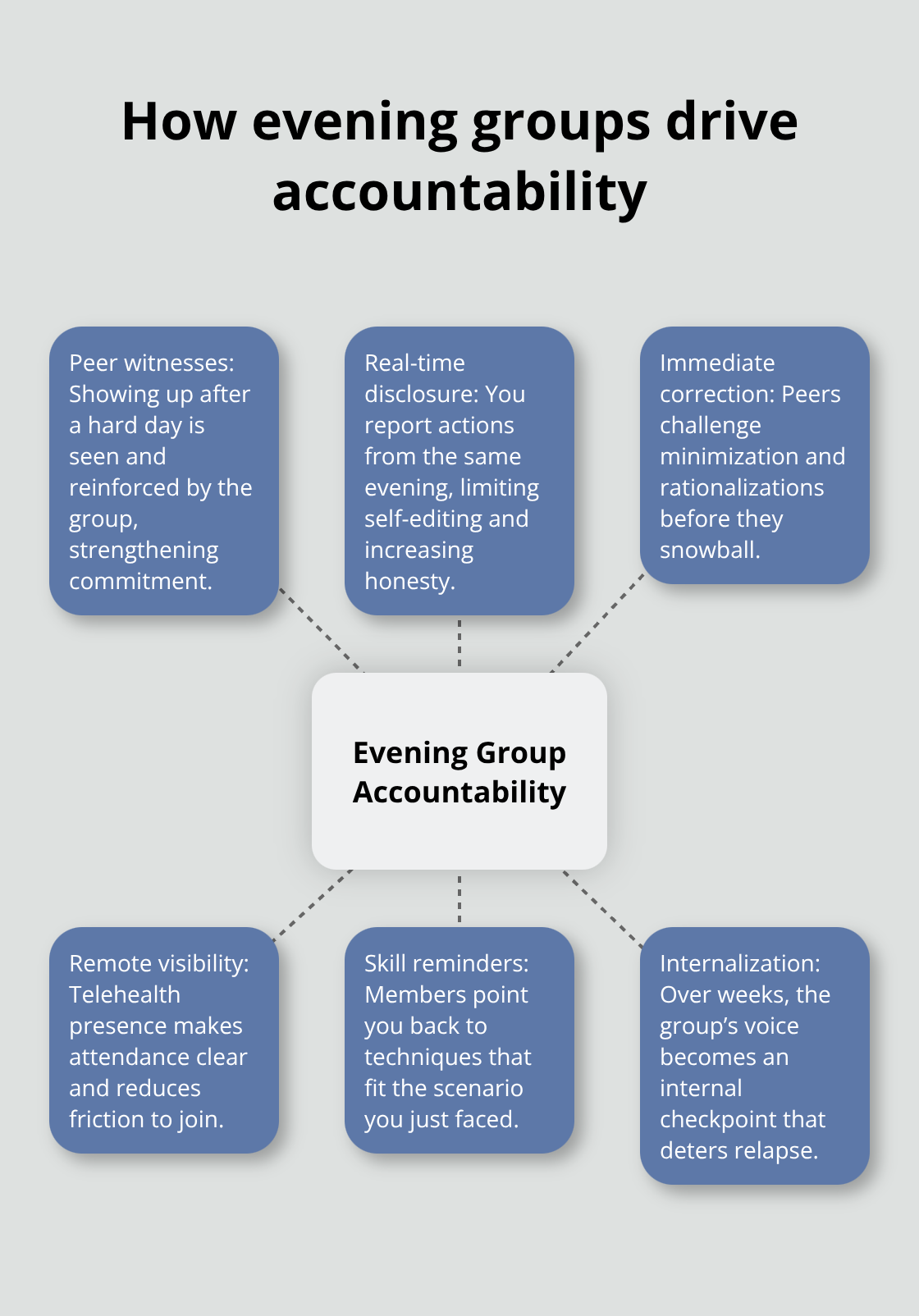
One member notices when you downplay a close call with using. Another mentions that the thought record technique you learned last week would have helped the exact situation you just described. These corrections land harder because they come from people who already tried and failed with the same rationalizations.
Remote Group Therapy Amplifies Visibility
Remote group therapy amplifies accountability because participants join from home, making attendance frictionless yet visible. You cannot slip into the back of a room unnoticed; you appear on screen or you do not. Treatment participants who engage in group therapy show significant effects on abstinence compared to individual therapy, and group members report stronger social support networks after treatment ends.
Internalized Accountability That Lasts
Over six to eight weeks of consistent evening attendance, this accountability pressure creates behavioral change that outlasts the program itself. You internalize the group’s voice; when you face a trigger alone, you hear what they would say. This internalized accountability prevents relapse far better than generic willpower or motivational statements because it reflects actual peer responses to actual situations you have faced together.
Final Thoughts
Nighttime cognitive behavioral therapy works for busy professionals because it abandons the pretense that recovery fits into standard business hours. You face your substance use triggers in the evening, so your treatment happens then. You experience work stress at 5 p.m., social pressure after dinner, and emotional fatigue when your defenses drop. Evening CBT meets you at those exact moments, not the next day when the intensity fades and memory distorts what actually happened.
Flexible evening programs remove the false choice between recovery and employment. About 75 percent of people in substance use treatment work full or part-time, yet traditional schedules force you to sacrifice your job or your recovery. Evening intensive outpatient care lets you attend sessions after work, maintain your income, and keep your family responsibilities intact. This flexibility matters because relapse often follows the stress of losing employment or the shame of explaining treatment to your boss.
EveningIOP offers live, telehealth evening intensive outpatient programs that combine interactive group therapy, one-on-one sessions with licensed clinicians, and remote drug testing (DHCS-licensed, Joint Commission-accredited, and LegitScript-certified). Evening sessions run when you need them most, group members become your accountability structure, and licensed clinicians tailor treatment to your actual schedule and triggers. Recovery does not require choosing between your job and your health.