


Addiction treatment shouldn’t force you to choose between recovery and your career. At EveningIOP, we’ve built nighttime telehealth rehab programs specifically for working professionals who need flexibility without sacrificing quality care.
Most traditional rehab programs demand you step away from your job for weeks or months. Our evening approach lets you attend therapy sessions, group counseling, and clinical assessments from home after work hours, keeping your paycheck and responsibilities intact.
Why Evening Programs Work Better for Working Professionals
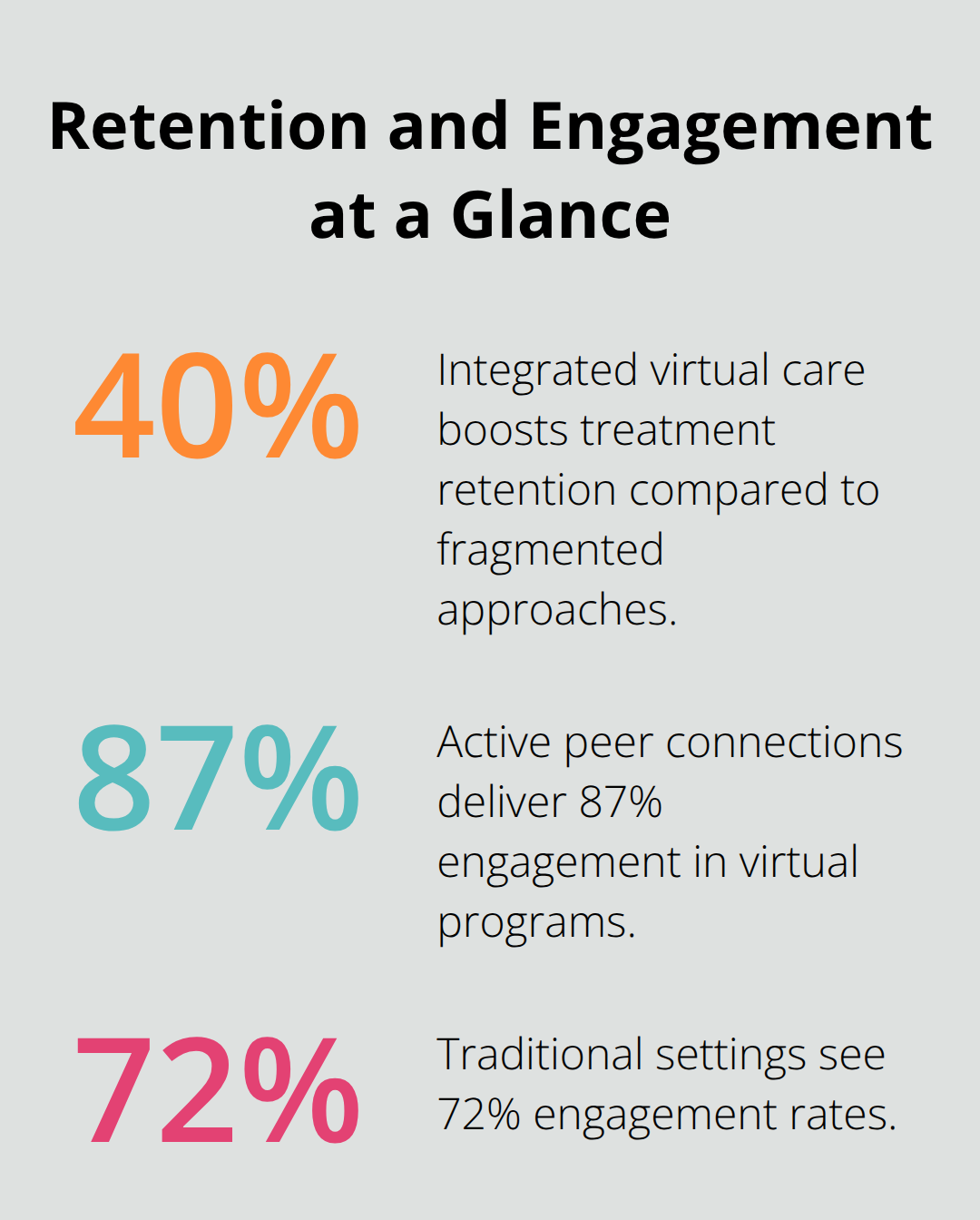
Evening rehab programs solve a real problem that daytime treatment cannot: they let you keep your job while addressing addiction. According to the National Institute of Mental Health, integrated virtual care for addiction and mental health boosts treatment retention by about 40% compared to fragmented approaches. When you attend sessions after work instead of taking medical leave, you maintain income stability, preserve your health insurance coverage, and avoid the professional disruption that often forces people to choose between recovery and employment.
Keep Your Job and Your Privacy
Most employers still stigmatize addiction treatment, so attending therapy during work hours signals something is wrong. Evening sessions keep your recovery private, eliminating that workplace exposure entirely. A structured approach to nighttime care also means you’re not isolated during the hours when cravings typically spike-research shows that active peer connections in online addiction recovery deliver 87% engagement rates in virtual programs versus 72% in traditional settings. This matters because evenings and nights are when isolation becomes dangerous.
Maintain Your Role at Home
Evening programs let you manage childcare, school pickups, and household responsibilities without hiring temporary help or asking family to rearrange their schedules. You attend sessions after dinner, keeping your role as a parent or caregiver intact. According to the National Institute of Mental Health, family involvement improves retention and recovery outcomes significantly, and evening scheduling actually makes family participation easier-spouses and children adapt to a routine where you’re home during the day and in treatment at night.
Protect Your Financial Stability
This structure also reduces the financial stress that often triggers relapse. You’re not paying for childcare coverage, taking unpaid leave, or facing job loss. Instead, you work a normal schedule, earn your paycheck, and receive evidence-based addiction treatment through telehealth platforms that include interactive online group therapy, licensed one-on-one clinicians, and remote drug and alcohol testing. Evening programs benefit from structured engagement-people stick with treatment when it fits their actual life instead of forcing them to abandon it temporarily.
Now that you understand why evening programs work for your schedule and finances, the next question becomes: how does nighttime telehealth rehab actually operate?
How Nighttime Telehealth Rehab Works
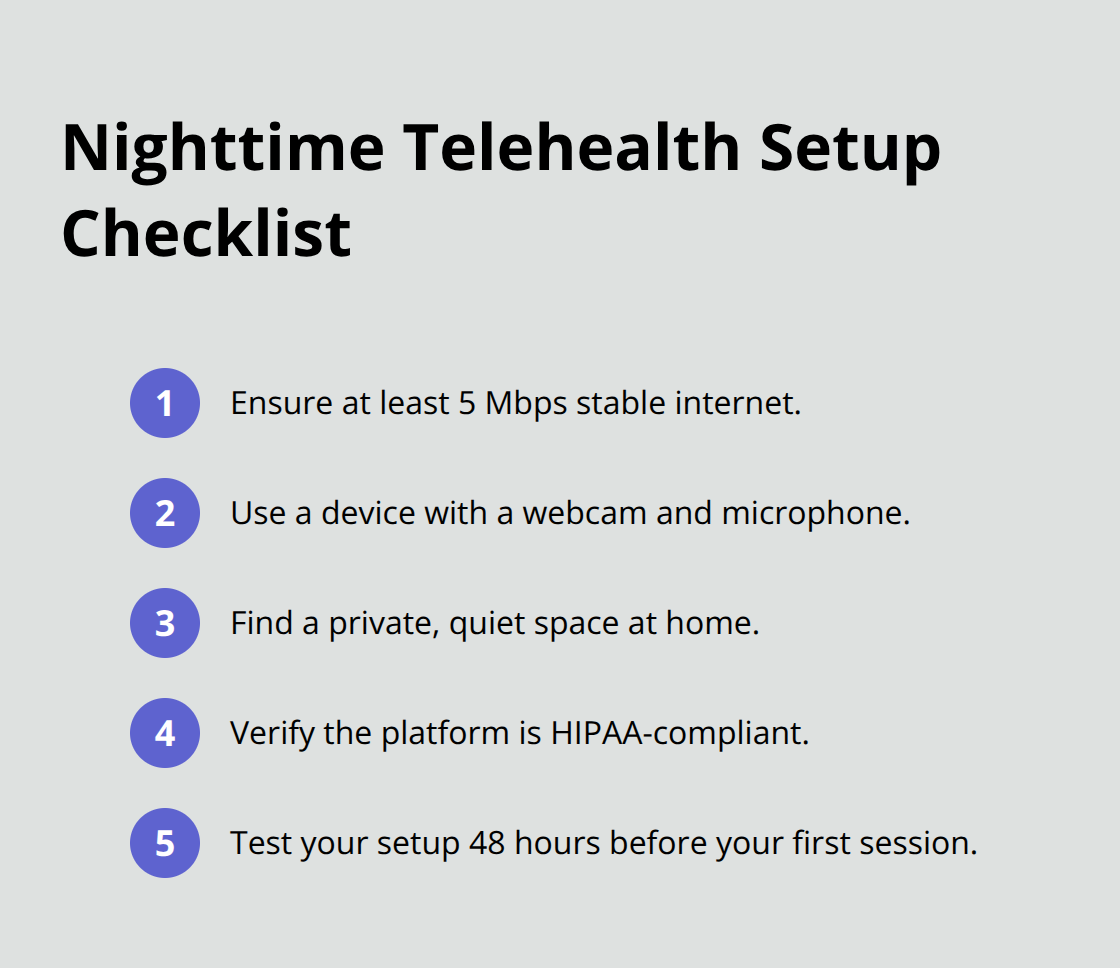
Evening telehealth rehab operates on a straightforward model: licensed clinicians and therapists deliver evidence-based addiction treatment through secure video platforms during nighttime hours, so you avoid taking time off work or arranging childcare. Evening IOP combines interactive online group therapy with one-on-one sessions and remote drug and alcohol testing into a structured program that runs several evenings per week. The setup itself requires minimal technical demand-a stable internet connection of at least 5 Mbps, a device with a webcam and microphone, and a private space in your home. Most platforms use HIPAA-compliant encryption, which means your sessions stay completely confidential. Test your technology setup at least 48 hours before your first session to avoid last-minute problems.
Live Group Therapy Sessions from Home
Group therapy sessions typically include 6 to 12 participants, and research shows that active participation in virtual group settings supports retention. These sessions are not passive webinars-facilitators call on participants, assign homework, and hold people accountable for their recovery work. You interact with peers who face similar struggles, which normalizes your experience and builds accountability. The group format creates a sense of community that many people find essential during early recovery, especially when isolation and loneliness strongly correlate with relapse risk.
One-on-One Sessions with Licensed Clinicians
Licensed clinicians schedule one-on-one sessions with you on a frequency you set together, usually once or twice weekly. These sessions focus on your specific triggers, medication management if needed, and personalized treatment planning. Your therapist tailors evidence-based approaches-Cognitive Behavioral Therapy, Dialectical Behavior Therapy, and trauma-informed methods-to your individual circumstances. The clinician reviews your progress across all program components and adjusts your care plan based on what you report and what your test results show.
Remote Drug and Alcohol Testing
Remote drug and alcohol testing works through at-home collection kits that you use on scheduled dates, then submit results through the telehealth portal for clinical review. Testing frequency typically ranges from weekly to monthly depending on your treatment phase and risk level. The entire system tracks your progress in real time-clinicians see test results, attendance records, and session notes that inform adjustments to your care plan. This accountability structure reinforces your commitment while giving your clinical team the data they need to support your recovery effectively.
This structure delivers clinical rigor without the inflexibility of traditional daytime programs. You attend sessions after work, maintain your employment, and receive the same evidence-based therapies that residential programs offer. The key difference is that evening telehealth removes the false choice between recovery and your responsibilities. Now that you understand how evening telehealth operates, the question becomes: what separates quality evening rehab from programs that prioritize convenience over clinical outcomes?
What Makes Quality Evening Rehab Different
Not all evening rehab programs deliver the same standard of care. Some providers market flexibility as their primary selling point, treating evening scheduling as a marketing advantage rather than a clinical feature. The difference between genuine quality and convenience-focused programs shows up in accreditation, licensing standards, and measurable clinical outcomes. Quality programs hold credentials that require independent verification of clinical protocols, staff qualifications, and treatment effectiveness. These aren’t marketing badges-they represent real accountability. State licensure means regulators have audited operations and confirmed compliance with substance use treatment standards.
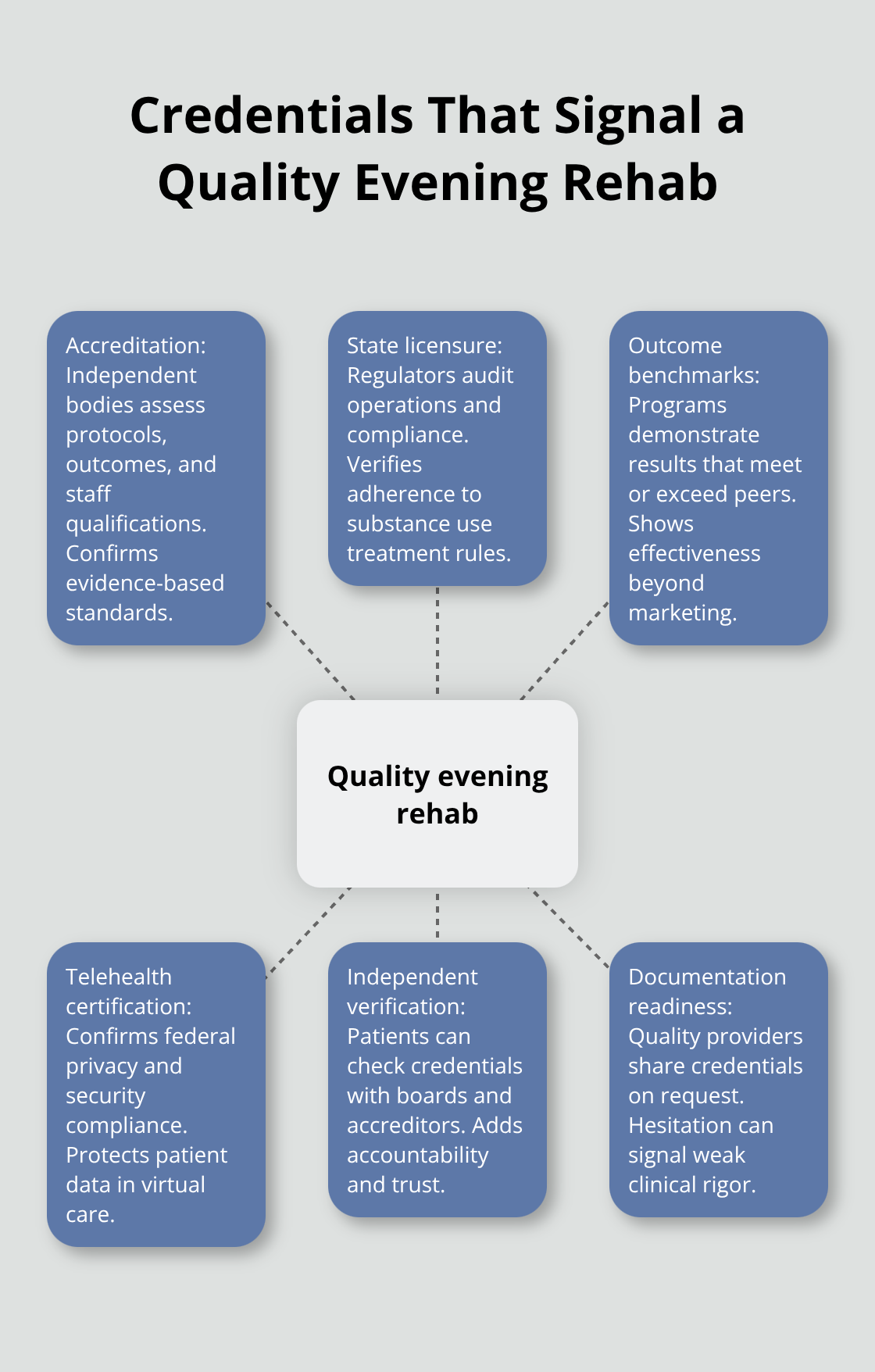
Accreditation requires programs to demonstrate that clinical outcomes match or exceed benchmarks for similar services. Certification verifies that telehealth platforms meet federal privacy and security standards. When you evaluate an evening program, ask directly for these credentials and verify them independently through state licensing boards and accrediting bodies. Programs that hesitate to provide documentation signal that their clinical rigor may not match their marketing promises.
Clinical Effectiveness Over Convenience Alone
Clinical effectiveness matters more than appointment timing. Research shows that integrated virtual care treating addiction and co-occurring mental health conditions together yields higher retention and reduced symptom severity compared to fragmented approaches where addiction treatment happens separately from mental health support. This means a quality evening program doesn’t just schedule therapy sessions at night-it designs treatment protocols that address the full clinical picture. Your clinician should conduct a comprehensive assessment covering substance use history, mental health conditions, medical needs, and family dynamics before your first therapy session. The program should then create a personalized treatment plan that specifies which evidence-based modalities you’ll receive, how frequently you’ll attend sessions, what testing schedule applies to your situation, and how your care team will coordinate medication management if needed.
Real Support When You Need It Most
Real support during evening hours means your program maintains clinical availability when cravings spike. Many traditional programs operate only during business hours, leaving you without professional support during the exact times when relapse risk peaks. Quality evening programs staff licensed clinicians during all scheduled sessions and maintain crisis protocols for emergencies outside regular hours. You should know exactly how to reach someone if you experience an acute crisis at 2 AM-whether that’s a crisis hotline, an on-call clinician, or a protocol that connects you to emergency services. Evening programming serves people whose lives don’t conform to 9-to-5 schedules, and that population deserves the same access to emergency support that daytime patients receive. Building structured routines and awareness of triggers strengthens your ability to maintain recovery during vulnerable evening hours.
Final Thoughts
Evening programs eliminate the false choice between pursuing recovery and maintaining your career. Traditional rehab forces you to step away from work, risk your job security, and disrupt your family’s routine. Nighttime telehealth rehab removes that conflict entirely-you attend sessions after work, keep your paycheck, preserve your health insurance, and stay present for your family. The financial stability alone reduces relapse triggers that often derail recovery when people face job loss or income disruption.
Telehealth brings clinical-quality addiction treatment directly into your home through licensed clinicians who deliver evidence-based therapies via secure platforms, group sessions that connect you with peers facing similar struggles, and remote testing that tracks your progress in real time. You receive the same standard of care as residential programs without the inflexibility that forces people to choose between recovery and their actual lives. The technology removes barriers that traditionally kept people from seeking help: distance, stigma, scheduling conflicts, and the fear of workplace exposure.
Starting nighttime telehealth rehab means taking a concrete step toward recovery that fits your reality. Contact EveningIOP today to discuss your situation with an intake specialist who can explain how evening programming works for your specific circumstances and answer questions about scheduling, insurance coverage, and what to expect during your first week.