


Addiction recovery doesn’t have to mean taking time off work or disrupting your family life. Private telehealth care options now make it possible to get professional support on your own schedule, from the privacy of your home.
At EveningIOP, we’ve designed programs specifically for people juggling careers and responsibilities. Evening sessions mean you can pursue recovery without sacrificing the rest of your life.
Why Telehealth Works Better for Working Adults in Recovery
Commute Time Vanishes, Treatment Fits Your Life
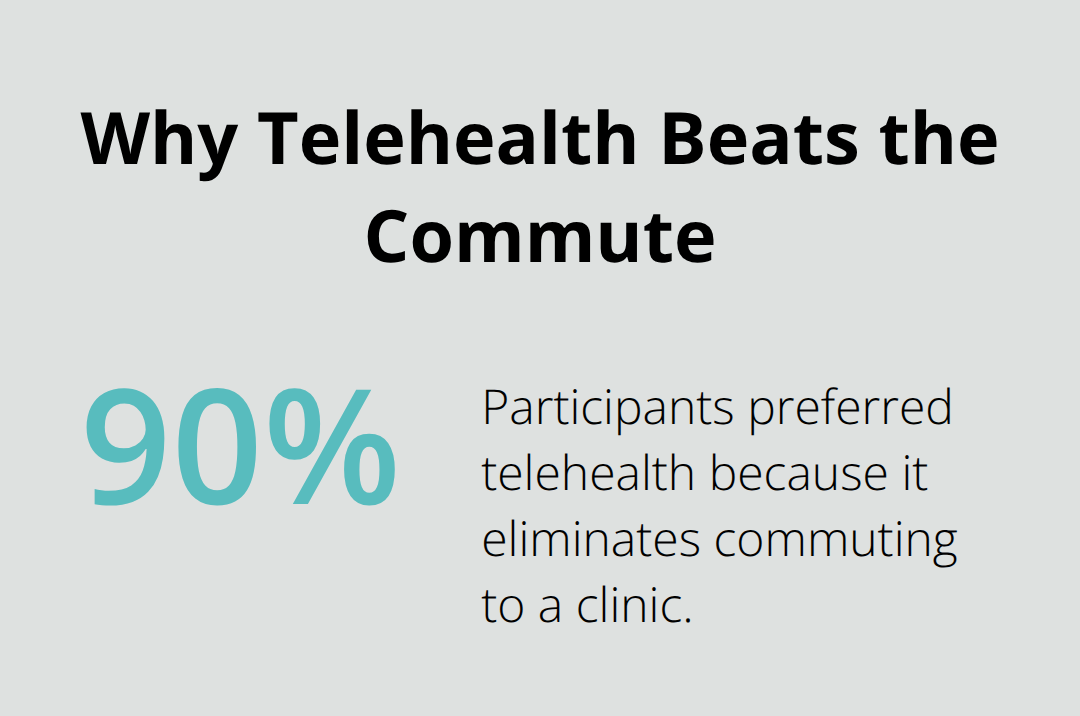
Telehealth addiction treatment removes the friction that keeps busy professionals from seeking help. A study published in NCBI found that about 90 percent of participants preferred telehealth specifically because it eliminates commuting to a clinic. That’s not a minor convenience-that’s the difference between fitting treatment into your life and having treatment consume it.
When you work full-time, manage a family, or both, the forty minutes spent driving to and from an appointment becomes a real barrier. Evening telehealth programs address this directly by scheduling sessions when you’re already home, already offline from work demands, and able to focus on recovery without burning vacation days or rearranging childcare.
Medication Management Happens Without Extra Trips
The flexibility extends to medication management as well. Licensed professionals oversee medication-assisted treatment such as Suboxone or methadone through secure video visits, so you avoid making separate trips to a pharmacy or clinic for prescriptions. Between sessions, rapid check-ins occur via phone or secure messaging when cravings hit or triggers emerge, giving you real support during the hours when relapse risk peaks.
Privacy Protects Your Career and Reputation
Privacy becomes transformative when you work in industries where addiction carries career risk. Accessing care from your home eliminates the stigma of walking into a treatment facility where colleagues might see you. Research shows this privacy factor alone increases treatment engagement for professionals concerned about their reputation or job security. At the same time, licensed clinicians conduct thorough assessments and ongoing therapy through video platforms using encrypted, HIPAA-compliant systems, so you don’t sacrifice clinical quality for confidentiality.
Specialists Exist Beyond Your Local Area
Geographic limitations disappear entirely with telehealth. You no longer depend on finding a specialist in your city-if you need expertise in opioid use disorder treatment or co-occurring mental health conditions, that clinician can be anywhere. This access to qualified professionals outside your local area fundamentally changes what treatment options are available to you, particularly if you live in rural or underserved regions where addiction specialists are scarce. SAMHSA’s National Helpline is a free, confidential, 24/7 treatment referral and information service in English and Spanish. When you’re ready to explore what a structured evening program looks like, understanding the specific components matters just as much as knowing how telehealth fits your schedule.
What Happens in an Evening Intensive Outpatient Program
Structure That Combines Accountability With Flexibility
Evening Intensive Outpatient Programs combine structured clinical care with the flexibility that working professionals need. Group therapy happens in real-time online sessions where you interact with others facing similar challenges, not through recorded videos or asynchronous modules. Licensed counselors and clinicians conduct one-on-one sessions via secure video to address your specific triggers, mental health concerns, and recovery goals. Drug and alcohol testing occurs at home using collection kits you manage on your own schedule, eliminating trips to a lab or clinic.
Research shows that hybrid outpatient programs have similar outcomes to in-person groups and better outcomes than fully online options. This means the combination of accountability through testing, personalized attention in individual sessions, and peer support in groups creates stronger outcomes than any single component alone. Sessions typically occur three to five days per week depending on your treatment phase, with the flexibility to adjust if work demands spike or if you need more intensive support during a vulnerable period.
How Group Therapy Works Online
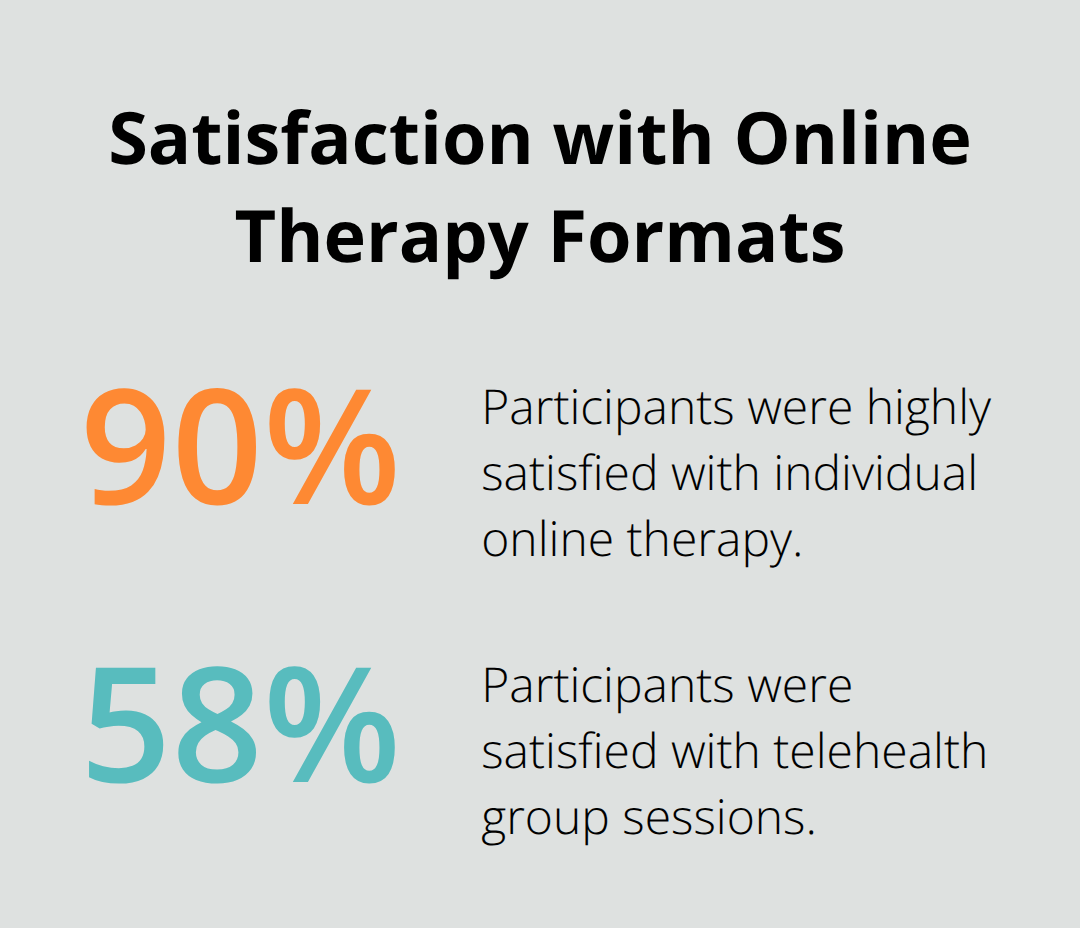
Group therapy in evening programs functions differently than you might expect if you’ve only experienced in-person groups. You sit in your home on video with six to twelve other people in recovery, and the interaction is live and unscripted. A study found that 90 percent of participants were highly satisfied with individual online therapy, while only 58 percent were satisfied with telehealth group sessions, which means group work requires intention and the right provider structure to succeed.
The difference comes down to whether the clinician actively manages the group, keeps participation balanced, and prevents certain people from dominating or withdrawing entirely. Strong facilitators create psychological safety so members share honestly about relapse triggers, family conflict, and workplace stress. The peer connection that emerges-hearing others navigate similar challenges-often becomes as therapeutic as the clinician’s guidance.
One-on-One Counseling Addresses What Groups Cannot
One-on-one counseling addresses what group cannot: the specific details of your job stress, family dynamics, medication side effects, or trauma history that you might not disclose in a group setting. Licensed professionals assess your needs during intake and then adjust your treatment plan based on what emerges week to week. The program integrates behavioral therapy and substance-use counseling into one coordinated care plan, so your clinician knows what happens in group, what emerges in individual therapy, and how your medication is responding.
Testing From Home Removes Barriers and Shame
Testing for drugs and alcohol from home removes excuses and removes shame simultaneously. You don’t sit in a waiting room where people see you entering a testing facility. You collect samples on your schedule within a specified window, and results feed directly to your clinical team. Testing happens frequently enough to catch relapse early but not so frequently that it becomes a financial burden or logistical nightmare.
This matters because accountability without stigma increases honesty and engagement. When you control the logistics of testing, you’re more likely to complete it consistently and report results truthfully to your clinician. The data your team receives becomes more accurate, which means treatment adjustments happen based on real information rather than gaps or missed appointments.
Moving From Structure to Choosing Your Provider
The components of an evening program-group, individual therapy, medication management, and testing-work together only when the provider coordinates them intentionally. Understanding what these sessions actually look like helps you evaluate whether a specific program matches your needs and your life.
How to Choose the Right Telehealth Provider for Your Needs
Verify Licensing and Accreditation Standards
Choosing a telehealth provider for addiction treatment requires moving past marketing claims and examining concrete credentials and clinical structure. Start by confirming that any provider holds state licensure for their clinicians and accreditation from recognized bodies like the Joint Commission or CARF. LegitScript certification matters too, since it verifies that a telehealth platform meets federal compliance standards for handling controlled substances and patient data. Many providers claim to offer personalized care, but accreditation and licensing prove they operate under external oversight rather than their own standards.
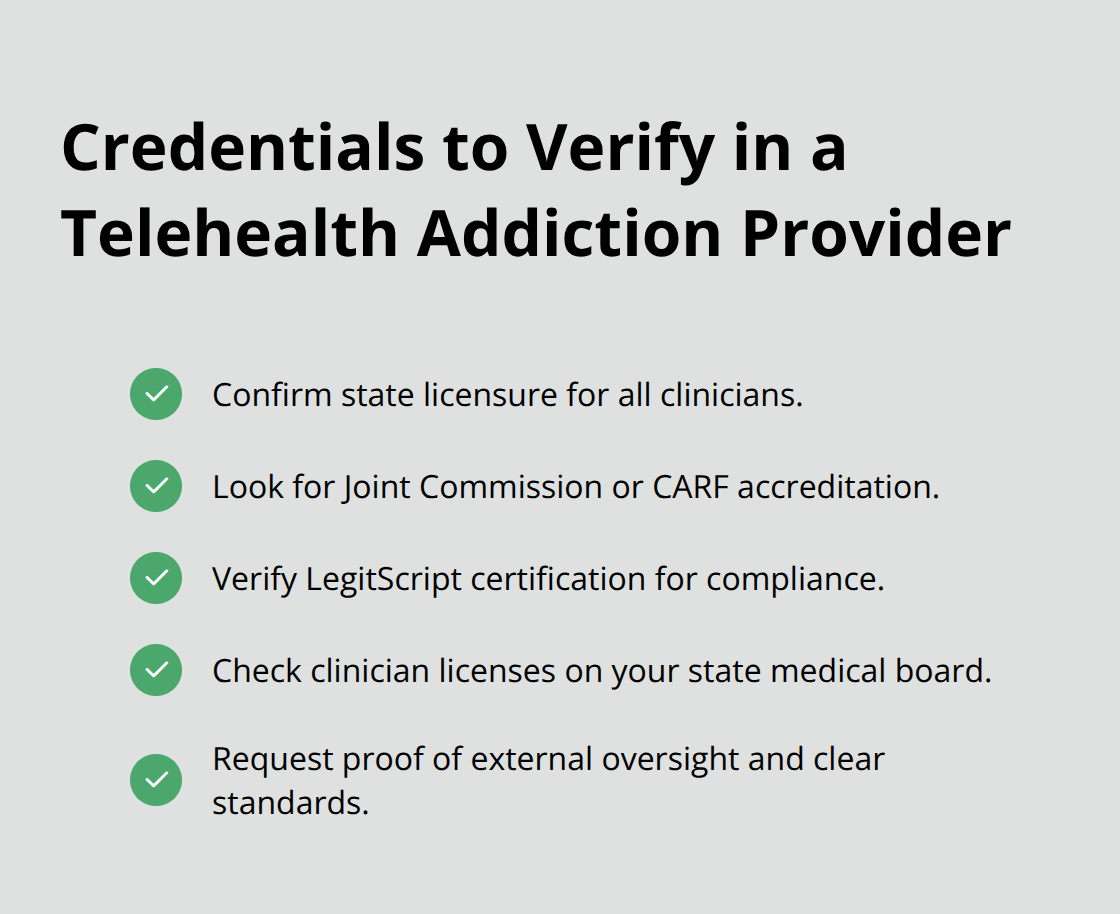
Check your state’s medical board website to verify individual clinician licenses independently, not just the provider’s word. This takes fifteen minutes and eliminates providers who hire unlicensed staff or operate in legal gray areas.
Evaluate Treatment Approach and Program Structure
Treatment approach separates mediocre programs from effective ones. Ask whether the program uses evidence-based modalities like cognitive behavioral therapy or dialectical behavior therapy, not just general counseling. Find out how they handle medication-assisted treatment if you need it-some providers offer Suboxone or methadone management, others don’t. Ask whether they coordinate between your individual therapist, group facilitator, and prescriber, or whether each person operates independently. Research shows hybrid outpatient programs with integrated components produce better outcomes than fragmented approaches.
Ask potential providers how they prevent group sessions from becoming passive watch-alongs-strong programs use licensed facilitators who actively manage participation and psychological safety. Request the group size and session frequency upfront. Groups larger than twelve people become harder to facilitate effectively, and fewer than three sessions per week often lacks the structure working professionals need. The structure matters because your treatment team should communicate constantly rather than treating you as separate cases.
Assess Cost, Insurance Coverage, and Payment Options
Cost and insurance coverage determine whether a program stays affordable long-term. Telehealth visits typically cost forty to ninety dollars per session without insurance according to provider pricing, but this varies widely based on clinician credentials and program intensity. Call your insurance company directly and ask which telehealth addiction providers they cover in your state, then cross-reference that list with providers that hold proper licensing.
Some Medicaid programs cover telehealth broadly while others restrict it to specific providers or require prior authorization. Medicare expanded telehealth coverage during the pandemic, but always verify current status since coverage rules change. Ask providers whether they offer sliding scale fees, payment plans, or package pricing for multiple weeks of treatment.
A provider charging ninety dollars per session with no payment flexibility might cost more over time than one charging seventy dollars with a discounted package for six weeks of daily sessions. Request a written estimate before starting treatment that breaks down individual session costs, testing fees, and any enrollment charges. Some programs bundle costs while others bill each component separately, so comparing the total monthly commitment matters more than the per-session rate.
Final Thoughts
Private telehealth care options work because they eliminate the barriers that prevent working professionals from seeking addiction treatment. Evening programs remove commute time, protect your career privacy, and connect you with licensed clinicians regardless of geography. The combination of group therapy, individual counseling, medication management, and home-based testing creates accountability without disrupting your job or family life.
Research consistently shows that telehealth-delivered addiction treatment produces outcomes comparable to in-person care, with the added benefit of flexibility that traditional programs cannot match. When you select a provider with proper licensing, evidence-based treatment approaches, and transparent pricing, you gain both clinical quality and convenience. At EveningIOP, we’ve built our programs specifically for this reality-DHCS-licensed, Joint Commission-accredited, and LegitScript-certified, which means your treatment meets rigorous clinical and compliance standards.
Taking the first step toward recovery doesn’t require choosing between your career and your health. Explore what EveningIOP’s evening intensive outpatient programs offer when evening hours and telehealth flexibility match how you live. Recovery becomes within reach when treatment adapts to your life instead of demanding your life adapt to treatment.