


Seeking addiction treatment takes courage, but many people hesitate because they worry about their privacy. At EveningIOP, we understand that privacy safe addiction care isn’t just a feature-it’s a foundation for recovery.
Your health information deserves protection, and you have the right to know exactly how treatment programs handle your data. This guide walks you through the safeguards that matter and the red flags to watch for.
How Your Health Data Gets Protected
Federal law treats addiction treatment records differently from other medical information, and for good reason. The 2024 updates to 42 CFR Part 2 strengthened protections specifically because substance use records have historically been weaponized against patients, deterring people from seeking help. These federal confidentiality rules apply to any program receiving federal assistance, including tax-exempt status or state funding. At intake, treatment programs must inform you in writing what information they collect, who can access it, and under what circumstances they can share it. You sign a consent form that names specific recipients and states the exact purpose of any disclosure. This form contains specific language-not vague terms. The form must specify whether information goes to your employer, insurance company, family member, or another treatment provider.
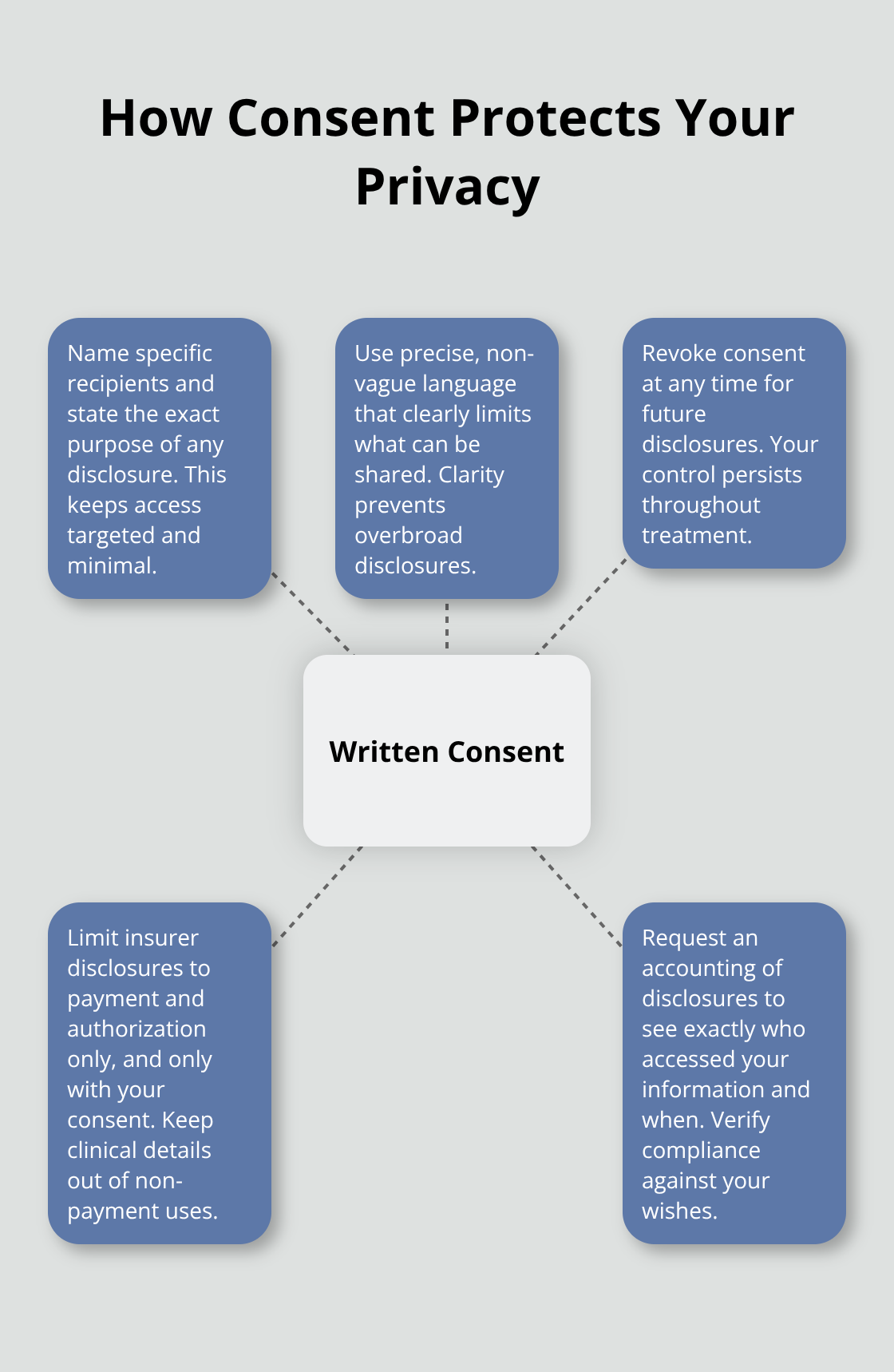
You maintain the power to revoke consent at any time, and that revocation takes effect immediately for future disclosures.
Encryption Protects Information in Transit and at Rest
Addiction treatment programs handle some of the most sensitive health information in healthcare. Electronic health records containing your substance use history, diagnoses, and treatment progress must be encrypted both when stored and when transmitted. Qualified Service Organization Agreements bind any outside vendors or contractors to the same confidentiality rules as the treatment program itself. If a program uses a cloud service for data storage or a telehealth platform for sessions, that vendor cannot access your information without restriction.
Access Controls Limit Who Sees What
Limited access means staff members see only the information necessary for their role. A billing administrator might see payment information but not clinical notes. A therapist sees treatment details but not insurance claims. Programs must document every access to your record, creating an audit trail that tracks who viewed what and when. Under the 2024 Final Rule updates, you have the right to request an accounting of disclosures to see exactly who accessed your information and when.
Violations Carry Real Consequences
The Office for Civil Rights administers penalties for programs that breach these protections. This enforcement mechanism exists to hold treatment providers accountable and to reinforce that your privacy is not negotiable. When you enroll in a treatment program, ask about their specific data security practices and request documentation of their compliance measures. Understanding these protections helps you identify programs that take your privacy seriously-a critical factor when choosing where to pursue recovery.
Why Privacy Protections Matter When Seeking Treatment
Addiction treatment records sit at the intersection of healthcare and criminal justice, making them uniquely vulnerable to misuse. Federal law recognizes this reality and treats substance use records as fundamentally different from other medical information. The reason is straightforward: people have historically faced arrest, job loss, custody battles, and insurance denial based on addiction treatment records. This weaponization of health data has kept millions from seeking help. A 2024 update to 42 CFR Part 2 reinforced protections specifically to address discrimination and stigma that deter treatment entry.
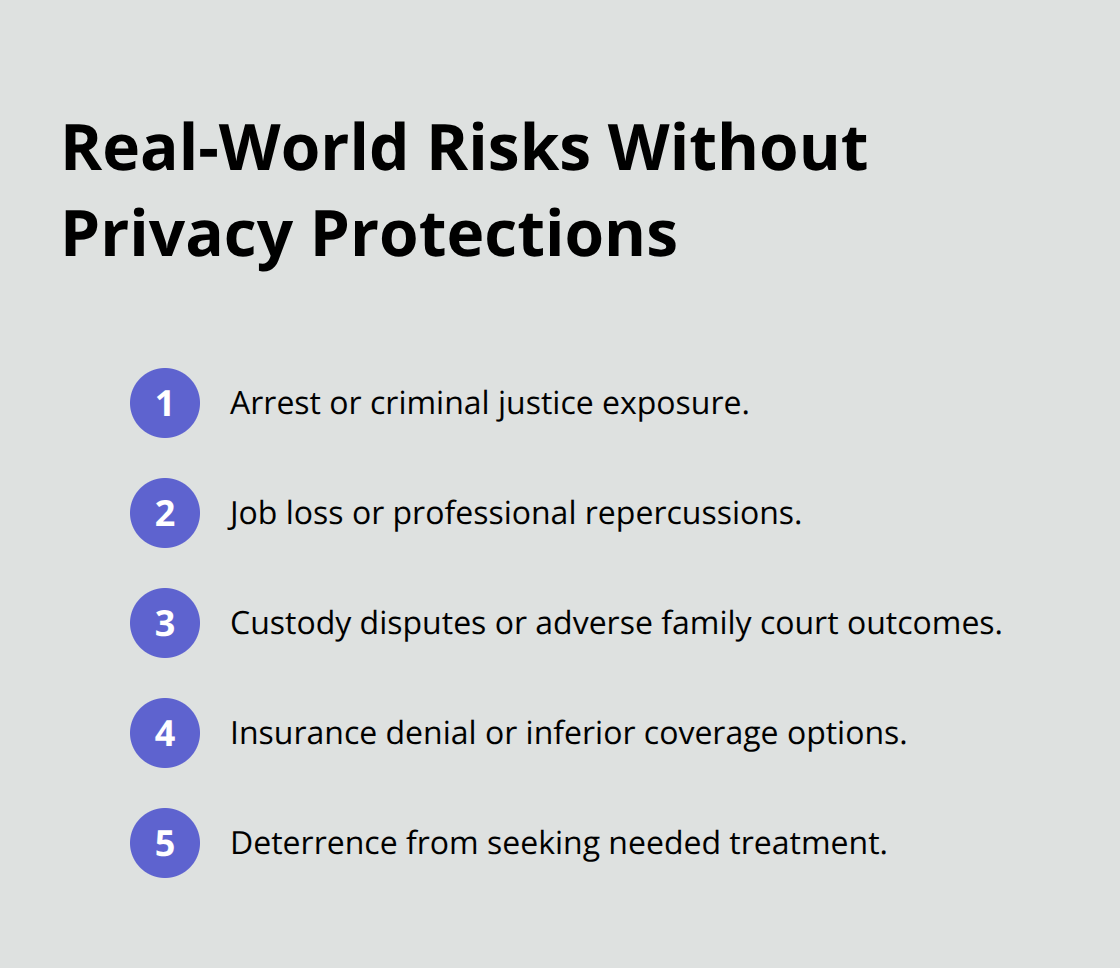
When you enter a treatment program, the stakes of privacy are not theoretical. Your treatment record can influence employment decisions, custody arrangements, insurance coverage, and social standing.
Employment and Professional Standing
Your job and professional reputation depend on keeping treatment records private. Many people fear that seeking addiction treatment will end their career or damage their professional licensing. This fear is not irrational. A therapist, nurse, attorney, or pilot who enters treatment risks investigation by their licensing board if records are disclosed improperly.
You control who receives your information through your consent form at intake. Your written consent must name the specific individuals or entities who can receive information and state exactly what information they can receive. If your consent does not name your employer, your employer cannot legally access your treatment records. Revoke consent for any recipient at any time, and that revocation takes effect immediately for future disclosures.
Many people worry about casual disclosure to workplace wellness programs or occupational health services. If your program uses a health information exchange or shares data electronically, you can restrict which entities in that network receive access to your substance use records. Request documentation of your consent form and verify that it matches your wishes before signing.
Insurance and Financial Privacy
Insurance companies operate on the principle that more health information means more control over what they cover. Substance use treatment triggers heightened scrutiny. Your insurance company may use treatment records to deny future claims, impose waiting periods, or offer inferior coverage options.
Federal law allows disclosure to insurers only for payment purposes and only if you consent. Your consent form should specify that your insurance company receives information solely for billing and authorization, not for other uses. Some people avoid using insurance altogether and pay out of pocket specifically to keep records away from insurers. This choice costs more but provides privacy protection.
If you do use insurance, know that the 2024 Final Rule gives you the right to request an accounting of disclosures showing exactly what your insurer received and when. Use this right to verify that information shared was limited to what you authorized. Employers conducting background checks sometimes attempt to access substance use history, though federal law prohibits disclosure without your explicit written consent. Law enforcement has pursued individuals based on information disclosed during treatment intake. These documented patterns continue today, which is why controlling your consent matters more than ever.
Red Flags in Treatment Program Privacy Practices
Treatment programs vary dramatically in how seriously they handle your confidentiality. Some programs treat privacy as a compliance checkbox; others embed it into every operational decision. The difference matters because weak privacy practices expose you to the exact harms that federal law was designed to prevent.
Ask Direct Questions About Data Practices
When you evaluate a program, look beyond website claims and ask direct questions about data practices. Vague answers, evasion, or reluctance to provide specifics should concern you immediately. A program that cannot or will not explain how they protect your information signals that protection is not their priority.
Ask whether they use encrypted communication for appointment reminders and whether staff access your records on personal devices or only on secure program systems. Request their privacy policy in writing and read it carefully. If the policy uses undefined terms like “we take privacy seriously” without explaining actual safeguards, that is a red flag. Legitimate programs articulate exactly which staff members access your records, what encryption standards they use, whether they store data on-site or with cloud vendors, and what happens to your records if the program closes or changes ownership.
Evaluate Technology Infrastructure
Programs using outdated technology often cannot implement modern security standards. If a program relies on fax machines, paper charts stored in unlocked cabinets, or unencrypted email for clinical communication, their infrastructure cannot meet current privacy requirements.
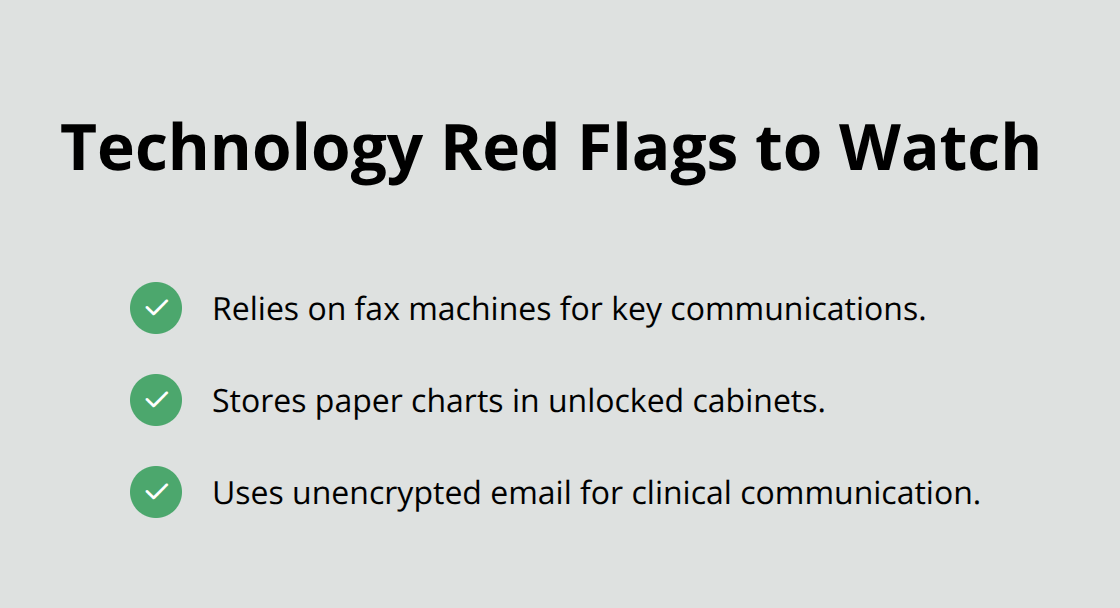
Ask whether they use electronic health records with audit logging that tracks every access to your file. Ask whether they conduct regular security assessments or penetration testing. Legitimate programs can name their technology vendors and describe their security certifications. If they cannot answer these questions, their systems likely lack the safeguards needed to protect sensitive substance use information.
Verify Transparent Privacy Policies
Transparency about privacy policies separates trustworthy programs from those cutting corners. A program should provide written notice of your privacy rights at intake, explain exactly how they use and share your information, and make clear that you control consent. They should describe the specific circumstances under which they might disclose information without your consent, such as mandatory reporting for child abuse or imminent danger.
If a program pressures you to sign broad consent forms allowing disclosure to numerous entities, that is a warning. Your consent should be specific about recipients and purposes. Legitimate programs welcome questions about their privacy practices and provide documentation. If staff become defensive when you ask about data security or privacy procedures, that defensiveness itself is a red flag worth taking seriously.
Final Thoughts
Privacy safe addiction care starts with choosing a treatment provider that treats your confidentiality as non-negotiable. Contact programs directly and ask specific questions about their data practices, request their privacy policy in writing, and ask how they encrypt your information and who accesses your records. Programs that answer these questions clearly and provide documentation signal that privacy protection is embedded in their operations, not an afterthought.
Recovery requires trust, and trust depends on knowing your information is genuinely protected. Federal law gives you concrete rights: you control who receives your information through written consent, you can revoke that consent at any time, and you can request an accounting of disclosures to see exactly who accessed your records. Programs that respect these rights and explain them clearly are programs worth considering.
We at EveningIOP understand that privacy protection enables recovery. Our DHCS-licensed, Joint Commission-accredited program combines interactive group therapy, one-on-one sessions with licensed clinicians, and remote drug and alcohol testing through evening telehealth sessions designed for working professionals and families.