

Working full-time and managing addiction recovery shouldn’t force you to choose between your job and your health. At EveningIOP, we’ve built night time recovery telehealth programs specifically for professionals who need treatment on their own schedule.
This blog post walks you through how evening intensive outpatient care removes the barriers that keep people from getting help.
Why Your Job Doesn’t Have to Wait
Traditional Rehab Destroys Your Career
The reality is brutal: traditional rehab schedules destroy careers. Most addiction treatment programs demand daytime attendance, which means telling your employer you need weeks off or watching your income disappear while you’re in treatment. Evening intensive outpatient programs eliminate this trap by scheduling sessions after work, so you keep your job, maintain your paycheck, and avoid the financial spiral that often derails recovery.
The American Medical Association reports that practices increasingly offered after-hours or night calls via telehealth as of 2022. This shift reflects a broader recognition that recovery doesn’t fit a 9-to-5 schedule, and neither should treatment.
Employment Stability Protects Your Recovery
Staying employed during recovery isn’t a luxury-it’s foundational to long-term success. When you maintain your income and job stability, you reduce the financial stress that often triggers relapse. You keep your professional identity intact, which matters psychologically. You avoid the shame and disruption of unexplained absences or having to disclose treatment to coworkers.
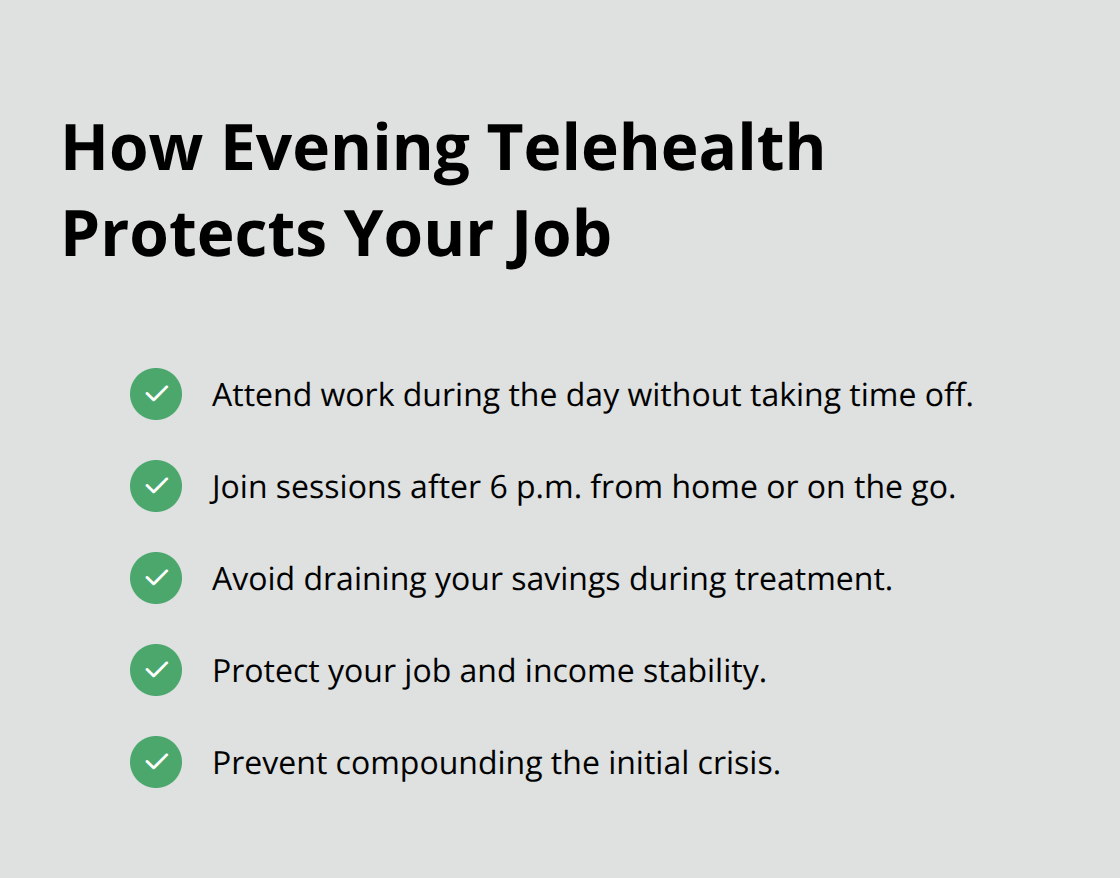
Evening telehealth programs eliminate the false choice between your career and your recovery. Sessions happen after 6 p.m., so you attend work, handle your responsibilities, and then log into your sessions from home or anywhere with an internet connection. This flexibility means you don’t burn through savings, don’t risk your job, and don’t compound the crisis that led to treatment in the first place.
Rigorous Care That Fits Your Schedule
The structure remains rigorous despite the flexible timing. You receive live group therapy, one-on-one clinical support, and accountability through remote testing. Evening programs deliver the same clinical intensity as daytime treatment, but the timing works with your actual life, not against it. This approach allows you to address your recovery needs while your professional responsibilities stay intact.
The next section explores how evening telehealth programs actually deliver results through their specific clinical components.
How Evening Telehealth Programs Actually Work
Live Group Therapy Builds Real Accountability
Group therapy in the evening creates accountability that sticks because you show up consistently with the same people week after week. When you attend sessions after work rather than taking time off, you remain committed to the full program. Live group therapy happens in real time via telehealth, meaning you interact directly with peers and clinicians, not recorded content or asynchronous forums. This real-time interaction matters: of all physicians surveyed, 15.7% reported using telehealth for more than 20% of their weekly visits, reflecting the clinical effectiveness of remote care.
The group format specifically builds accountability because other participants notice when you’re absent, and you develop relationships with people who understand exactly what you’re facing. You hear how others handle cravings, manage stress at work, and navigate relationships during recovery. This peer accountability often works better than solo treatment because you can’t hide in a group setting, and the social pressure to show up and participate becomes positive rather than punitive.
One-on-One Sessions Address Your Specific Needs
One-on-one sessions with licensed clinicians address the specific issues that group therapy can’t touch, whether that’s trauma, family conflict, mental health conditions, or relapse triggers tied to your particular job or life circumstances. These sessions happen on the same evening schedule, so you don’t need separate appointments during work hours. A clinician works with you on the issues that matter most to your recovery, tailoring treatment to your situation rather than applying a generic approach.
Remote Testing Keeps Progress Measurable
Remote drug and alcohol testing keeps you accountable and provides your clinician with real data about your compliance, which prevents small lapses from becoming full relapses. Testing happens at home or through local labs, eliminating the need for travel or time off work.
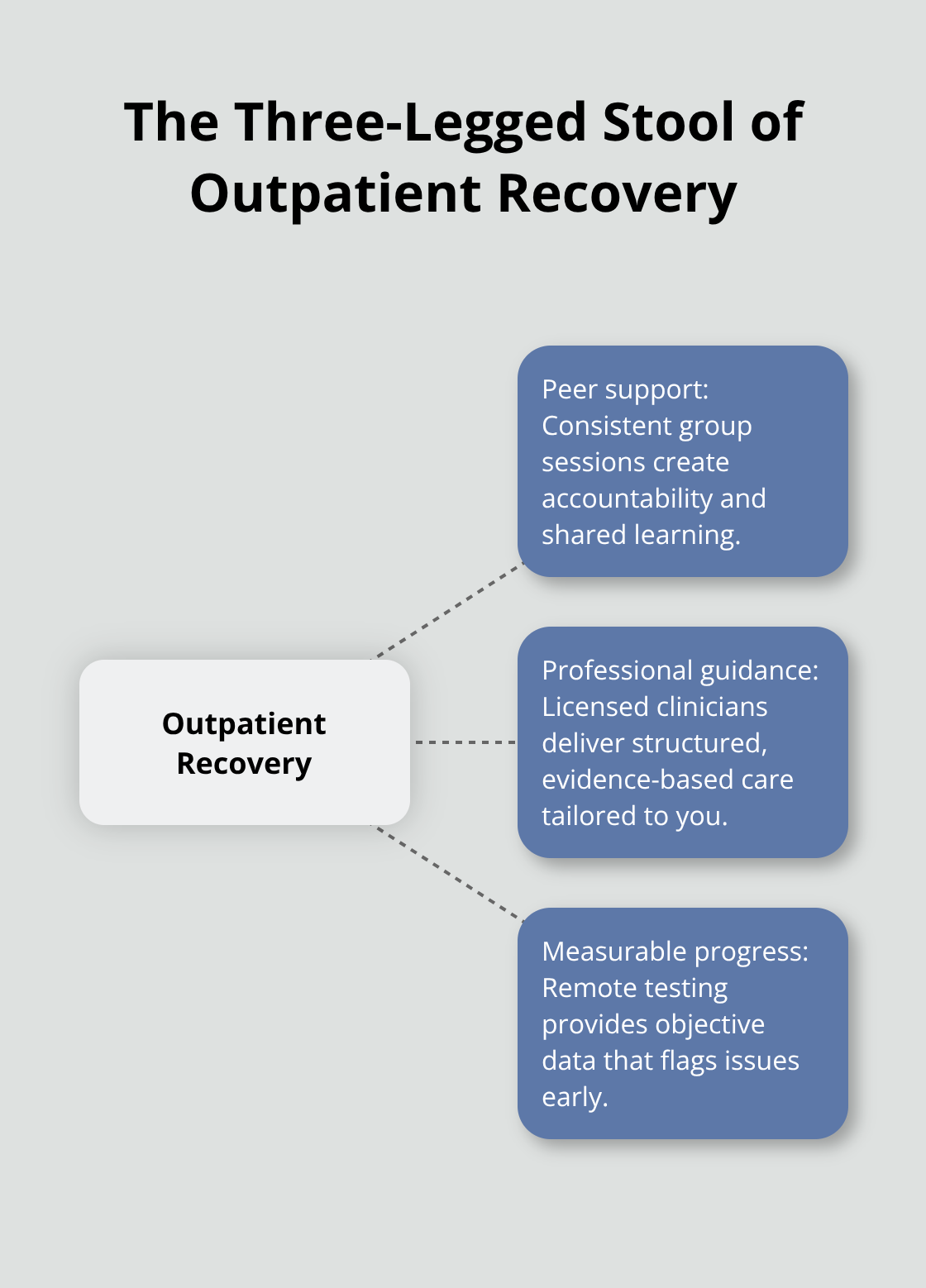
The combination of group accountability, individual clinical support, and objective testing creates what addiction medicine calls the three-legged stool of outpatient recovery: peer support, professional guidance, and measurable progress.
Each component addresses a different aspect of recovery, and the evening timing means nothing interferes with maintaining the employment and income stability that protects your long-term success. This structure works because it combines social connection, personalized clinical care, and concrete accountability-all without forcing you to sacrifice your job or financial security. What happens next determines whether you actually stick with treatment long enough for recovery to take hold.
What Actually Happens in Your Evening Sessions
Live Group Sessions Build Real Accountability
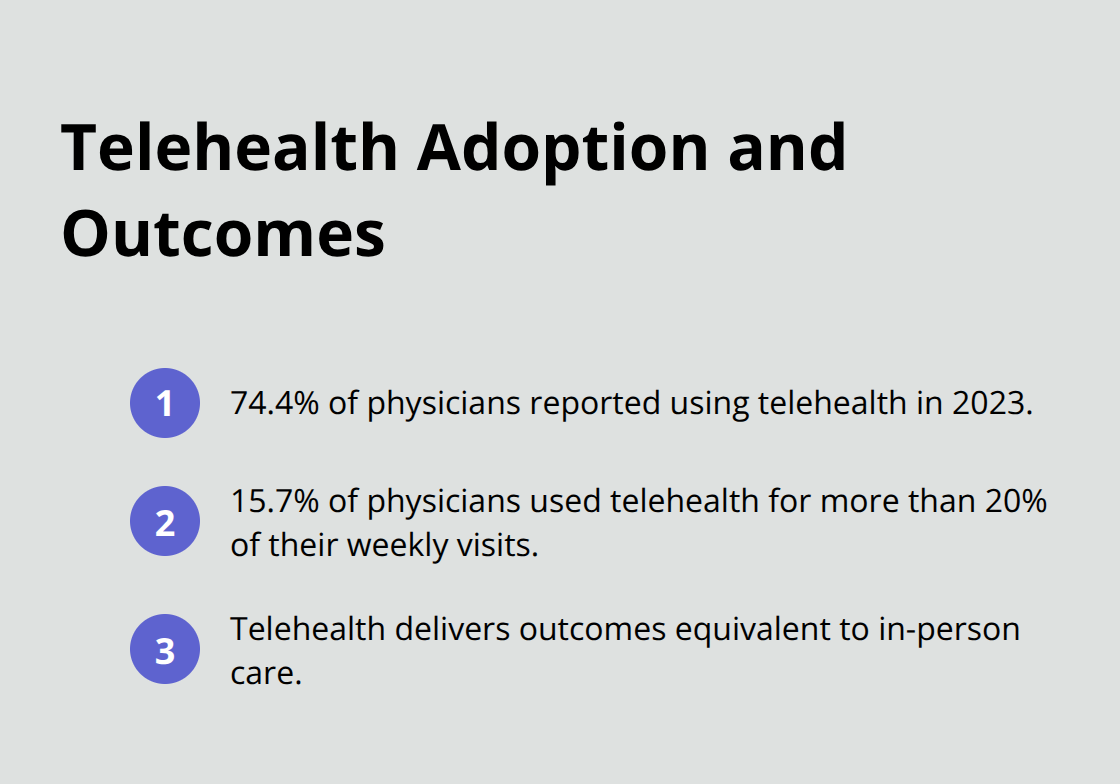
Evening intensive outpatient programs operate nothing like traditional daytime rehab. You log into live group sessions after work where real clinicians and real peers show up at the same time, every time. The American Medical Association found that 74.4% of physicians reported using telehealth in their practices as of 2023, demonstrating that remote clinical care has become the standard, not the exception.
Your group sessions happen with the same cohort week after week, meaning faces become familiar and accountability builds naturally. When someone doesn’t show up, people notice. When someone shares a breakthrough, the group witnesses it.
This consistency matters because telehealth delivers equivalent outcomes to in-person care. You interact directly with clinicians and peers in real time through video conferencing rather than watching videos or reading materials on your own time.
How the Schedule Actually Works
Sessions typically occur after 6 p.m. or on weekends, fitting into the actual rhythm of your life rather than forcing you to restructure your entire existence around treatment. You spend roughly two to four hours per week in structured sessions, split between group therapy and one-on-one work with licensed clinicians. The structure combines live interaction, personalized clinical attention, and measurable accountability without requiring you to take time away from work.
One-on-One Sessions Address Specific Gaps
One-on-one sessions with your assigned clinician address the specific issues that group therapy cannot cover. Your clinician might work with you on sleep problems, which research shows sleep and stress are interdependent risk factors for relapse during recovery. They tailor cognitive-behavioral strategies for insomnia or help you establish consistent sleep schedules that support your nighttime recovery. This personalized approach means treatment adapts to your situation rather than applying a generic framework to everyone.
Remote Testing Keeps Progress Measurable
Remote drug and alcohol testing happens at home or through local labs, eliminating the excuse of travel time and providing objective data that prevents relapse before it happens. The combination of live interaction, clinical support, and measurable accountability creates what addiction medicine calls the three-legged stool of outpatient recovery: peer support, professional guidance, and concrete progress tracking. Each component addresses a different aspect of recovery without forcing you to sacrifice your job or financial security.
Final Thoughts
The barrier between your recovery and your career no longer has to exist. Evening intensive outpatient programs eliminate the false choice that has kept countless professionals from seeking help. You address your addiction, build accountability with peers, work with licensed clinicians on your specific needs, and maintain the employment and income stability that protects your long-term success-all without sacrificing your job or financial security.
Night time recovery telehealth works because it meets you where you actually live. You attend work, handle your responsibilities, and then log into sessions after 6 p.m. from home or anywhere with an internet connection. The American Medical Association found that 74.4% of physicians now use telehealth in their practices, confirming that remote clinical care delivers real results.
EveningIOP offers live, telehealth evening intensive outpatient programs specifically designed for busy professionals and families. Contact EveningIOP today to learn how evening programs fit your life and your recovery.