


Choosing a treatment program means trusting that your care meets real standards. Accredited IOP evening care isn’t just a label-it reflects actual oversight from organizations like the Joint Commission and compliance with state licensing requirements.
At EveningIOP, we built our programs around accreditation because it matters. When you’re balancing work, family, and recovery, you need to know your treatment is backed by measurable quality standards and clinical accountability.
What Sets Accredited Programs Apart
State Licensing and Third-Party Oversight
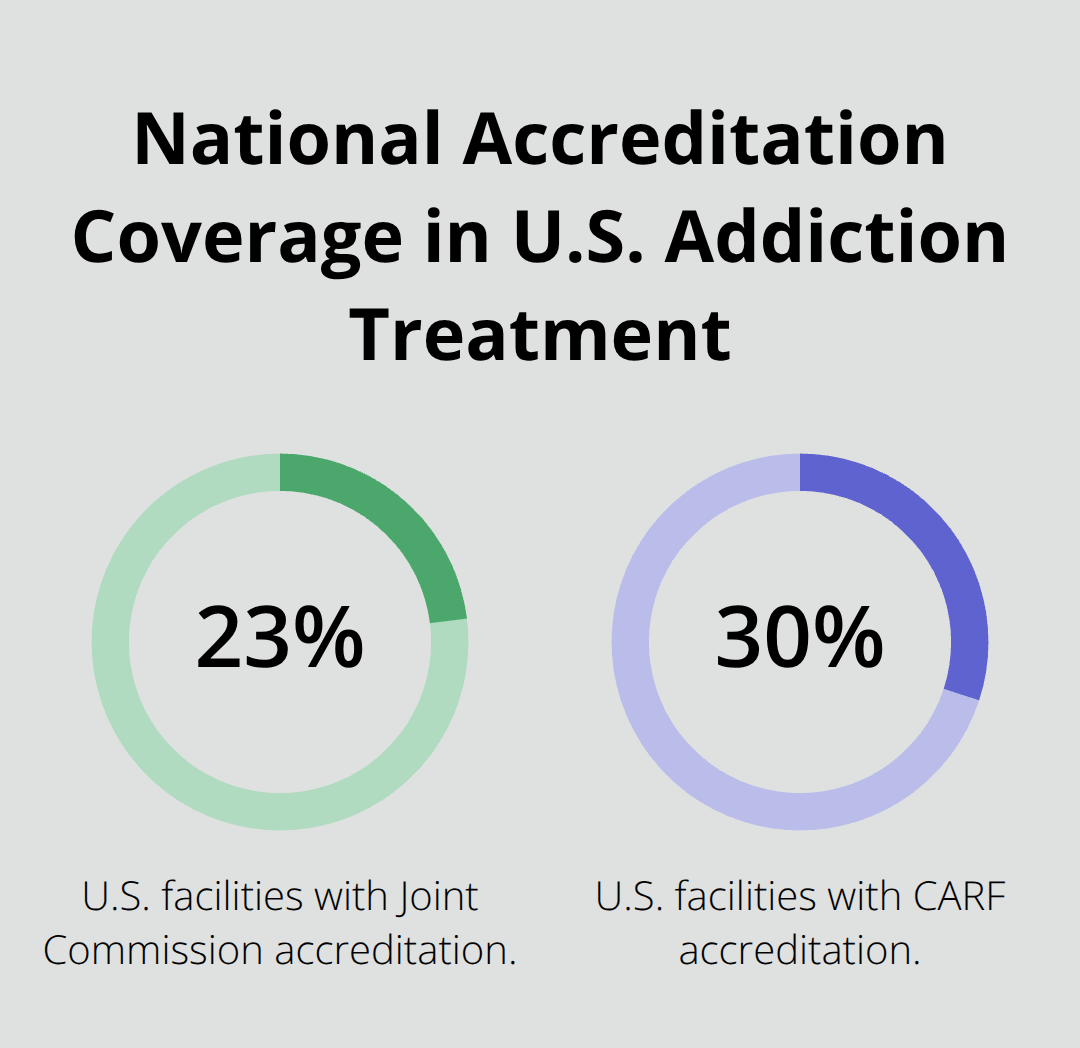
State licensing and third-party accreditation are not bureaucratic checkboxes-they are concrete safeguards that separate legitimate treatment from programs cutting corners. DHCS licensing means California has reviewed clinical staff qualifications, facility standards, and treatment protocols. Joint Commission accreditation goes further: surveyors conduct unannounced or scheduled on-site reviews using tracer methodology, examining patient records, staff credentials, and safety procedures in real time. According to CARF data, only about 23% of U.S. addiction treatment facilities carry Joint Commission accreditation and 30% hold CARF accreditation, meaning most programs operate without national oversight.
The Measurable Impact of Accreditation
This gap matters because accredited programs demonstrate measurable commitment to quality improvement. CARF-accredited providers show commitment to quality standards after accreditation. LegitScript certification specifically verifies that a program operates legally, maintains proper licensing, and follows pharmacy and testing regulations. When you enter an accredited evening IOP, your clinical team follows evidence-based protocols for group therapy, individual counseling, and medication management rather than improvised approaches. Accreditation also protects your privacy and data security through HIPAA compliance verification.
Accountability That Protects Your Treatment
The practical protection comes down to accountability. If your treatment plan lacks adjustment when you need it, if your therapist lacks proper credentials, or if your drug test results vanish, accreditation standards create documented pathways to address those failures. Programs pursue accreditation because insurers-including Medicaid and Medicare-increasingly require it for reimbursement, which means accredited evening IOPs have financial incentives aligned with your recovery. Unaccredited programs often cannot access major insurance networks, forcing patients to pay out of pocket or work with limited payer options.
How to Verify Accreditation Status
Verify accreditation status directly through The Joint Commission’s directory or CARF’s search tool rather than trusting a program’s claim. Ask whether accreditation covers the specific evening services you need, since some programs accredit only daytime operations. The cost difference between accredited and unaccredited programs is typically minimal-quality evening IOPs run $250 to $650 per day whether accredited or not-but accreditation guarantees that your treatment follows clinical standards, your records stay confidential, and your provider faces real consequences for negligence.
What This Means for Your Evening Treatment
These safeguards matter most when you’re juggling work, family, and recovery simultaneously. An accredited evening program means your therapist holds verified credentials, your medication management follows clinical protocols, and your progress notes remain secure. The next section examines how evening IOP scheduling itself becomes a clinical advantage-not just a convenience factor, but a treatment design that works specifically for working professionals and families.
Why Evening IOP Works for Working Professionals
Treatment Without Sacrificing Your Paycheck
Evening intensive outpatient programs succeed for working professionals because they eliminate the false choice between recovery and employment. A standard daytime IOP demands 9 to 12 hours per week during business hours, which forces you to take time off work, explain absences to managers, or lose income. Evening programs operate after 5 PM or 6 PM, leaving your workday intact. You attend group therapy, individual counseling, and medication management without requesting medical leave or fabricating excuses. This matters concretely because job loss during early recovery is a documented relapse risk factor. Research shows that individuals who maintain employment during treatment demonstrate better recovery outcomes. Your paycheck stays consistent, your health insurance coverage (often tied to employment) remains active, and the structure and identity that employment provides continues to support your recovery.
Keeping Family Routines Intact
Evening programming lets you maintain school pickups, attend your child’s soccer game, or support a spouse’s schedule without gaps. Parents in recovery often face an impossible situation with daytime programs: arrange childcare for treatment hours, which strains finances and creates logistical chaos. Evening IOPs eliminate that pressure. Virtual formats remove commute time entirely, so you log in from home after work, eliminating the travel burden that makes evening in-person programs difficult for working parents. Family involvement and education components in IOPs are linked to better recovery outcomes according to clinical evidence. When you attend treatment without disrupting family routines, your spouse and children experience recovery as part of your life rather than an interruption to it.
Real-World Practice of Recovery Skills
Medication management, group therapy, and individual sessions all occur on the same evening schedule, so your clinician sees you in the context of your actual life, not in an artificial daytime environment. You practice recovery skills immediately after treatment sessions in your actual job and family environment, which builds competence faster than waiting until you return to work the next day. This real-world testing of coping strategies, relapse prevention techniques, and stress management happens where you actually live and work. Your therapist observes how you handle workplace stress, family conflict, or social pressure because you report on these situations hours after they occur, not days later. The accountability that evening programming creates (you must show up after work, you must apply what you learned that same evening) strengthens your commitment to the treatment process itself.
Structured Support That Fits Your Schedule
Evening IOPs typically provide at least 9 hours of structured programming per week, commonly delivered as three 3-hour sessions. This structure matters because it creates predictable, non-negotiable time for your recovery without consuming your professional hours. You know exactly when treatment happens, which lets you plan your work schedule, arrange childcare, and communicate with your employer about your availability. The consistency of evening sessions (same time, same clinicians, same peer group) builds therapeutic relationships faster than sporadic daytime appointments that conflict with work deadlines.
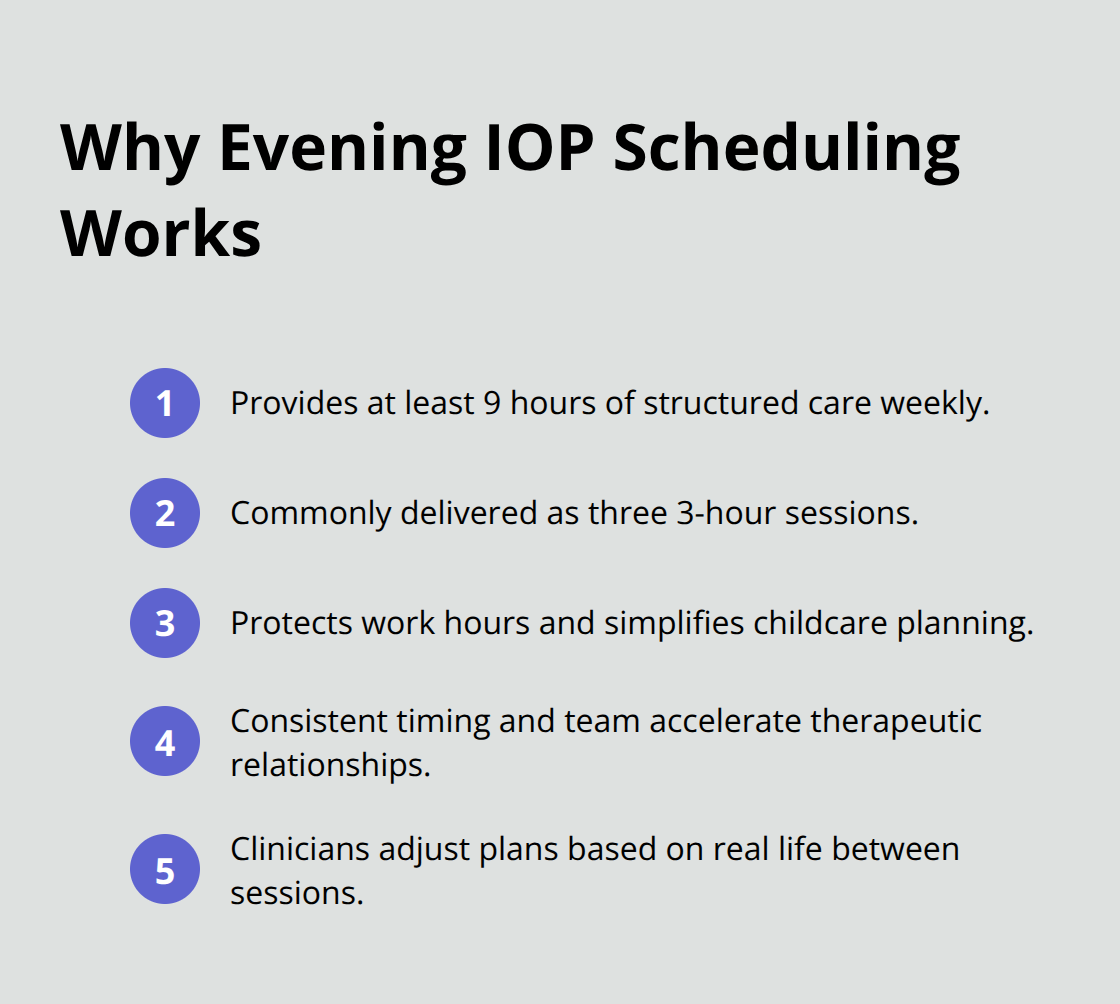
Your clinical team adjusts your treatment plan based on what actually happens in your life between sessions, not based on hypothetical scenarios discussed in a therapy office.
How Evening Format Reveals What Actually Works
The evening schedule itself becomes diagnostic information for your treatment team. If you struggle to attend sessions because of work stress, your therapist addresses that directly. If your peer group in evening IOP includes other working professionals facing similar pressures, you learn from their coping strategies in real time. If medication management happens at 6 PM and you report side effects affecting your evening mood, your psychiatrist adjusts your regimen before it impacts your next workday. This feedback loop (treatment, real-world application, report back, adjustment) accelerates your progress compared to daytime programs where you experience treatment in isolation from your actual responsibilities. The next section examines the clinical mechanisms that make evening IOPs measurably effective, not just convenient.
How Evening IOP Delivers Clinical Results
Group Therapy That Reflects Real Life
Group therapy in evening IOPs works because participants arrive after experiencing their actual day. A working professional discusses how their boss’s criticism triggered anxiety that nearly led to substance use. A parent describes the stress of managing children’s schedules while maintaining sobriety. These are not hypothetical scenarios discussed in isolation-they are real situations that happened hours earlier, making peer feedback immediately applicable. Research shows that group therapy participants demonstrate stronger accountability and faster skill acquisition than those in individual-only treatment because peer support creates social reinforcement that extends beyond the therapist’s office. Evening groups include working professionals and parents facing identical pressures, which means participants learn coping strategies from people navigating the same work deadlines, family obligations, and recovery demands. When someone in your group successfully manages a high-stress work situation without relapsing, you see a concrete example of recovery in action rather than hearing theoretical advice. The group structure also creates continuity-you see the same peers three or four times weekly, building trust and accountability that sporadic daytime programs cannot replicate. This consistency matters because therapeutic alliance (the quality of your relationship with your treatment team) is a primary driver of successful outcomes in outpatient programs.
Individual Sessions That Adapt to Your Week
One-on-one sessions with licensed clinicians happen on the same evening as group therapy, meaning your therapist observes your mood, stress level, and readiness after you have already processed the day’s challenges in group. Your clinician adjusts your treatment plan based on what you actually experienced, not on what you predict you might experience. If you report that workplace conflict triggered cravings during group therapy, your individual session that same evening focuses on developing specific coping strategies for that exact situation. Medication management also occurs in this evening window, so if your psychiatrist hears that anxiety is increasing, adjustments happen before your next workday rather than days later.
Testing and Accountability in Real Time
Remote drug and alcohol testing integrated into evening programming creates accountability without the shame or disruption of traditional testing.
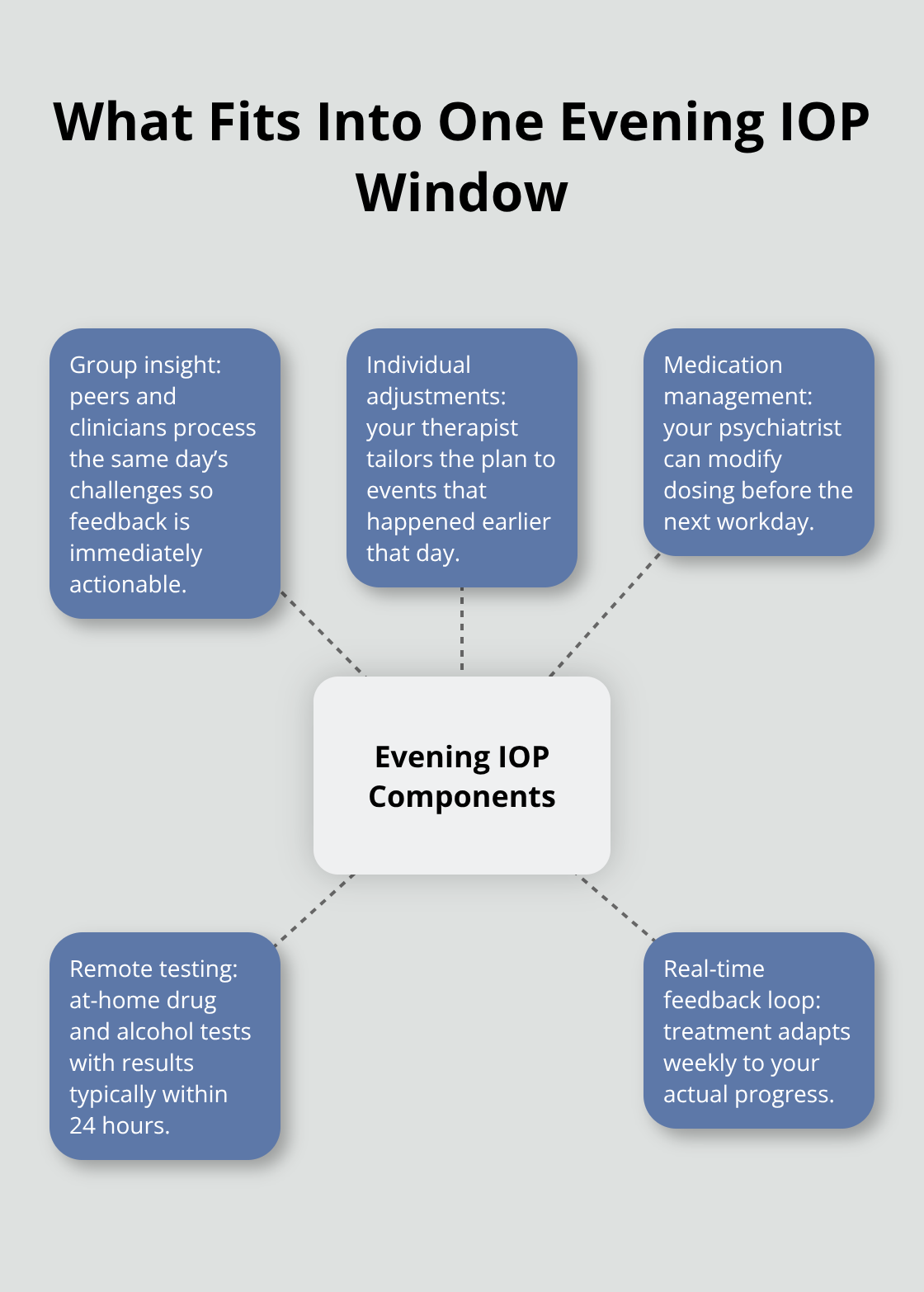
You submit samples from home on the same schedule as your treatment sessions, and results reach your clinical team within 24 hours, allowing immediate discussion of positive results or challenges rather than waiting for results to arrive by mail. This real-time feedback loop means your treatment adapts to your actual recovery progress week by week. The combination of group insight, individual adjustment, medication management, and testing accountability within a single evening window creates a treatment intensity that rivals inpatient programs.
Final Thoughts
Accreditation proves that your treatment program meets clinical standards and operates under real oversight-not as a marketing claim, but as measurable verification. When you select an accredited IOP evening care program, you choose a provider that has submitted to independent review, maintains documented quality standards, and faces consequences for failing to deliver safe, effective treatment. This matters most when you manage work, family, and recovery at the same time, and you cannot afford to waste time in a program that cuts corners or lacks clinical accountability.
Evening IOP works because it treats recovery as part of your actual life rather than as an interruption to it. You attend group therapy after experiencing your workday, practice coping skills in real time, and receive medication adjustments based on what actually happened to you. Your therapist sees you in the context of your real responsibilities and pressures, while your peer group includes people navigating identical challenges. Your accountability happens through testing and clinical oversight that adapts week by week.
Finding the right program means verifying accreditation status directly and confirming that evening hours match your schedule. EveningIOP offers DHCS-licensed, Joint Commission-accredited evening care that combines interactive group therapy, individual sessions with licensed clinicians, and remote drug testing-all delivered virtually so you can pursue recovery without disrupting work or home. Contact a program today, complete an assessment, and start treatment that actually fits your life.