

Choosing an evening IOP program is one of the most important decisions you’ll make for your recovery. At EveningIOP, we believe that DHCS licensing isn’t just a credential-it’s your assurance that a program meets rigorous standards for safety, quality, and clinical excellence.
This guide walks you through what DHCS licensing actually means, how to verify it, and what questions to ask when comparing programs in your area.
What DHCS Licensing Actually Protects
DHCS licensing for evening IOP programs isn’t a rubber stamp-it’s proof that a program has met California’s specific regulatory requirements for substance use treatment. The California Department of Health Care Services requires adult IOPs to deliver at least 9 hours per week spread across at least 3 days, with a maximum of 19 hours per week based on clinical need. This structure prevents programs from cutting corners on treatment intensity while allowing flexibility for working professionals. When you see a DHCS license number on a program’s website, that facility has undergone a formal review process and must maintain compliance with state and federal statutes. The license itself carries an expiration date-typically valid for two years-which means programs undergo regular renewal scrutiny.
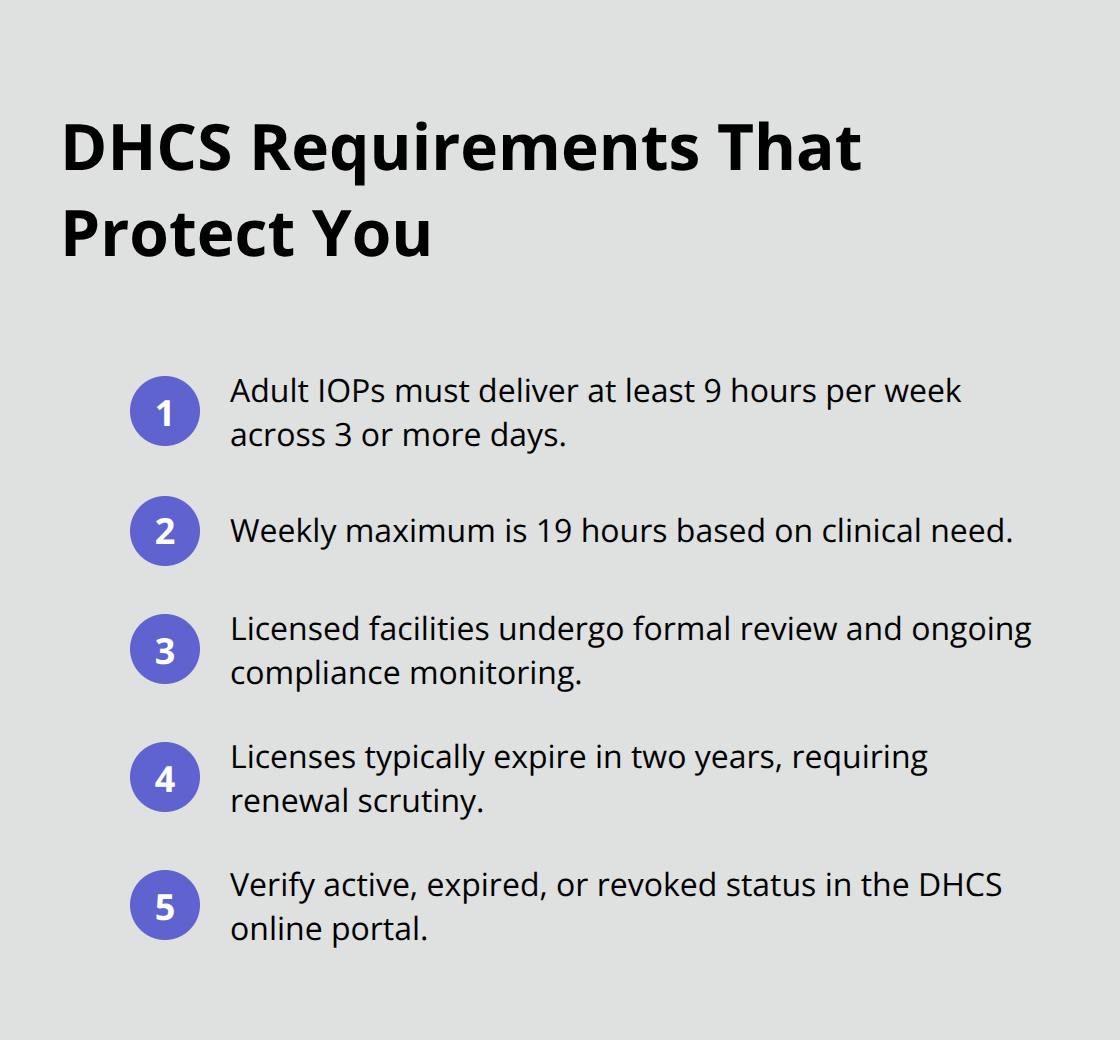
You can verify any provider’s current license status directly through the DHCS Licensing and Certification Division online portal, where you’ll find active, expired, and revoked licenses listed. This transparency matters because an expired or revoked license indicates a program no longer meets standards.
Who Oversees Quality and Safety
The DHCS Licensing and Certification Division (LCD) doesn’t just hand out licenses and walk away. They conduct ongoing monitoring, investigate complaints, and review unusual occurrences at licensed facilities. Licensed programs must employ direct counseling staff holding relevant credentials like LMFT, LCSW, LPCC, or CADC certification-not just any counselor can work in a DHCS-licensed IOP. Licensed Practitioners of the Healing Arts lead assessments and treatment decisions, bringing clinical expertise to initial evaluations. The LCD also investigates certified Alcohol and Other Drug counselors, so staff qualifications aren’t self-reported claims. Many quality programs pursue additional accreditation through the Joint Commission, which signals verified safety standards above minimum requirements. When a program holds both DHCS licensing and Joint Commission accreditation, you’re looking at a facility that independent reviewers have verified twice over.
What Accountability Looks Like in Practice
DHCS licensing creates legal accountability that protects you. Licensed programs must follow evidence-based treatment protocols and maintain comprehensive, individualized treatment plans built around SMART goals-not generic one-size-fits-all approaches. Programs must conduct initial assessments using standardized tools, identifying substance use severity, co-occurring mental health conditions, and social supports before treatment starts. Treatment teams including psychiatrists, psychologists, and addiction specialists must document progress and adjust plans based on clinical outcomes. If a program violates compliance standards, the LCD can issue temporary suspension orders or revoke the license entirely. This enforcement mechanism means programs face real consequences for cutting corners on clinical care or safety. The LCD publishes lists of revoked and suspended providers, so you can see which programs have failed to maintain standards.
How to Spot a Legitimate License
Not all programs claiming to offer treatment actually hold current DHCS licensing. Some operate without state oversight, which means no one monitors their staff qualifications, treatment protocols, or safety practices. You should verify the license number directly through the DHCS portal rather than trusting a program’s word. Look for the specific license number and expiration date on their materials. Programs that can’t produce this information or claim their license is “in process” haven’t met state standards. The difference between a licensed and unlicensed program is the difference between regulated clinical care and an unaccountable operation.
Moving Forward With Confidence
Understanding what DHCS licensing protects-from treatment intensity standards to staff qualifications to ongoing regulatory oversight-gives you a concrete way to evaluate programs. You now know what questions to ask and where to verify answers. The next step involves learning how to check credentials before enrollment and what red flags should stop you from choosing a particular program.
Why DHCS Standards Shape Your Treatment Outcomes
Evidence-Based Therapies That Produce Results
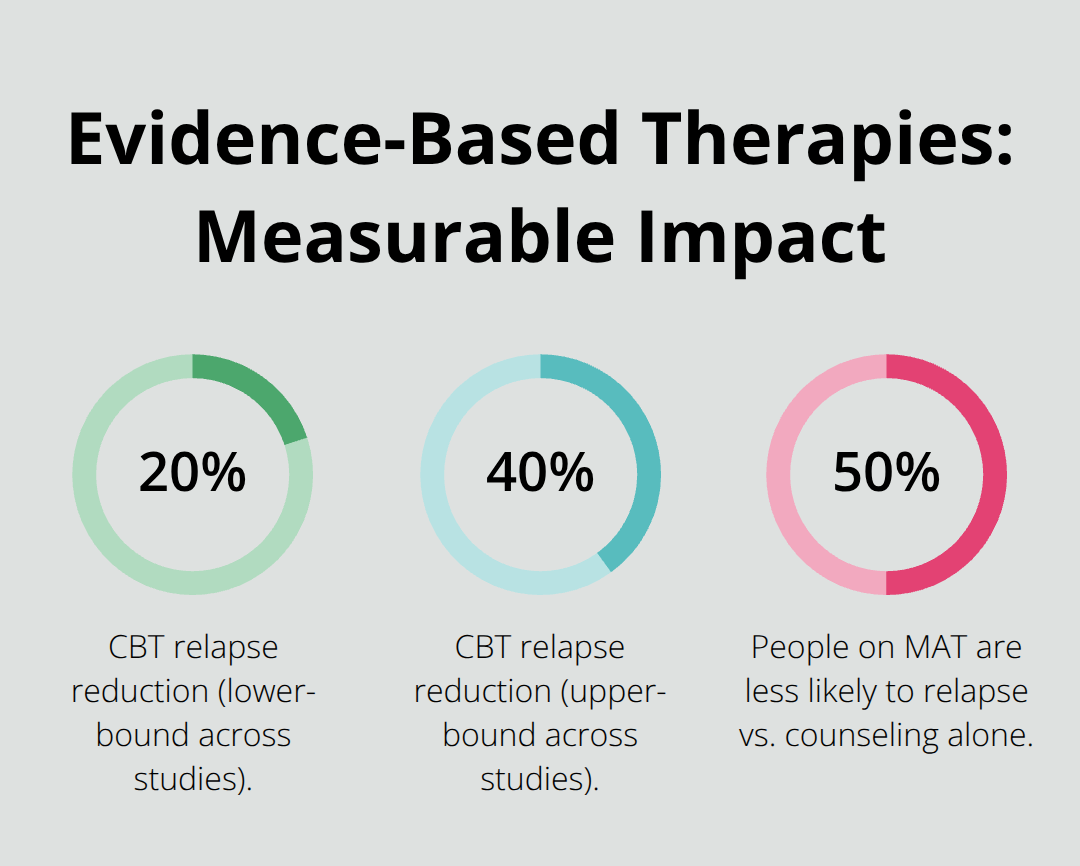
DHCS licensing exists for one reason: to force programs to use treatment methods that actually work. When a program holds DHCS approval, it must operate using evidence-based therapies like Cognitive Behavioral Therapy (CBT), Dialectical Behavior Therapy (DBT), and Medication-Assisted Treatment (MAT)-not unproven wellness trends or outdated approaches. These aren’t theoretical choices. CBT reduces substance use relapse rates by 20-40% depending on the study and population, backed by decades of research. DBT, originally developed for treating borderline personality disorder, now appears in DHCS-licensed programs because research demonstrates it works for people managing both addiction and mental health conditions simultaneously. MAT combines medication with counseling, and the evidence is clear: people on MAT are 50% less likely to relapse compared to counseling alone, according to data from the National Institute on Drug Abuse.
DHCS doesn’t let programs pick and choose based on what’s trendy or cheaper to deliver. Licensed programs must document which evidence-based modalities they use, how they implement them, and what outcomes they achieve. This regulatory requirement means the staff treating you spent time training in these specific methods, not just generic talk therapy.
Clinical Staff Credentials That Matter
The clinical staff difference separates licensed programs from everyone else operating without oversight. DHCS requires direct counseling staff to hold credentials like LMFT (Licensed Marriage and Family Therapist), LCSW (Licensed Clinical Social Worker), LPCC (Licensed Professional Clinical Counselor), or CADC (Certified Alcohol and Drug Counselor). Licensed Practitioners of the Healing Arts conduct your initial assessment, which matters because they’re trained to identify co-occurring conditions like depression, anxiety, or PTSD that frequently accompany substance use disorders.
Your treatment plan gets built by a team including psychiatrists and psychologists, not just counselors. Programs must conduct comprehensive evaluations using standardized assessment tools before treatment starts, identifying your specific needs rather than funneling everyone into the same curriculum. DHCS oversight means the LCD investigates complaints about staff credentials and can revoke certifications for counselors who misrepresent qualifications or fail to maintain training standards. This accountability protects you from walking into a program where your counselor lacks legitimate credentials.
Transparent Reporting and Outcome Tracking
Transparent reporting requirements force licensed programs to track and report clinical outcomes, which means they can’t hide poor results or pretend their program works when data shows otherwise. Some programs voluntarily pursue accreditation on top of DHCS licensing, adding an independent verification layer that reviews their treatment protocols, staff qualifications, and safety practices. This dual oversight-state licensing plus national accreditation-indicates a program serious about maintaining standards.
When you compare programs in your area, you’ll notice that some offer evening schedules specifically designed for working professionals and families. The flexibility of evening sessions (typically 6pm-9pm) combined with DHCS oversight means you get both clinical rigor and practical convenience. Programs that hold both state licensing and national accreditation demonstrate commitment to standards that go beyond minimum requirements. Understanding these distinctions helps you identify which programs actually invest in quality versus those cutting corners on staff training or treatment protocols.
How to Verify DHCS Licensing Before Enrollment
Check the DHCS Online Portal for Active Licenses
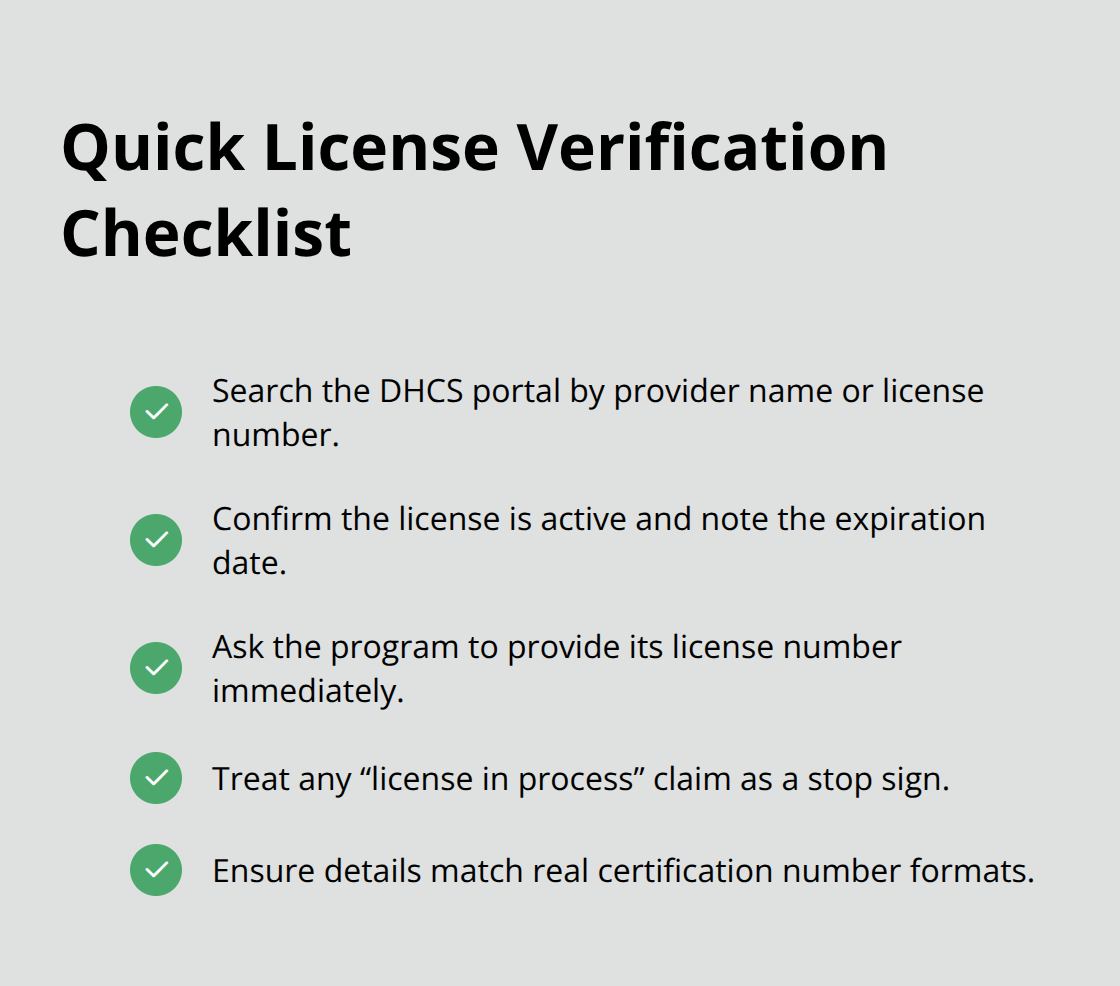
The DHCS Licensing and Certification Division maintains an online portal where you can verify any program’s current license status in minutes. Visit the DHCS website and search for the provider’s name or license number-you’ll see whether the license is active, expired, or revoked. An active license displays the specific certification number and expiration date. Compassion Recovery Center holds State Certification 300422AP, effective through December 31, 2025, as an example of what current documentation looks like.
Oceans Luxury Rehab displays License 300736BP with expiration August 31, 2026.
When you contact a program, ask them to provide their license number immediately-legitimate providers keep this information readily available because they’re proud of their regulatory status. If a program hesitates, claims their license is “in process,” or can’t produce documentation, that’s a hard stop.
Understand What Licensed Programs Must Do
Programs operating without current DHCS licensing have no state oversight of staff qualifications, treatment protocols, or safety measures. You’re essentially trusting an unregulated operation with your recovery. The difference is stark: a licensed program must employ counselors with credentials like LMFT, LCSW, LPCC, or CADC certification, conduct standardized assessments, document treatment plans, and submit to regular compliance reviews. An unlicensed program answers to nobody.
Licensed programs track clinical data and can speak specifically about relapse prevention strategies, aftercare planning, and how they measure progress. They maintain comprehensive records showing how they assess each client’s needs and adjust treatment accordingly.
Look Beyond State Licensing for Additional Accreditation
Check whether the program holds additional accreditation from the Joint Commission, which conducts independent verification of safety standards and clinical practices. Joint Commission accreditation means external reviewers evaluated the program’s treatment protocols, staff qualifications, and outcomes-it’s a second layer of accountability beyond state requirements. EveningIOP, for example, holds both DHCS licensing and Joint Commission accreditation, providing dual verification of clinical standards.
When comparing programs, watch for these specific red flags: staff who can’t explain their credentials or training in evidence-based therapies like CBT or DBT; programs that avoid discussing their assessment process or claim everyone receives identical treatment plans; facilities that won’t share information about their treatment team composition or psychiatrist availability; pricing that seems drastically lower than comparable licensed programs in your area, which often signals cost-cutting on clinical staff; and programs unwilling to discuss their outcomes or success rates.
Ask Direct Questions About Clinical Practices
Ask directly whether the program conducts initial assessments using standardized tools, whether psychiatrists are available for medication management, and how they handle dual diagnosis treatment for people managing both substance use and mental health conditions. These questions reveal whether a program invests in clinical rigor or operates on autopilot. If a program deflects these questions or relies on vague promises, their lack of accountability should concern you.
Final Thoughts
Start by verifying DHCS licensing through the state portal-this single step eliminates unlicensed operations from consideration. When you contact programs, ask whether they conduct standardized assessments, employ licensed clinicians with credentials like LMFT or LCSW, and use evidence-based therapies such as CBT or DBT. Programs that answer these questions directly and provide documentation operate with transparency, while those that deflect signal that accountability isn’t their priority.
Compare programs based on clinical practices, not just convenience or cost. A DHCS licensed evening IOP that costs slightly more than competitors likely invests that difference in staff qualifications and evidence-based treatment protocols. Ask about their relapse prevention strategies, aftercare planning, and how they measure progress using objective metrics rather than vague promises about success.
Your recovery deserves a program built on evidence, staffed by qualified professionals, and held accountable by regulatory oversight. Visit EveningIOP.com to learn more about how we combine clinical excellence with evening flexibility for working professionals and families pursuing recovery.